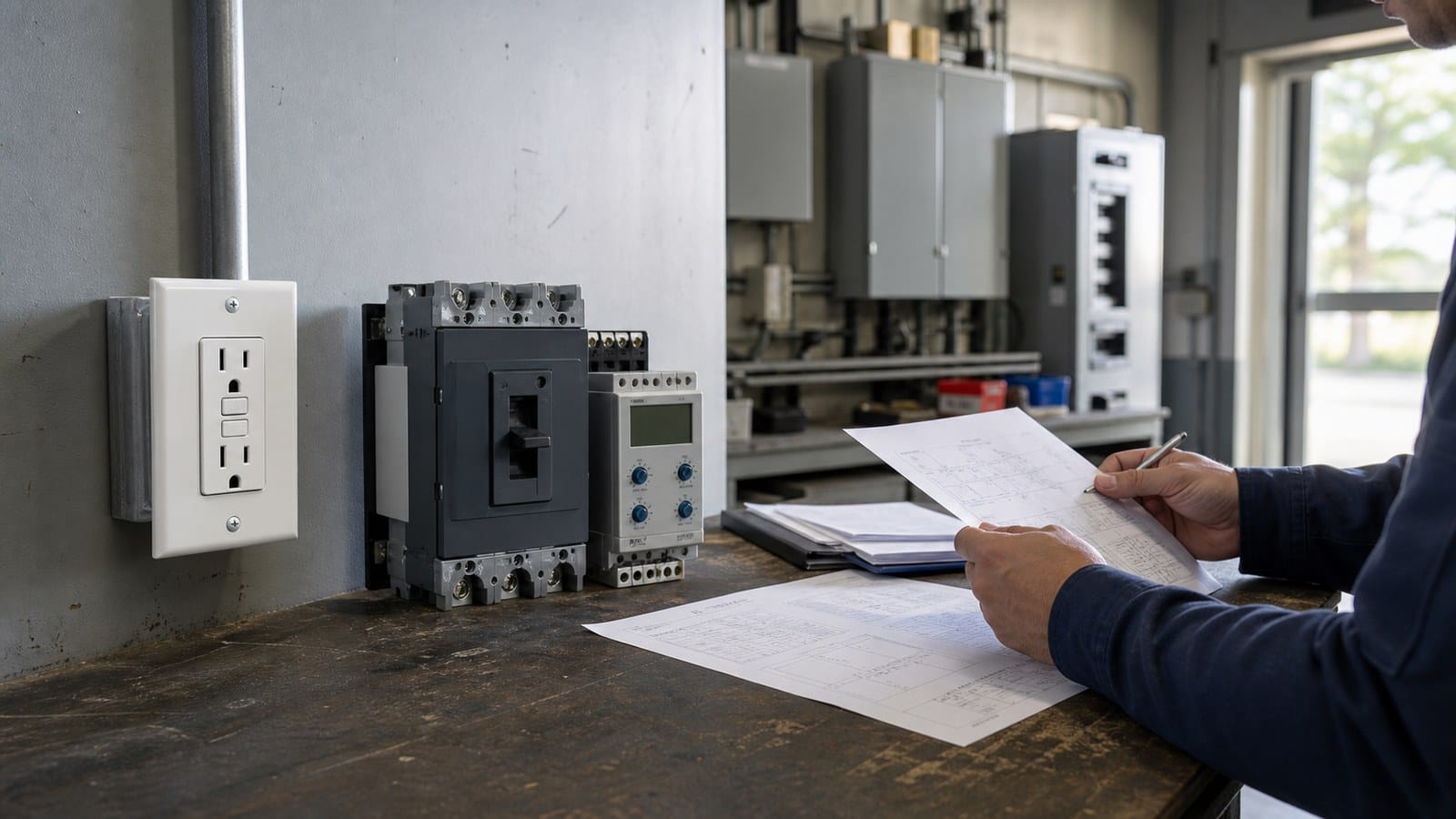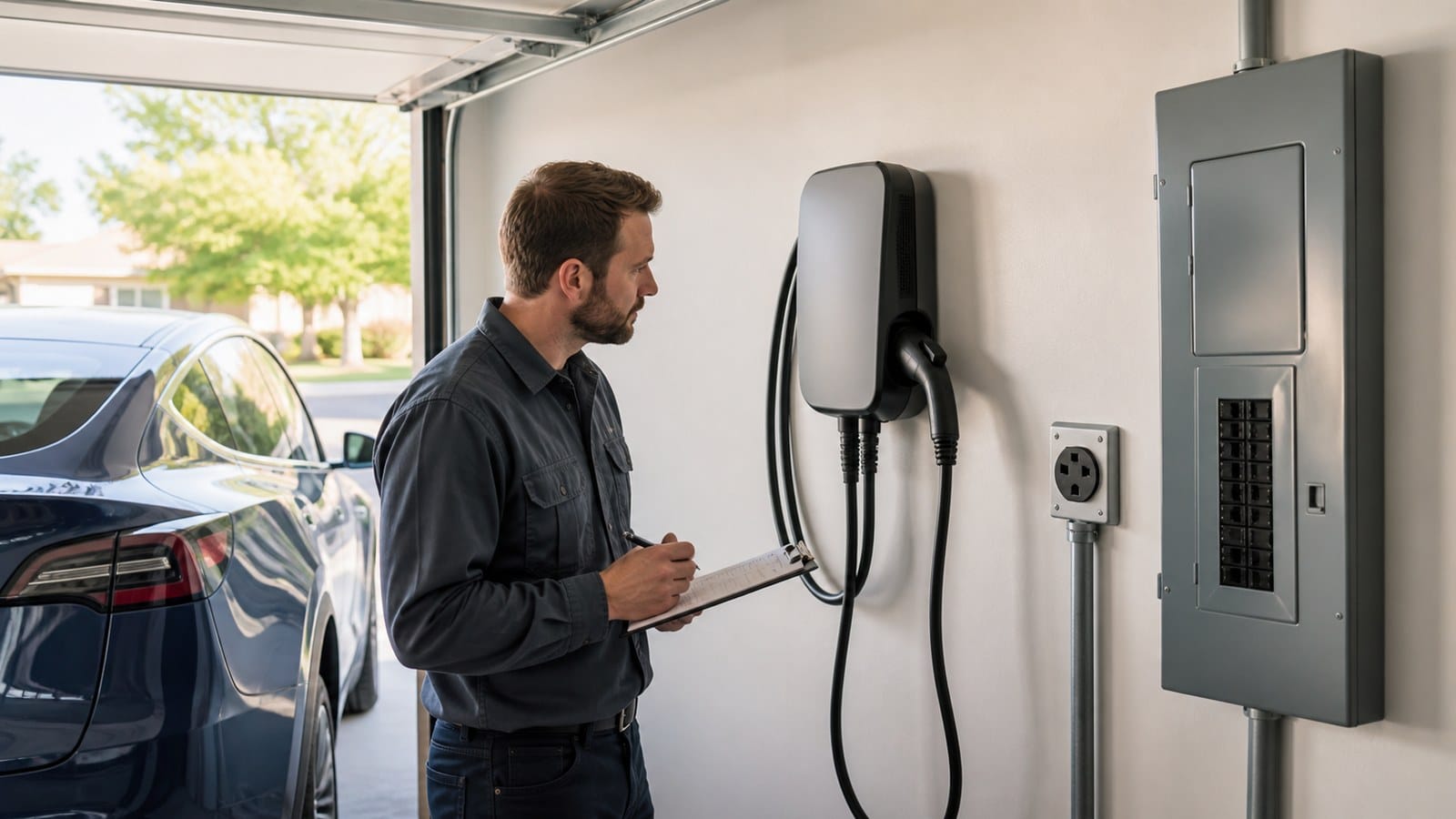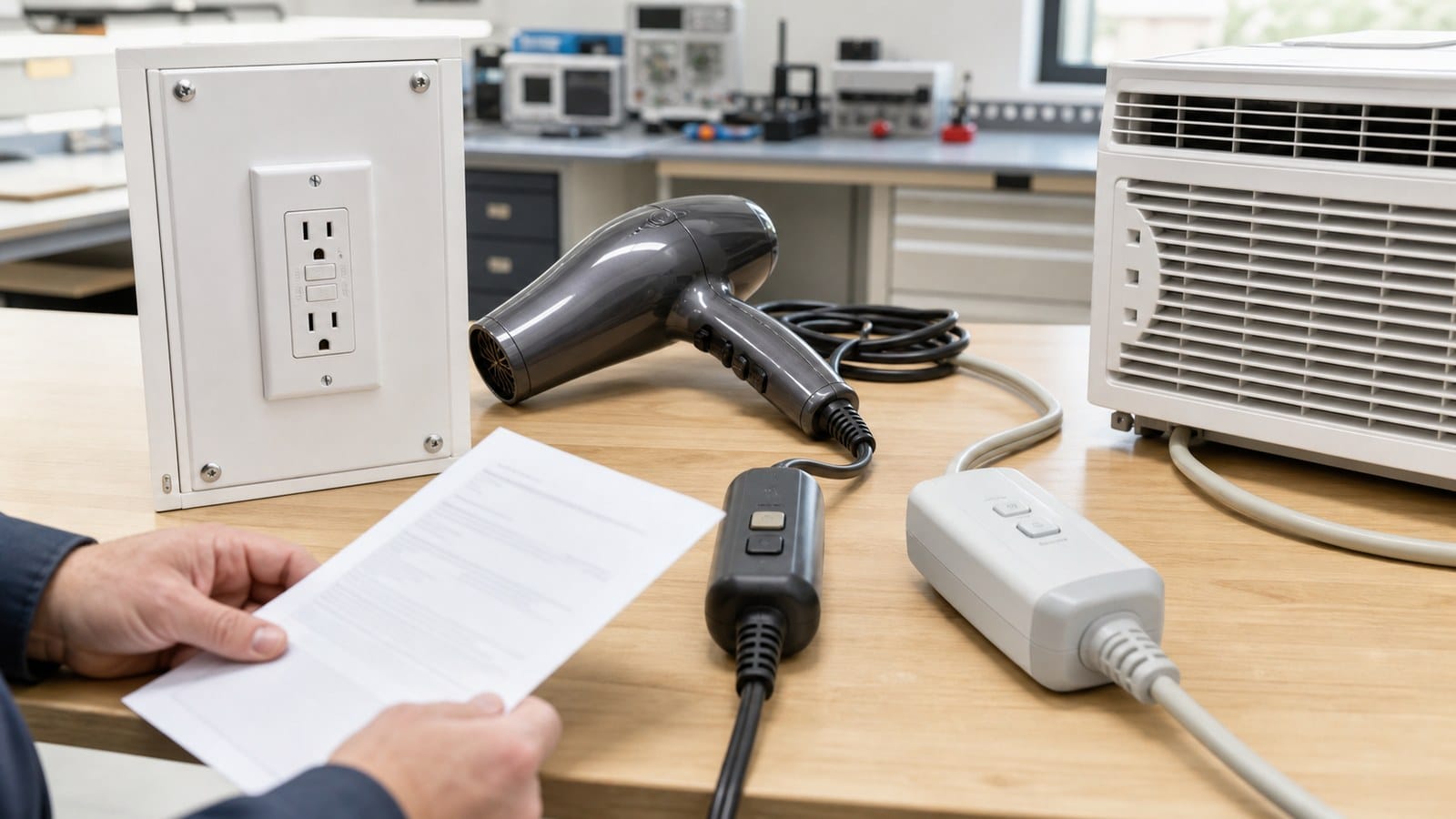
Yes—under recent U.S. National Electrical Code (NEC) editions, the receptacle supplying a washing machine in a dwelling-unit laundry area generally requires GFCI protection. The rule is based primarily on the location, not on whether the receptacle is close to a laundry sink. A washer can therefore need GFCI protection even when it is more than six feet from water.
The answer for an existing home depends on the code edition adopted locally, amendments, the scope of renovation or replacement work, circuit configuration, and manufacturer instructions. Do not remove GFCI protection because a washer trips. A trip can reveal leakage from the appliance, moisture, damaged wiring, cumulative leakage, or a failing protective device.
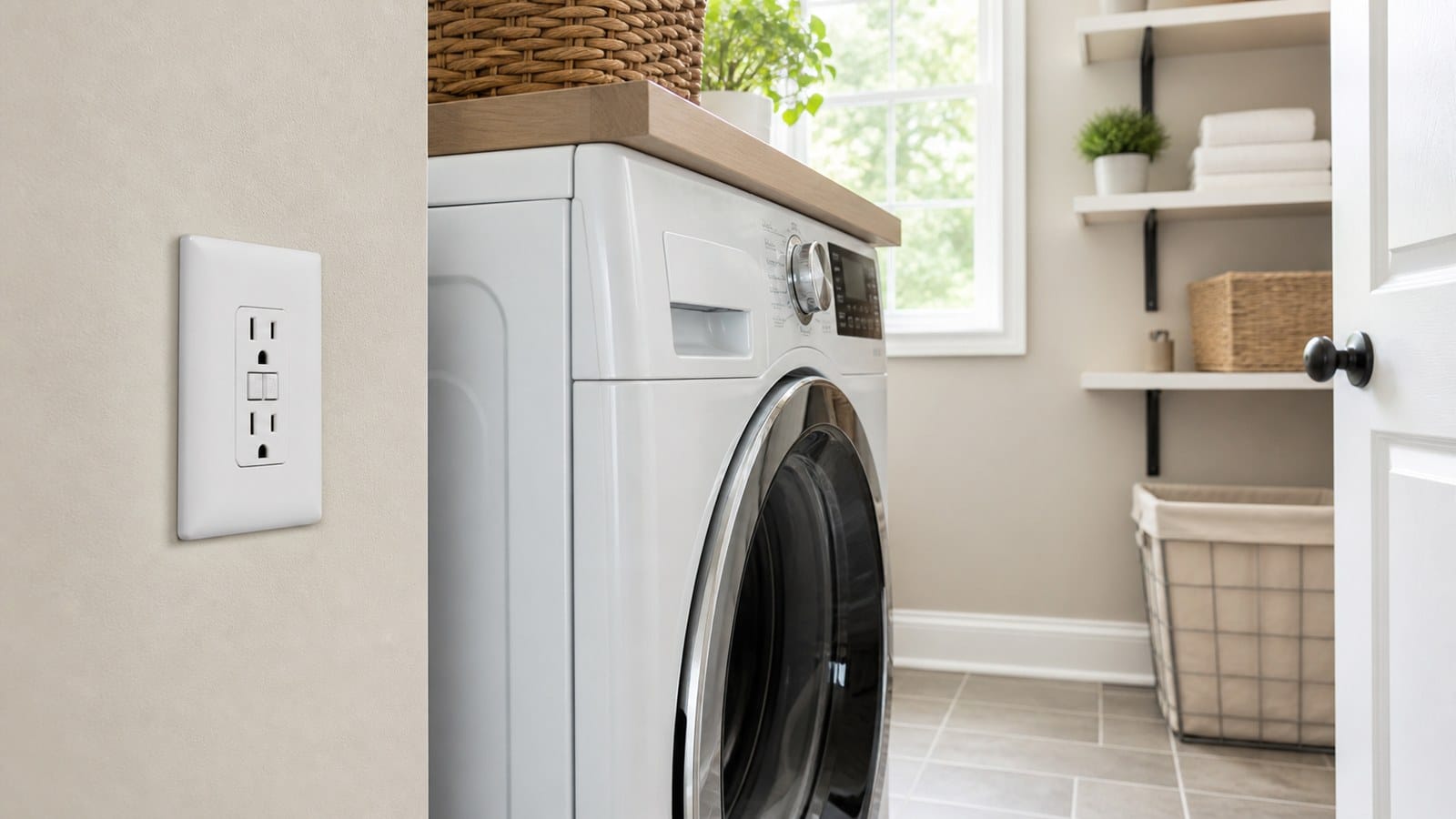
Washing Machine GFCI Protection: Quick Answers
| Question | Practical answer |
|---|---|
| Does a washing machine need GFCI? | Generally yes when supplied by a receptacle in a dwelling-unit laundry area under recent NEC editions. |
| Does the outlet have to be within six feet of a sink? | No. The laundry-area rule is independent of the six-foot sink rule. |
| Can I use a GFCI receptacle? | Yes for a compatible 125-volt, 15- or 20-amp receptacle when it remains readily accessible and the circuit design allows it. |
| Can I use a GFCI breaker? | Yes. It may be preferable when the receptacle is behind the washer, the circuit also needs AFCI protection, or the dryer receptacle also requires GFCI. |
| Does motor startup normally trip a GFCI? | Motor inrush alone is an overcurrent issue, not a ground-fault imbalance. A trip at startup deserves diagnosis. |
| Can I plug the washer into a non-GFCI outlet to stop trips? | Not as a permanent fix. Bypassing required protection hides the symptom without correcting the fault. |
Where the Requirement Comes From
NEC 210.8(A)(10) identifies laundry areas among dwelling-unit locations requiring GFCI protection. The 2014 NEC introduced GFCI protection for 125-volt, 15- and 20-amp receptacles in laundry areas. Later editions expanded the voltage and ampere range for covered dwelling-unit receptacles.
The key phrase is “laundry area.” The rule is not limited to a dedicated laundry room with a door. A washer closet, basement laundry corner, utility area, or hallway laundry alcove may still be a laundry area based on its permanent provisions and use.
The six-foot sink rule is not the main test
Another NEC provision covers receptacles near sinks, but it does not replace the laundry-area requirement. Moving the washing-machine receptacle more than six feet from a laundry sink does not automatically remove GFCI protection when the receptacle remains in the laundry area.
The required laundry branch circuit
Dwelling units generally require at least one 20-amp branch circuit for laundry receptacle outlets. That circuit is intended for laundry loads and is not a general-purpose circuit for unrelated rooms. The circuit rating, conductor size, receptacle configuration, GFCI method, and any AFCI requirement must be coordinated rather than selected independently.
A 20-amp branch circuit does not mean every duplex receptacle must have a 5-20R T-slot. NEC receptacle-rating rules distinguish a single receptacle from multiple receptacles on a branch circuit. Faith Electric’s 15-amp vs. 20-amp GFCI guide explains this distinction. The final device must still match the approved circuit design.
What about the dryer?
The laundry-area rule can also affect a 125/250-volt dryer receptacle under editions that cover the applicable voltage and current range. In addition, recent appliance-specific provisions identify clothes dryers. A standard duplex GFCI receptacle cannot protect a typical 30-amp dryer outlet, so a listed two-pole GFCI breaker or other approved upstream solution is normally considered.
Older Homes, Replacements, and Local Adoption
An older non-GFCI washer receptacle may have complied when installed. That does not mean every new installation can copy it. A new laundry circuit, relocated receptacle, service upgrade, remodel, or substantial repair may trigger current requirements.
The 2026 NEC has been published, but adoption is local. Many jurisdictions still enforce the 2023, 2020, or an earlier edition with amendments. Before purchasing devices for a project, record:
- the enforced NEC edition;
- state and municipal amendments;
- whether the work is new construction, alteration, or like-for-like replacement;
- the washer and dryer nameplate ratings;
- connection types and receptacle configurations;
- whether AFCI protection also applies; and
- the inspector or AHJ interpretation when the layout is unusual.
The newer national edition is useful for future planning, but it does not automatically override the code currently adopted in a city.
GFCI Receptacle vs. GFCI Breaker for a Washer
Both methods can provide personnel protection when listed, correctly rated, and installed. The practical difference is where the device sits and how much of the circuit it protects.
GFCI receptacle
A receptacle-type GFCI can be a good fit when the washer uses a normal 125-volt plug and the device is readily accessible. It gives occupants a visible TEST and RESET point. It may also protect downstream receptacles through its LOAD terminals.
However, many washing-machine outlets are placed directly behind the appliance. A GFCI cannot be considered convenient to reset if the machine must be pulled out of a tight alcove. A nearby accessible location or breaker-type solution may be better.
GFCI breaker
A breaker protects the branch circuit from the panel forward. It can simplify whole-circuit protection and may be necessary for a 240-volt dryer receptacle. A listed dual-function AFCI/GFCI breaker can address both functions when required and compatible with the panel and circuit.
The reset point is at the panel, which can be less convenient but more accessible than a receptacle behind a washer. Breaker selection is panel-specific: do not install a breaker merely because it appears to fit.
For a detailed comparison, see GFCI receptacle vs. GFCI circuit breaker.
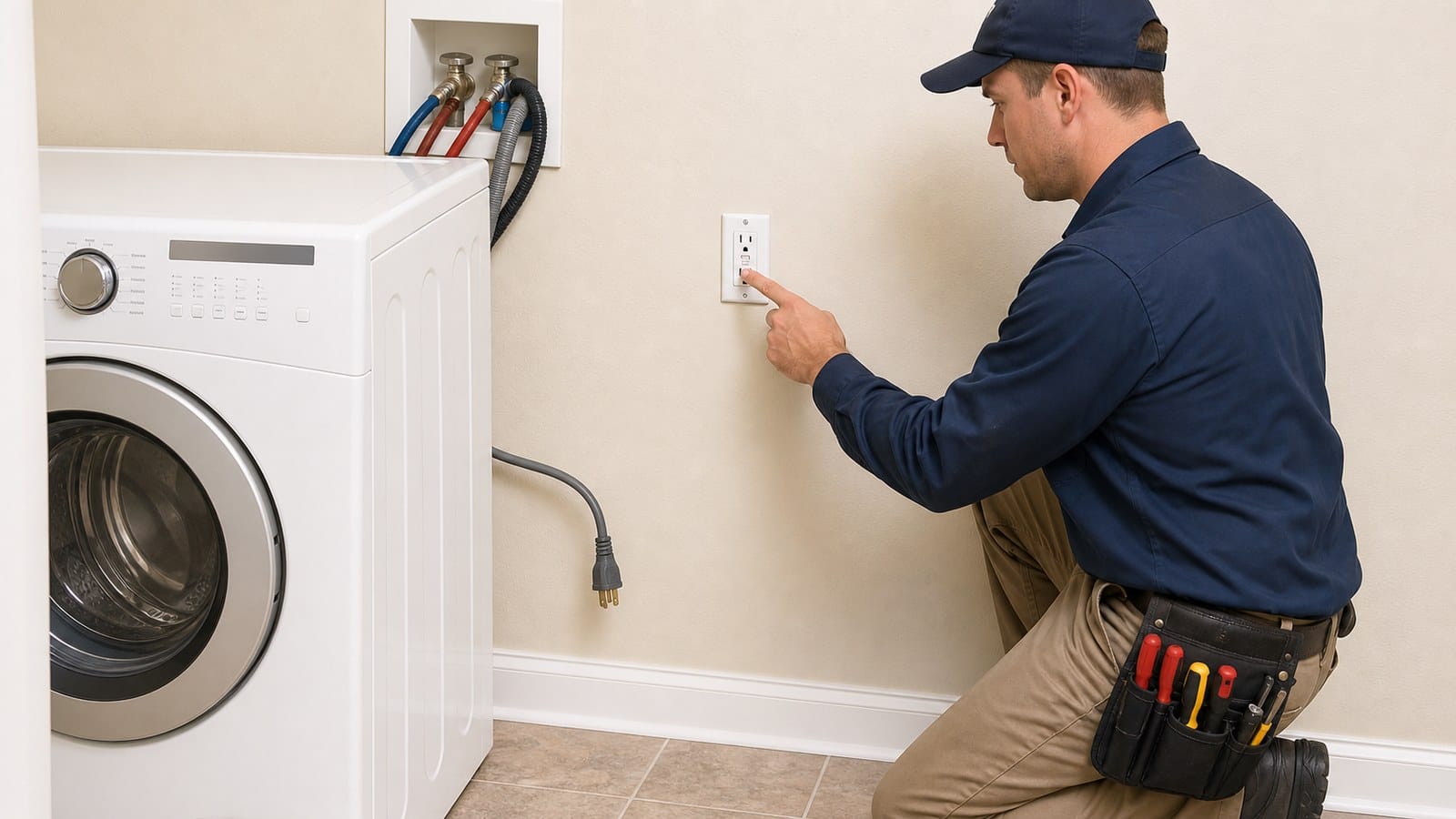
Why a Washing Machine Trips a GFCI
A GFCI does not measure total load in the same way as the branch-circuit breaker. It compares current in the ungrounded and grounded circuit conductors. If current is leaking through another path, the imbalance can trip the device even when the washer is not drawing enough current to trip the breaker.
1. Water leakage or condensation
A loose hose, leaking pump, failed seal, overflowing dispenser, or condensation can wet electrical parts, connectors, the receptacle box, or the floor. Stop using the washer if water is near energized equipment. Do not reach behind or under a wet appliance while it is connected to power.
2. Deteriorated motor or wiring insulation
Motor windings, harnesses, door-lock wiring, drain-pump wiring, and internal connectors experience heat and vibration. Insulation damage can let current reach the grounded metal cabinet. A GFCI may detect this before a normal breaker opens.
CPSC washer recalls have documented shock hazards caused by internal conductors contacting metal parts. One CPSC recall notice described a wire that could contact the metal washtub. The lesson is not that every washer has that defect; it is that an apparently normal appliance can develop an internal fault that should not be bypassed.
3. Drain pump, heater, or line filter fault
Some failures appear only during one part of the cycle. A washer that trips during drain may point toward the pump or wet lower cabinet. A trip during water heating can implicate the heater or related wiring. A trip as soon as the plug is inserted may involve the power cord, line filter, terminal block, or receptacle circuit.
Cycle timing is useful diagnostic information for a qualified appliance technician, but it is not permission for a homeowner to probe energized parts.
4. Moisture or damage in the receptacle circuit
The washer may be innocent. Loose terminals, a damaged cord, a neutral-to-ground connection downstream, water in the box, reversed LINE/LOAD conductors, or another device on the protected circuit can trip the GFCI.
If the GFCI trips with the washer unplugged, investigate the receptacle, downstream wiring, and other loads. A visible empty outlet does not prove that nothing else is connected to its LOAD terminals.
5. Cumulative leakage
Electronic appliances often contain filters that intentionally couple small high-frequency currents for electromagnetic compatibility. One properly operating appliance should be compatible with an appropriate listed GFCI, but several loads on one protected circuit can add leakage. This is another reason to keep the required laundry circuit focused on laundry loads.
6. Aging or damaged GFCI
GFCIs contain electronic and mechanical components. Heat, moisture, corrosion, loose connections, surges, and repeated operation can cause failure. A device that will not pass its integral TEST/RESET procedure, will not reset with the load removed, or shows heat or damage should be evaluated and replaced as appropriate.
Faith Electric’s article on common GFCI tripping causes covers downstream faults and moisture in more detail.
The 2026 NEC and High-Frequency-Rated GFCIs
Modern high-efficiency washing machines may use inverter drives and power-conversion electronics. These technologies can produce high-frequency differential currents that create interoperability problems with some GFCIs even when the ordinary 60 Hz leakage is not hazardous.
UL Solutions reports that the 2026 NEC recognizes an optional Class A GFCI marked “HF”. UL 943 Supplement SB adds an evaluation for immunity across a defined high-frequency range. Washing machines are among the appliance types UL identifies as using relevant power-conversion technology.
This does not mean every washer needs an HF-marked device, that every trip is an interoperability issue, or that an HF device can hide a true ground fault. Use the marking only as part of a listed, code-accepted solution after checking the appliance, wiring, installation instructions, device availability, and AHJ requirements.
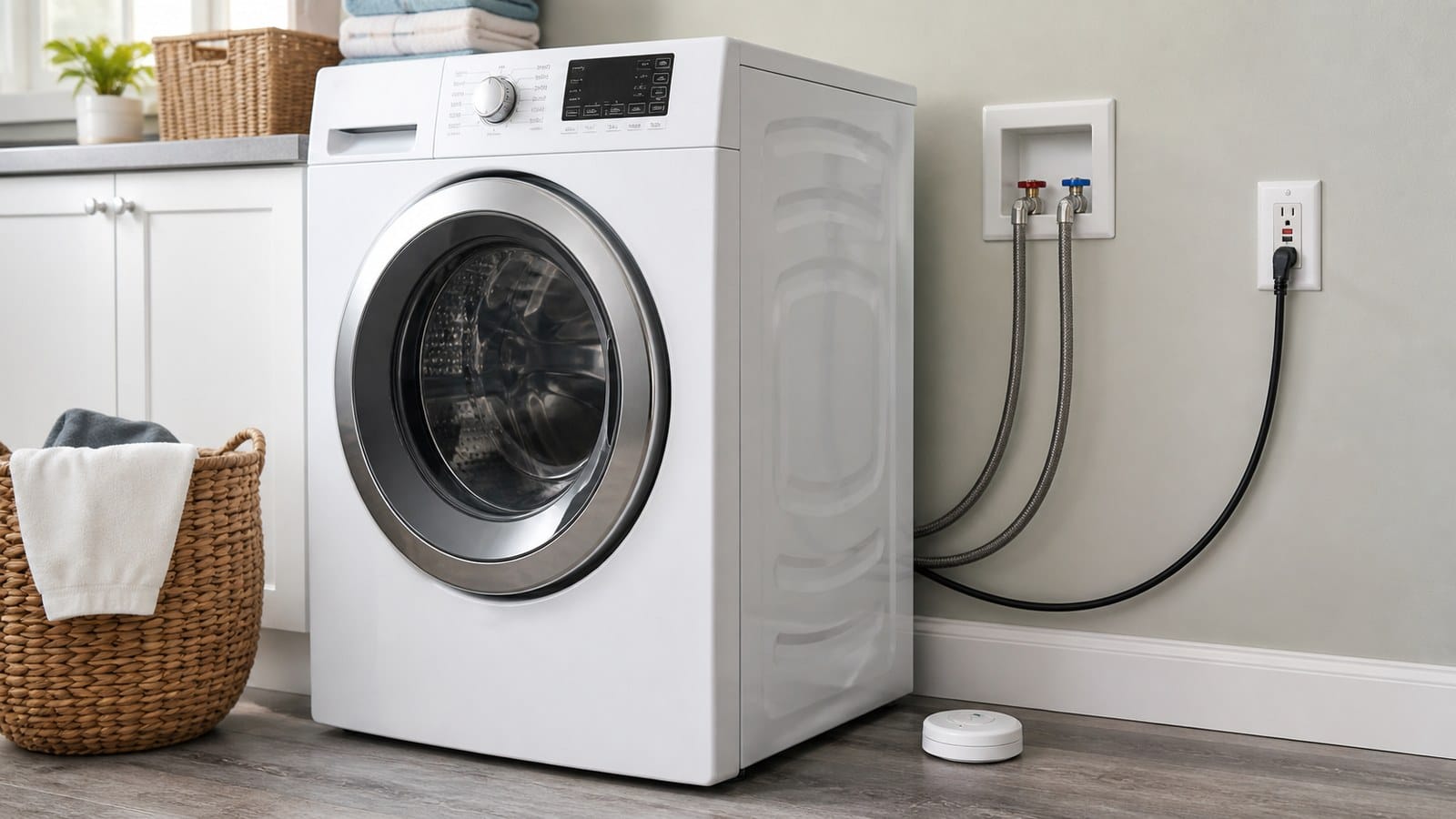
Safe Troubleshooting Sequence
- Stop if water or heat is present. If the floor, receptacle, plug, or appliance is wet—or if there is smoke, heat, arcing, or a burning smell—leave the equipment alone, open the circuit from a safe location, and call qualified help.
- Unplug the washer from a dry position. Do not pull the cord. Do not move the appliance while it is energized.
- Inspect without disassembly. Look for damaged cords, crushed plugs, loose hoses, water tracks, corrosion, or a hot/discolored receptacle.
- Test the GFCI with the washer disconnected. Follow the device manufacturer’s integral TEST/RESET instructions. If it will not reset or hold with the load removed, the circuit or GFCI needs electrical diagnosis.
- Identify downstream loads. Determine whether the GFCI protects another receptacle or appliance. Disconnect accessible loads before one controlled reset.
- Record when the trip occurs. At plug-in, fill, agitation, heating, spin, or drain timing can help a technician isolate the fault.
- Stop repeated resets. A second trip is enough reason to stop. Do not use an extension cord to reach an unprotected outlet as a permanent workaround.
- Choose the right professional. If the GFCI trips with no load, call an electrician. If the circuit tests correctly but the washer trips a known-good GFCI, contact a qualified appliance technician.
Buyer and Installer Checklist
- Verify the locally adopted NEC edition and amendments.
- Confirm a 20-amp laundry branch circuit and conductor size where required.
- Match device voltage, amperage, receptacle configuration, conductor range, and feed-through rating.
- Keep TEST/RESET controls readily accessible.
- Use a breaker listed for the exact panel if breaker protection is selected.
- Coordinate GFCI and AFCI requirements; avoid stacking devices without understanding the circuit.
- Require traceable NRTL certification for the exact model. UL Solutions describes the applicable UL 943 GFCI product categories.
- Specify auto-monitoring/self-test behavior for current receptacle GFCIs.
- Label downstream receptacles when one GFCI protects more than its own face.
- Follow washer and dryer installation instructions, including grounding, receptacle location, and clearance.
- Add a water-leak alarm or automatic shutoff where a hose failure could cause major damage; these controls complement GFCI protection rather than replace it.
Faith Electric has manufactured wiring devices since 1996. Project buyers should still validate the exact model’s listing, ratings, markings, and approved construction for the intended laundry application.
Frequently Asked Questions
Does a washer need GFCI if there is no sink?
Generally yes under recent NEC editions when the receptacle is in a dwelling-unit laundry area. The laundry-area requirement does not depend on a sink being present.
Can a washing machine share a GFCI with other outlets?
One GFCI can protect downstream receptacles when the circuit design permits it and LINE/LOAD wiring is correct. The required laundry branch circuit should not be used for unrelated outlets, and excessive grouping can make trips harder to diagnose.
Should I use a 15-amp or 20-amp GFCI receptacle?
Match the receptacle configuration to the 20-amp laundry circuit and NEC receptacle-rating rules. A 20-amp breaker does not automatically require a T-slot at every duplex receptacle, but a 20-amp single receptacle and equipment with a 20-amp plug require appropriate configurations.
Why does the washer trip the GFCI during spin?
Vibration may disturb damaged wiring, or motor/drive leakage may appear under load. Water can also move inside the cabinet. Stop repeated resets and have the appliance and circuit tested.
Will a larger GFCI stop the tripping?
Changing from a 15-amp face to a 20-amp face does not raise the personnel-protection trip threshold and does not repair a ground fault. Device and circuit ratings must match, but unexplained leakage still requires diagnosis.
Is an HF GFCI a cure for every modern washer trip?
No. HF marking addresses defined high-frequency interoperability conditions. It should not be used to dismiss moisture, insulation failure, damaged wiring, or a defective appliance.
Bottom Line
A washing-machine receptacle in a dwelling-unit laundry area generally needs GFCI protection under recent U.S. codes, even without a nearby sink. Choose the protection method based on accessibility, panel compatibility, circuit requirements, and the other laundry loads. If the washer trips the GFCI, preserve the safety protection and find the cause instead of moving the plug to an unprotected circuit.
This article provides general U.S. educational information, not project-specific engineering, appliance repair, or legal advice. The adopted code, local amendments, manufacturer instructions, approved plans, and AHJ decision control each installation. Electrical and internal appliance work should be performed by qualified persons.