Short answer: A commercial occupancy does not make every receptacle a GFCI location. The answer comes from the locally adopted electrical code, the actual room or equipment location, and the circuit rating. In the 2023 edition of NFPA 70, Section 210.8(B) addresses receptacles in other-than-dwelling locations such as bathrooms, kitchens, rooftops, outdoors, garages and service bays, damp or wet areas, and laundry areas. The adopted edition, local amendments, project documents, equipment instructions, and the authority having jurisdiction (AHJ) control the installation.
That still leaves a buyer with practical work to do. “Commercial GFCI outlet” is not a complete purchase description. It says nothing about circuit voltage, phase, protected loads, receptacle versus breaker protection, WR or TR construction, enclosure selection, or where maintenance staff will reset a trip.
Research and review method: Faith Editorial Team checked the 2023 edition of NFPA 70 through NFPA LiNK, the formal NFPA 70 document page, OSHA construction-wiring rules, UL Solutions guidance for UL 943 Class A GFCIs, and the cited Faith product-procurement pages. No licensed-electrician or AHJ review is claimed. Readers should verify the edition adopted for the project location.
Quick answer: where commercial GFCI protection is commonly required
NFPA LiNK provides the formal 2023 edition of NFPA 70. Section 210.8(B), “Other Than Dwelling Units,” is the starting point for the location review below. Use the edition and amendments adopted where the project is located; a newer model-code edition is not automatically the enforceable rule.
| Location category | Typical commercial examples | Procurement question |
|---|---|---|
| Bathrooms | Office, retail, school, hotel, restaurant, and public restrooms | Are all receptacles in the room within the rule’s electrical limits protected? |
| Kitchens | Restaurant, employee, school, institutional, and hospitality kitchens | Does the schedule cover every qualifying receptacle rather than only receptacles near a sink? |
| Food and beverage preparation areas | Coffee bars, break rooms, beverage counters, and food-prep rooms | Does the area have permanent provisions for preparation or cooking? |
| Buffet serving areas | Heated serving lines, beverage stations, and food-service counters | Has the serving area been reviewed under the adopted edition? |
| Rooftops and outdoors | HVAC service receptacles, exterior maintenance outlets, patios, and loading areas | Are the enclosure, cover, and environmental ratings specified separately from GFCI? |
| Sinks | Laboratories, utility rooms, salons, workshops, and service counters | Is the receptacle or a supplied fixed appliance within the measured 6-foot zone? |
| Indoor damp or wet locations | Wash-down rooms, pool support rooms, and wet process areas | Is the location classification documented on the drawings? |
| Locker rooms with showers | Fitness centers, schools, and industrial changing areas | Are receptacles in the locker room included in the protection schedule? |
| Garages, service bays, and similar areas | Fleet garages, repair shops, maintenance bays, and accessory buildings | Are showrooms correctly distinguished from service areas? |
| Crawl spaces and unfinished basements | Utility access and equipment spaces | Are below-grade and unfinished areas included? |
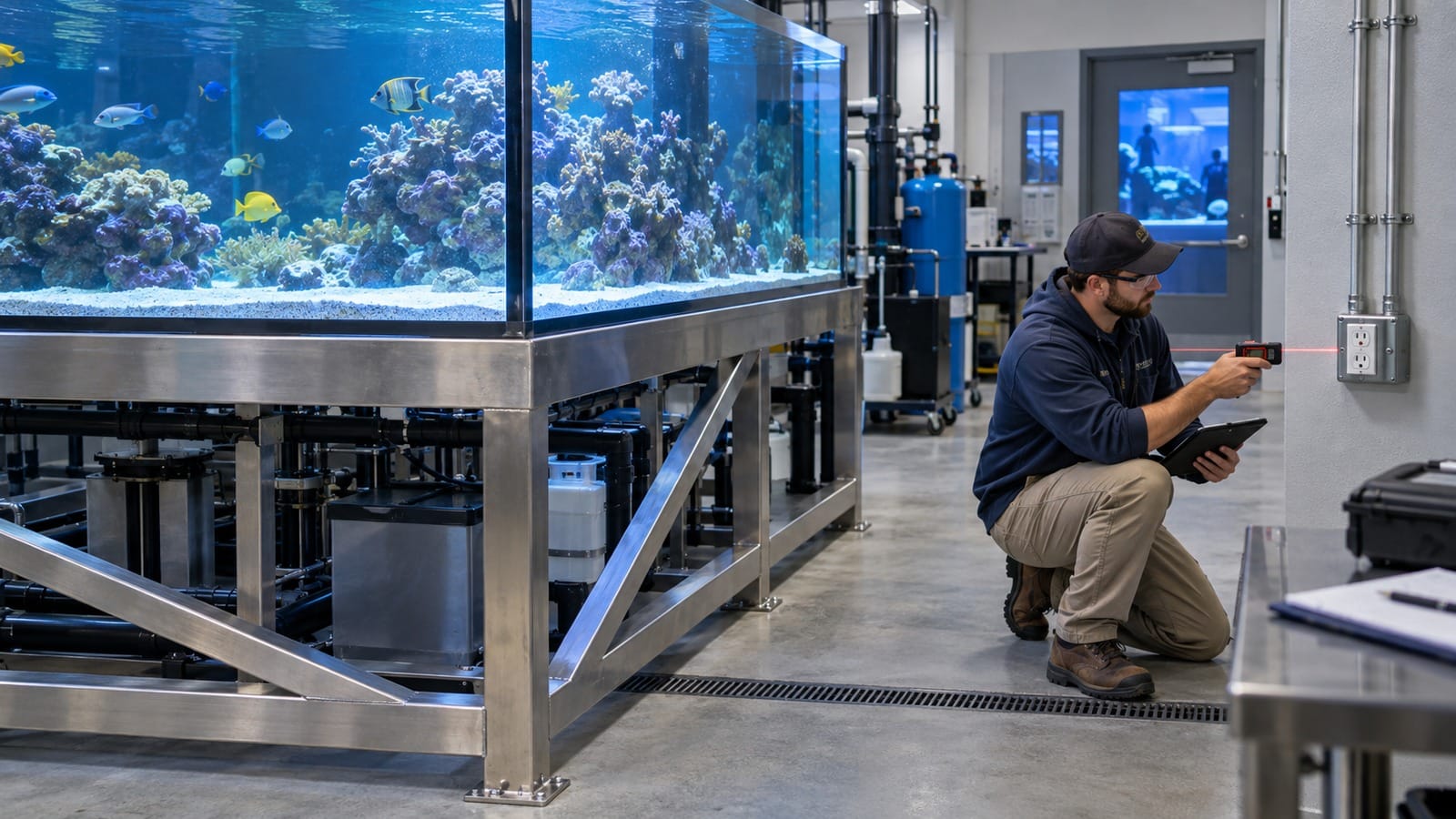
| Aquariums and similar vessels | Pet stores, exhibits, seafood displays, and research tanks | Is the 6-foot measurement taken from the rim or conductive support framing? |
| Laundry areas | Hotels, healthcare support areas, laundromats, and staff facilities | Are receptacles serving laundry equipment and general use covered? |
| Bathtubs and shower stalls | Hospitality, healthcare, athletic, and spa support spaces | Are receptacles within the applicable 6-foot zone protected? |
This table is a planning aid, not a substitute for the adopted code text. The scope, exceptions, definitions, and measurement method all matter.
The electrical ratings matter as much as the room name
The 2023 wording in NFPA 70 Section 210.8(B) is broader than the old shorthand “125-volt, 15- and 20-amp receptacles near water.” Its scope includes:
- single-phase receptacles from 125 through 250 volts, supplied by branch circuits rated 150 volts or less to ground and 50 amperes or less; and
- three-phase receptacles supplied by branch circuits rated 150 volts or less to ground and 100 amperes or less.
Do not convert that wording into a blanket purchase rule without checking the adopted edition. Many jurisdictions are still enforcing an earlier NEC, and some have state or local amendments. A project may also specify protection beyond the code minimum.
The buyer’s schedule should therefore include at least voltage, phase, branch-circuit rating, receptacle configuration, location, load description, GFCI method, environmental rating, and accessibility requirement. Room names alone are not enough.
Bathrooms: protection is required even when the receptacle is optional
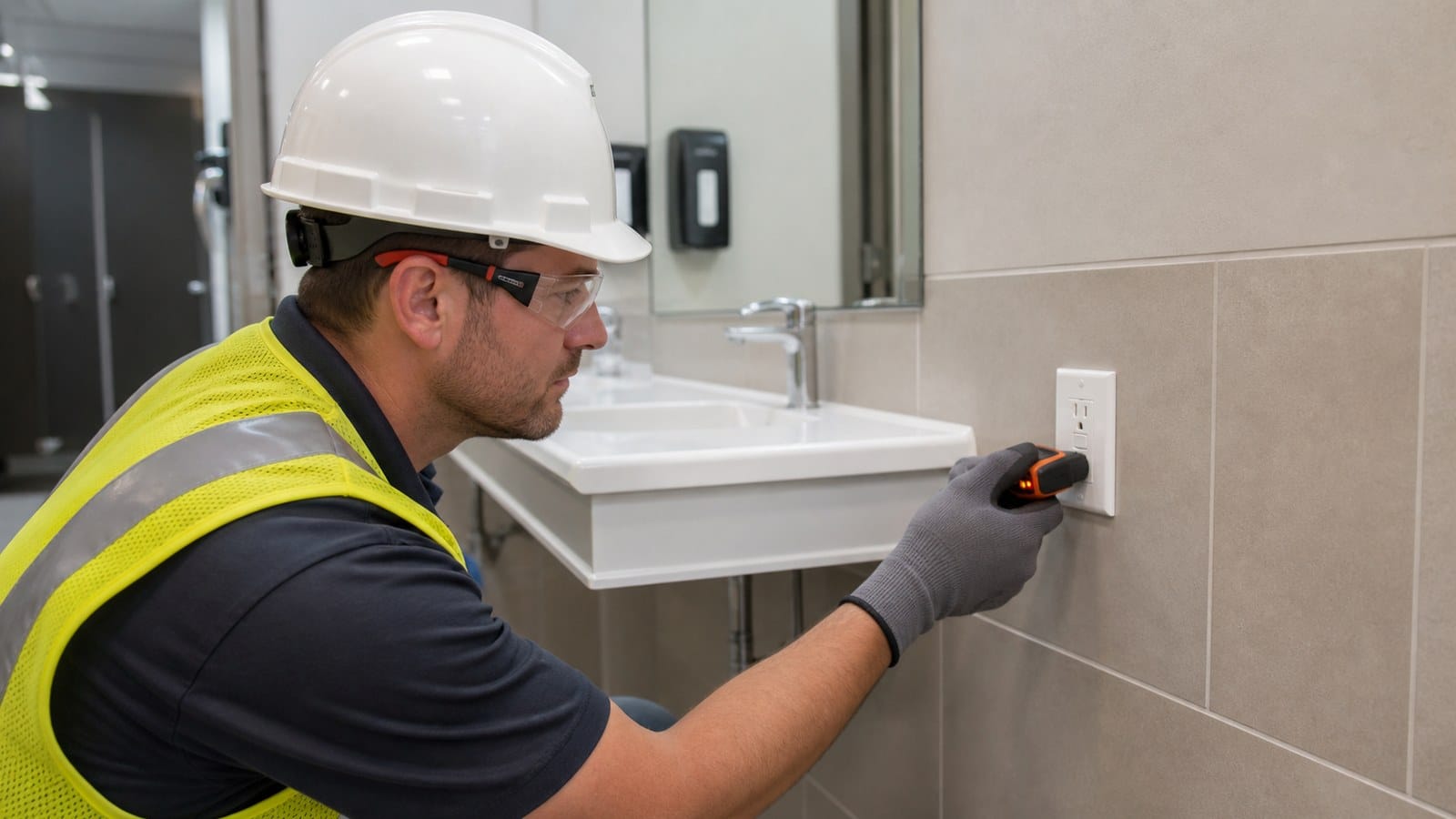
A common misunderstanding is that a commercial bathroom must contain the same receptacle layout as a dwelling bathroom. The NEC may not require a convenience receptacle in every non-dwelling bathroom, but when a qualifying receptacle is installed in the bathroom, the GFCI rule applies.
For specifications, identify hand-dryer service outlets, janitorial equipment connections, mirror or counter receptacles, and receptacles inside cabinetry. Do not hide a receptacle-type GFCI behind a fixed vanity panel where staff cannot test or reset it.
The commercial drawing still needs its own device schedule because equipment, accessibility, and occupancy differ from a dwelling bathroom.
Commercial kitchens and preparation areas
Commercial kitchens deserve a separate circuit-by-circuit review. Under the modern framework, protection is not limited to receptacles within 6 feet of the sink. Qualifying receptacles in the kitchen are covered because of the kitchen location itself. The 2023 edition also added or clarified related food and beverage preparation and buffet-serving areas.
Build the schedule from the equipment plan rather than from a generic wall-outlet count. Typical loads include:
- refrigerators, freezers, ice machines, and beverage equipment;
- mixers, slicers, warmers, cooking appliances, and countertop equipment;
- dishwashing and sanitation equipment;
- receptacles under counters or behind movable appliances;
- cleaning and maintenance receptacles; and
- dedicated receptacles that may not be visible after equipment placement.
Whether the protective function is at the receptacle, an upstream device, or a breaker, the test and reset location should be readily accessible. Do not assume staff can move a refrigerator, remove a stainless-steel panel, or enter an electrical room every time a device trips.
Sinks, fixed appliances, and the 6-foot measurement
In non-dwelling occupancies, the sink rule can reach more than a convenience outlet beside the basin. The 2023 language includes qualifying receptacles and receptacle-supplied fixed or stationary appliances where the receptacle or appliance is within 6 feet of the top inside edge of the sink bowl.
That can affect laboratories, salons, dental support rooms, break areas, utility rooms, workshops, and beverage counters. Measure the path as required by the adopted code; do not measure through walls, doors, or fixed barriers when the code directs the path a cord would follow.
The equipment schedule should record both the receptacle location and the appliance location. A receptacle outside the 6-foot radius does not automatically avoid the rule if the supplied stationary appliance is inside the relevant zone under the adopted edition.
Rooftops, outdoors, and service receptacles
GFCI protection, weather resistance, and enclosure suitability solve different problems:
- Class A GFCI protection addresses electric-shock risk from ground-fault current.
- WR receptacle construction improves resistance to outdoor environmental exposure where required.
- A suitable enclosure and cover limit water and debris entry when correctly installed.
- Overcurrent protection protects conductors and equipment from overloads and short circuits.
A rooftop service receptacle may be allowed to have different accessibility treatment than an indoor GFCI device, depending on the exact rule and edition. That is not permission to conceal the test and reset function. Document how maintenance staff will reach and identify every protective device.
Use Faith’s weather-resistant vs. tamper-resistant GFCI guide when the bill of materials needs separate WR and TR decisions.
Garages, service bays, and similar work areas
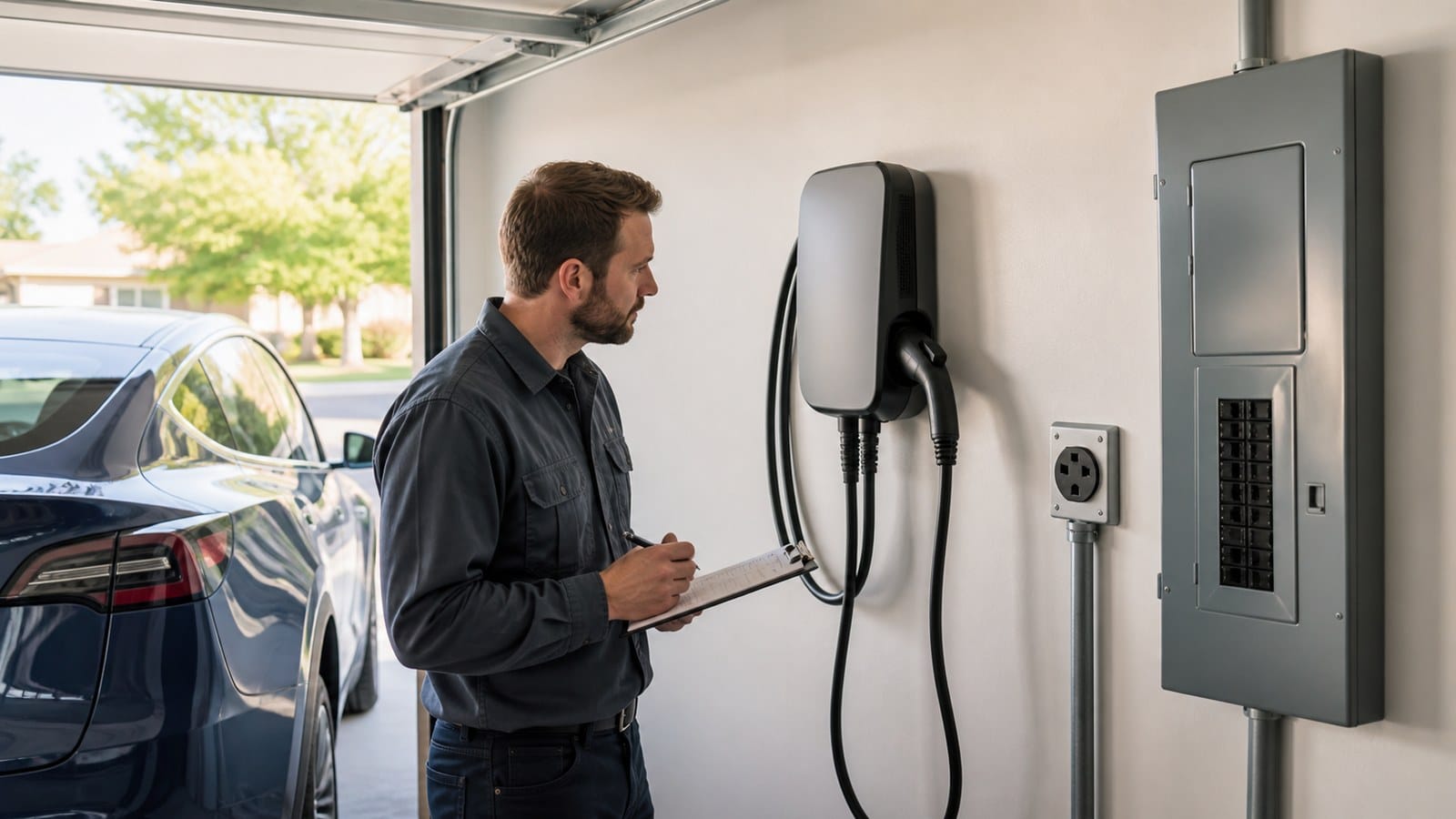
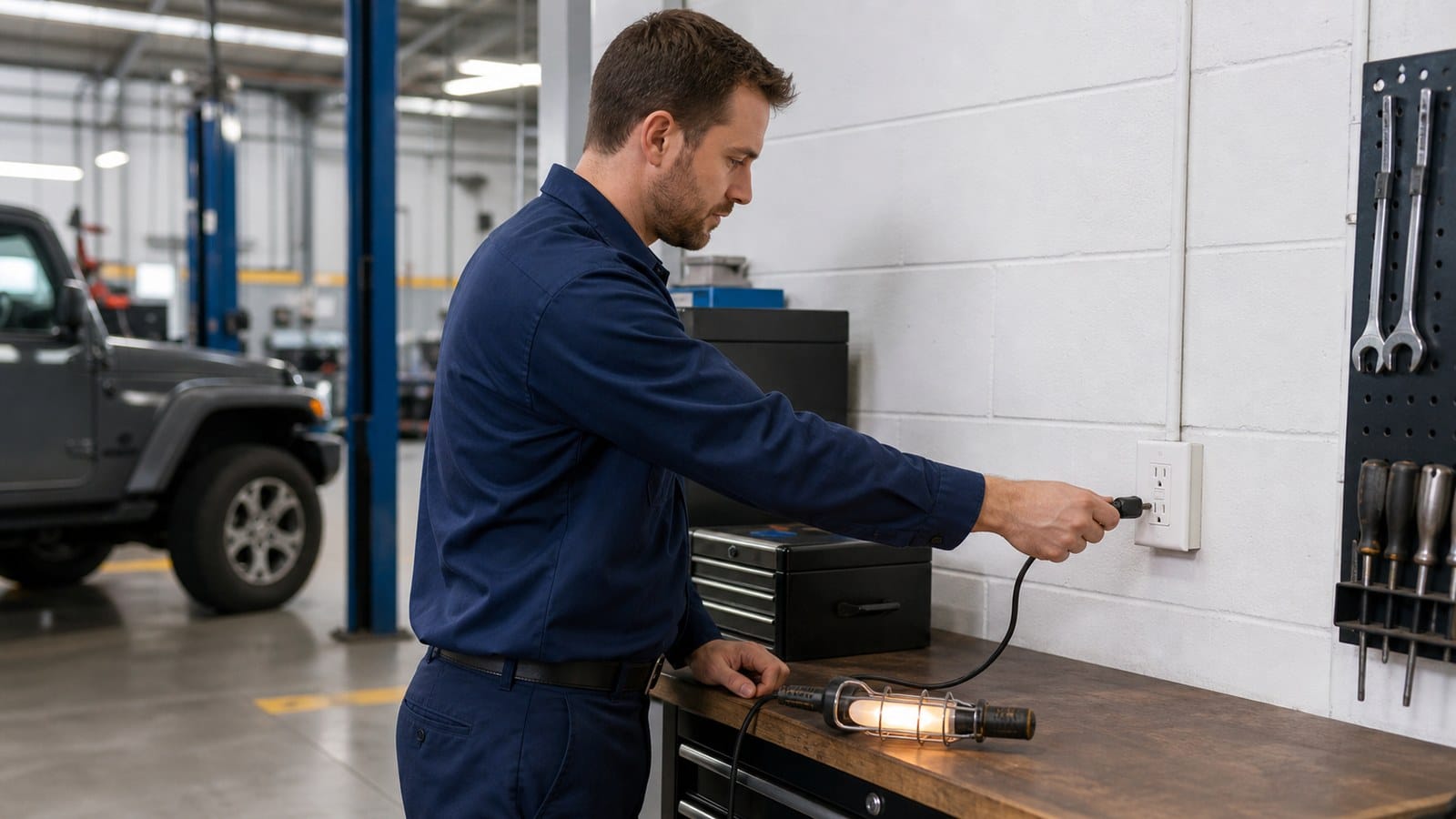
Commercial garages and service bays combine conductive floors, vehicles, cord-connected tools, chargers, wash-down activity, and damaged-cord risk. The modern rule covers qualifying receptacles in garages, accessory buildings, service bays, and similar areas, while distinguishing vehicle exhibition halls and showrooms.
Do not classify an entire dealership as one room type. A polished showroom, a delivery bay, a repair stall, a wash area, and an exterior vehicle-preparation area can have different conditions and code treatment. Mark the boundaries on the electrical drawings and tie each receptacle to a location code.
Receptacle GFCI or circuit-breaker GFCI?
Both methods can provide the required function when the complete equipment and installation are listed, correctly rated, and permitted by the adopted code. The choice is an operations decision as well as an electrical decision.
| Selection factor | Receptacle-type GFCI | GFCI circuit breaker |
|---|---|---|
| Reset location | At the point of use or an upstream accessible outlet | At the panel |
| Protected scope | Device plus properly connected load-side outlets | Entire branch circuit |
| Troubleshooting | Local indication can make the affected area easier to identify | One device centralizes protection but may interrupt more loads |
| Space | Requires a compatible box and device depth | Requires a compatible panel and breaker position |
| Environmental exposure | Device and cover must suit the location | Panel can be remote while field receptacles still need environmental ratings |
| Maintenance | Individual devices may be easier to isolate | Central testing can support documented facility maintenance |
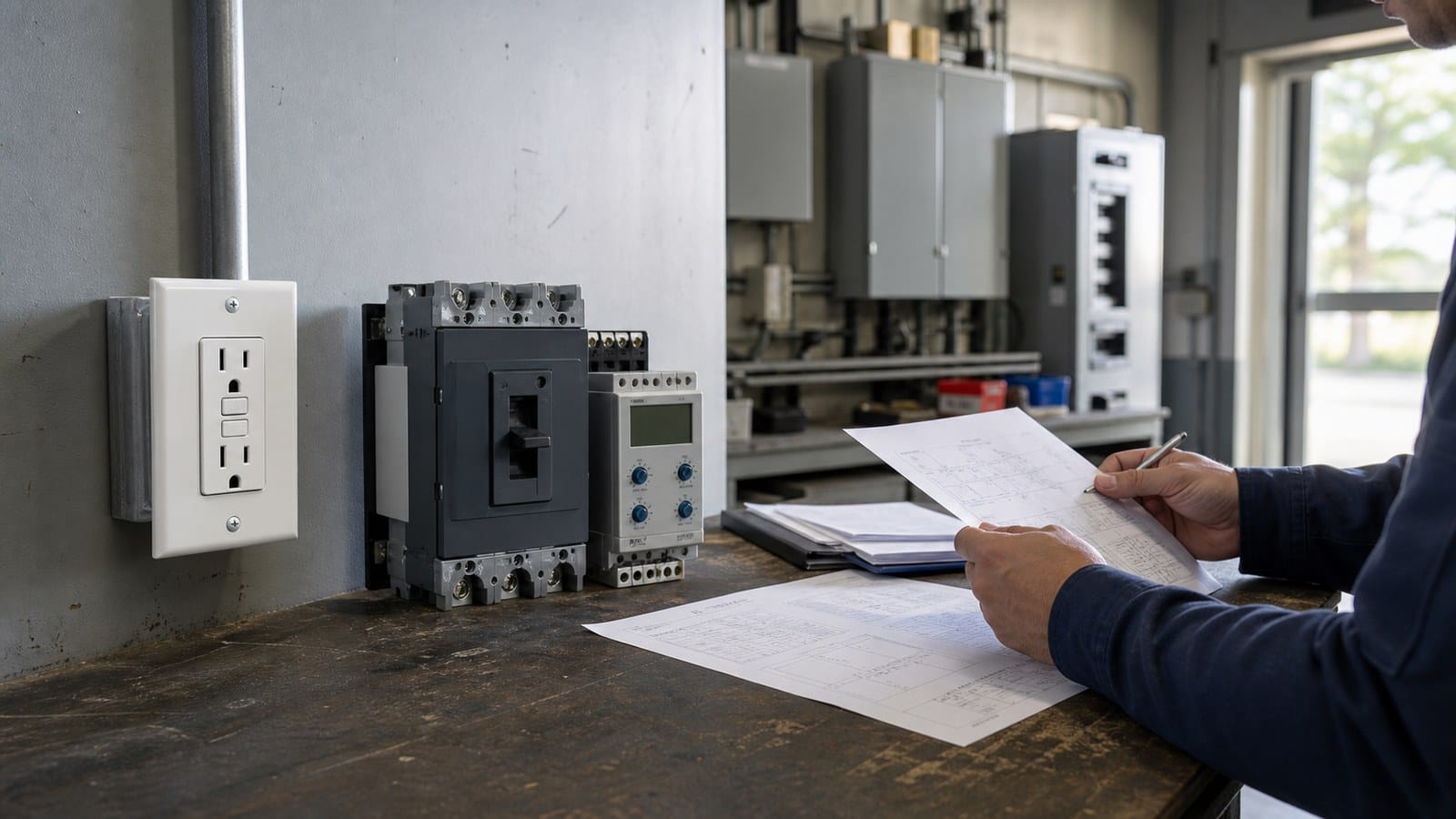
Faith’s GFCI receptacle vs. GFCI circuit breaker comparison covers the tradeoffs. For either method, define the protection boundary. Staff should not have to guess which upstream device protects a remote receptacle.
What “listed Class A GFCI” means for procurement
The protective function must come from equipment evaluated for the intended use, not from an unverified claim on a faceplate or package. UL Solutions identifies UL 943 as the principal standard for Class A GFCI devices and describes receptacle, portable, and circuit-breaker types.
For a purchase specification, request:
- the exact model number and electrical rating;
- the certification organization and listing file information that applies to that model;
- the device category and applicable standard;
- self-test or auto-monitoring behavior and end-of-life indication;
- line/load terminal arrangement and installation instructions;
- WR, TR, hospital-grade, or other markings only where required;
- color, face, terminal, and packaging configuration approved before production; and
- traceability between the approved sample, certification record, and shipped product.
Faith has manufactured wiring devices since 1996. For private-label work, the buyer should still verify the exact listed configuration and approved markings instead of assuming that certification for one model automatically covers every color, rating, or label variation. Faith’s private-label GFCI checklist explains this control process.
A model-verification workflow buyers can put in the PO file
For each quoted model, create one approval row and do not release it until every field points to the same product:
| Field to freeze | Evidence to retain | Release check |
|---|---|---|
| Manufacturer model and buyer SKU | Quotation, data sheet, device marking artwork | Both identifiers map to one listed construction |
| Rating and configuration | Device face/back marking, NEMA configuration, feed-through rating | Markings match the circuit schedule and sample |
| Certification identity | Current NRTL directory entry or file, product category, covered model | The exact model and production site are within the current record |
| Safety options | TR, WR, self-test, indicator logic, failure behavior | Package claims and instructions match the ordered variant |
| Terminals and installation | Conductor range, terminal type, torque data, box-depth requirement | Installer instructions match the physical sample |
| Packaging traceability | Revision, date/lot code, barcode, carton mark | Shipped units can be tied back to the approved set |
This is a document-control check, not a substitute for certification-body approval. It prevents a familiar sourcing failure: the sample, listing record, box, and purchase order describing four slightly different products.
OSHA construction rules are a separate layer
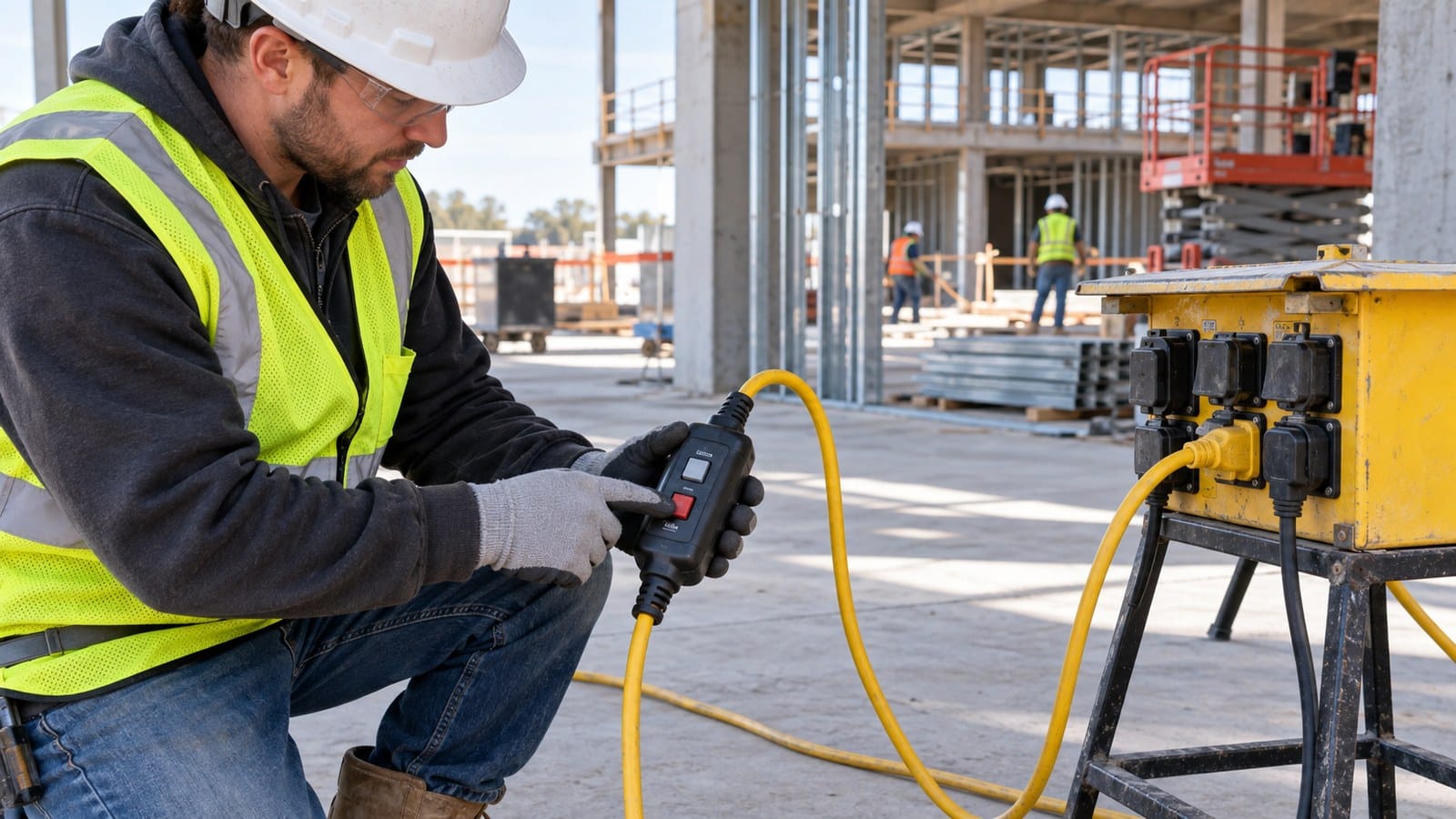
Permanent-building requirements and temporary construction-site protection should not be mixed into one note. OSHA 29 CFR 1926.404 requires approved personnel-protection GFCIs for specified 120-volt, single-phase, 15- and 20-amp receptacle outlets on construction sites that are not part of the permanent wiring and are used by employees, unless the employer uses the permitted assured equipment grounding conductor program.
OSHA’s construction GFCI eTool also distinguishes receptacle, portable, and cord-connected GFCI types. These jobsite rules do not replace the permanent-building NEC design. A project can need both temporary protection during construction and compliant permanent protection at turnover.
A 15-point commercial GFCI buyer checklist
Use this checklist before releasing a quotation or purchase order:
- Record the state and local code edition adopted for the project.
- Obtain the engineer’s receptacle and equipment schedules.
- Classify each location: bathroom, kitchen, rooftop, outdoors, sink zone, damp/wet area, garage, laundry, or another listed condition.
- Record voltage, phase, amperage, and voltage to ground.
- Identify fixed and stationary appliances associated with each receptacle.
- Confirm the Class A GFCI method: receptacle, breaker, upstream device, or listed assembly.
- Map the exact downstream protection boundary.
- Keep TEST and RESET controls readily accessible.
- Specify WR, TR, hospital-grade, and enclosure ratings separately.
- Verify box depth, conductor range, terminal method, faceplate, and mounting.
- Match breaker and panel compatibility where breaker protection is used.
- Verify listing information for the exact model and private-label configuration.
- Approve markings, instructions, packaging, and traceability records.
- Define commissioning tests and the turnover documentation.
- Establish a facility testing, replacement, and incident-response procedure.
Common specification mistakes
- Writing “GFCI where required” without a location and circuit schedule.
- Applying dwelling-unit rules to a commercial occupancy without checking 210.8(B).
- Using the old 15/20-amp, 125-volt shorthand for a newer adopted edition.
- Protecting only receptacles near sinks in a commercial kitchen.
- Treating WR, TR, hospital-grade, and GFCI as interchangeable markings.
- Hiding a receptacle GFCI behind fixed equipment or a locked panel.
- Connecting several critical loads to one protective device without documenting the interruption scope.
- Assuming a certification mark on one sample covers every private-label variation.
- Removing GFCI protection after a trip instead of diagnosing leakage, moisture, wiring, or load problems.
FAQ
Does every outlet in a commercial building need GFCI protection?
No. The requirement depends on location, voltage, phase, branch-circuit rating, equipment, the adopted code edition, and project rules. Bathrooms, kitchens, rooftops, outdoors, sink zones, damp or wet locations, garages, and other listed areas receive special treatment.
Do commercial bathroom receptacles need GFCI protection?
Qualifying receptacles installed in a commercial bathroom need GFCI protection under the modern other-than-dwelling framework, even though the code may not require the same bathroom receptacle layout used in a dwelling.
Are all commercial kitchen receptacles protected?
Under the modern framework, qualifying receptacles in the kitchen location are covered, not only those near sinks. Confirm the adopted edition and related equipment rules.
Can one upstream GFCI protect several commercial receptacles?
Potentially, when the device is listed and rated for the application, line/load wiring is correct, the protected scope is documented, and the arrangement meets the adopted code and operational requirements. Avoid one trip interrupting unrelated critical loads without a deliberate design decision.
Is a GFCI receptacle the same as a weather-resistant receptacle?
No. GFCI is a protective function; WR is a construction rating for environmental exposure. An outdoor installation may require both, plus a suitable enclosure and cover.
Do existing commercial buildings have to be upgraded immediately?
Not necessarily. Existing-installation treatment depends on local law, the adopted code, alterations, equipment replacement, occupancy changes, receptacle replacement rules, and AHJ interpretation. Do not assume either automatic grandfathering or automatic full retrofit.
Does OSHA’s construction GFCI rule apply after the building opens?
OSHA’s construction rule addresses specified temporary jobsite receptacles used by employees. Permanent-building design follows the applicable adopted electrical code and other occupational rules. The two layers should be documented separately.
Before you release the order
Pick one real circuit from the project and audit it end to end. The schedule should name the location, voltage, phase, amperage, load, protection method, reset point, environmental rating, exact device model, and listing evidence. If the team cannot complete those fields for one circuit, “GFCI where required” is still doing too much work.
Once the sample row is correct, apply the same control to the rest of the schedule. That gives the contractor, inspector, facility team, and supplier one description of the installed protection instead of four assumptions.
Sources / References
Accessed August 11, 2026.
- NFPA 70, National Electrical Code, 2023 edition, Section 210.8(B), via NFPA LiNK
- NFPA 70 formal document and product page
- OSHA 29 CFR 1926.404 – Wiring design and protection
- OSHA Construction eTool – Ground-Fault Circuit Interrupters
- UL Solutions – GFCI personal protection devices testing and certification under UL 943
- Faith Electric – Private-label GFCI model, marking, packaging, and approval checklist
- Faith Electric – About Faith, including the documented 1996 start
This article provides general U.S. product-selection and code-planning information. It is not a substitute for the locally adopted electrical code, sealed project documents, manufacturer instructions, OSHA compliance advice, or approval by the AHJ. Electrical installation and testing should be performed by qualified persons.