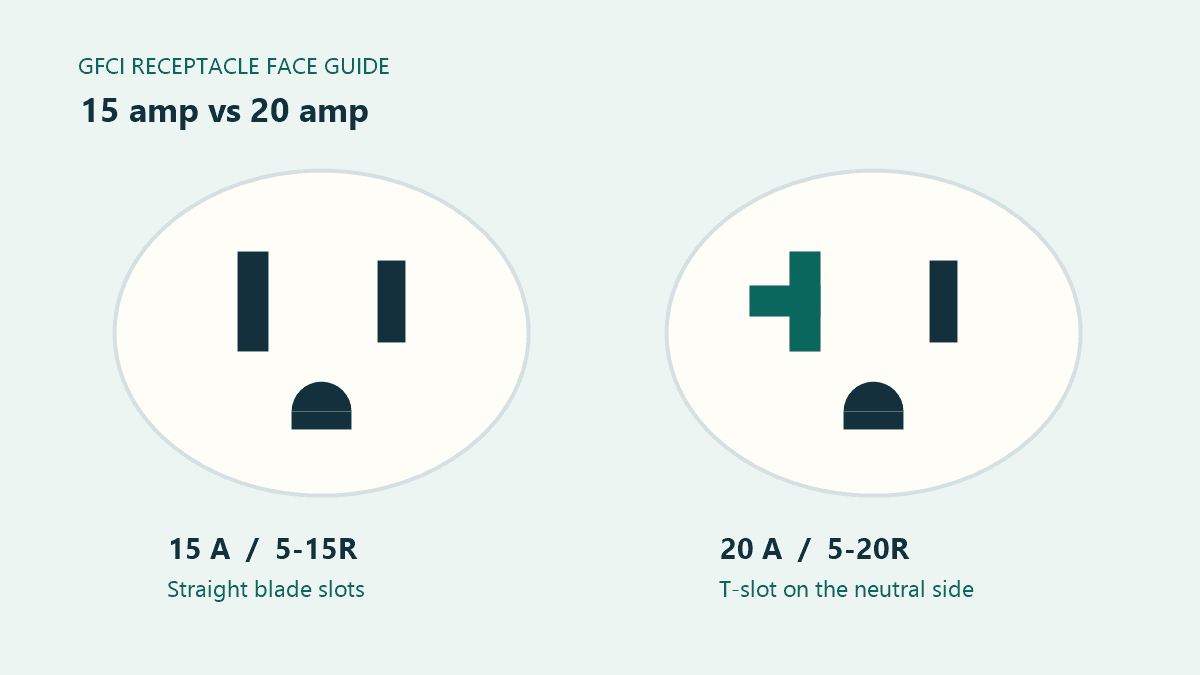
By Faith
A missing equipment ground can explain why a GFCI’s TEST button works while a plug-in tester fails to trip it. IDEAL documents this limitation for its 61-051 tester on two-wire circuits. Start with the built-in test and the tester’s wiring indication. An unexplained mismatch on a circuit believed to be grounded needs an electrician’s investigation. IDEAL 61-051 instructions
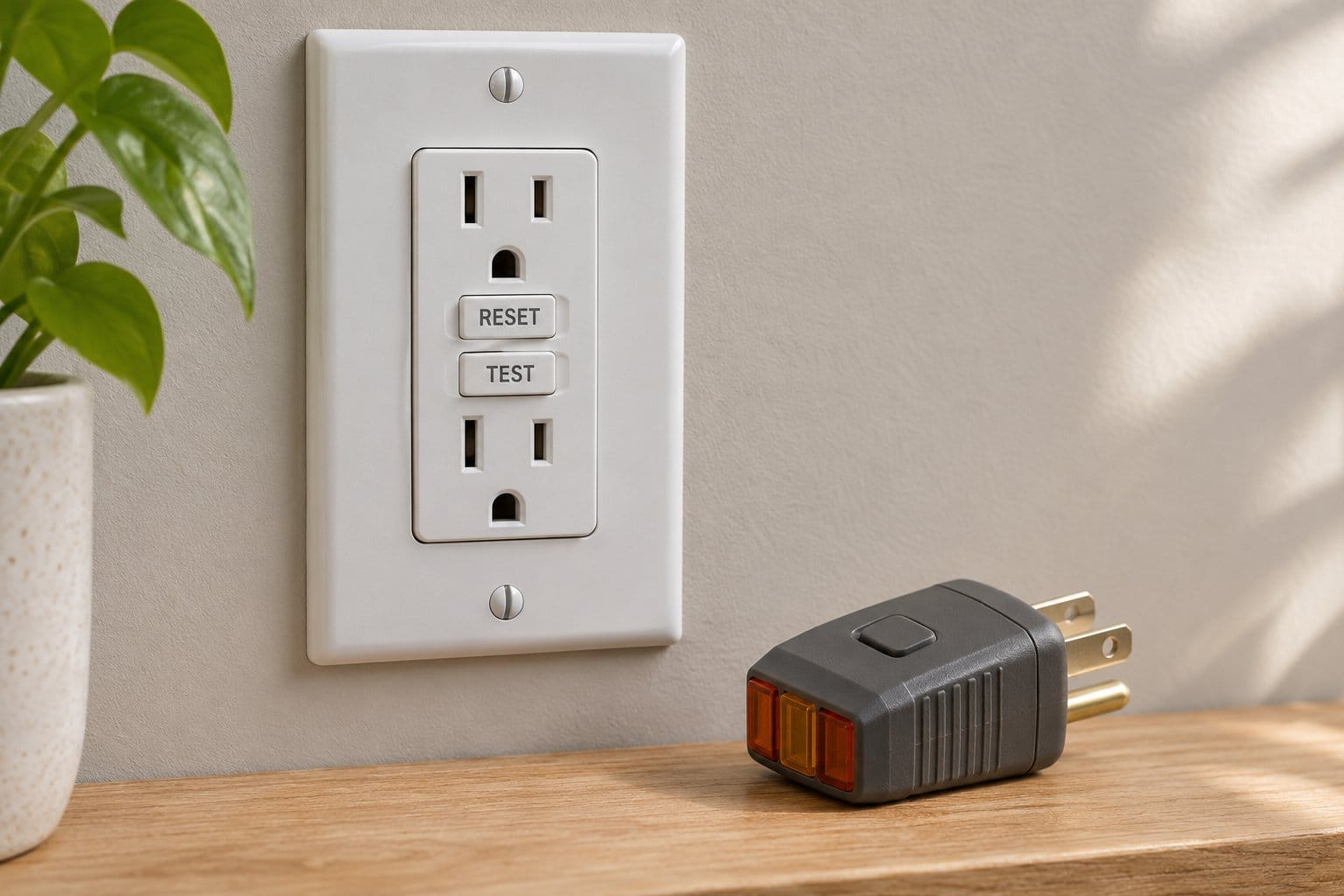
AI-generated illustration of the two devices. It shows no measured test result.
Why won’t a plug-in GFCI tester trip the outlet?
A GFCI detects a difference between outgoing and returning current. That function can operate on an older two-wire circuit. The CPSC describes GFCI replacements for ungrounded receptacles with labels identifying the ungrounded condition. The three-slot face alone cannot establish a grounding path. CPSC GFCI fact sheet
The external tester has its own operating requirements. IDEAL directs users who encounter this two-wire limitation to recheck with the GFCI’s built-in controls. For replacement options and grounding limits, see Faith’s guide to GFCI outlets without a ground wire. IDEAL 61-051 instructions · GFCI outlets without a ground wire
First, check what the GFCI’s own TEST button does
Plan for the test to cut power to connected equipment, including any outlets protected downstream. Follow the GFCI manufacturer’s instructions. Keep checks to accessible controls on dry, undamaged equipment. Leave a wet, scorched or damaged device to a qualified electrician.
The CPSC’s user test uses a plugged-in lamp switched on. Press the GFCI’s TEST button and check that the lamp goes out. Then use RESET as directed and check that it comes back on. If TEST leaves it lit, have an electrician check the installation and device. Observe the power interruption along with any click. CPSC GFCI fact sheet
Now compare that observation with the tester result.
The lamp goes out, but the tester reports open ground
On a two-wire circuit without an equipment ground, IDEAL warns that this tester may falsely indicate a GFCI failure. An open-ground reading alone cannot distinguish an older circuit built without an equipment-grounding conductor from a grounding fault. If the circuit history is unknown, ask a qualified electrician to identify the condition and check the required labels. IDEAL 61-051 instructions
The lamp goes out, and the tester reports correct wiring
Check the tester model, rating and operating sequence. For its RT210, Klein requires verifying the tester on a known live, correctly wired receptacle before use and unplugging appliances or equipment on the circuit under test to reduce misleading readings. Its GFCI check uses the device’s own TEST button first, RESET next, then the RT210’s button held for seven seconds. Follow the exact tester manual for its sequence and duty cycle.
If the prescribed external test still fails, arrange a qualified electrician’s check. Klein directs users to an electrician for an unsuccessful trip test because the installation or GFCI may be at fault. Save the exact indicator pattern for that visit. Klein RT210 instructions
The GFCI’s TEST button leaves the lamp on
Stop using the affected receptacle and have the GFCI and installation checked. CPSC identifies this result as a device or installation problem. The absence of an equipment ground cannot be used to dismiss a failed built-in test. CPSC GFCI fact sheet
What if the tester is plugged into a downstream outlet?
A plain outlet may receive GFCI protection from another receptacle. Start by locating the device believed to protect it. Leviton’s installation instructions use a lamp or radio at surrounding receptacles to identify which lose power when the GFCI’s TEST button is pressed.
For example, the GFCI is in a bathroom and the tester is in a nearby plain outlet. Put a working lamp in the plain outlet, then operate the identified GFCI’s TEST button. If the lamp stays on while power at the GFCI face stops, that test has not established protection for the plain outlet. Have the installer trace its supply. Physical proximity cannot establish the electrical connection.
If the lamp goes out, record which GFCI operated and where it resets. Follow the device instructions for the full check and any required labels. The LINE/LOAD arrangement determines which outlets a receptacle GFCI can protect. Leviton installation and downstream-test instructions · Faith’s LINE and LOAD guide
What does a “correct” tester indication establish?
Read it within the tester’s stated limits. Klein lists ground quality, combinations of defects and reversal of grounded and grounding conductors among the conditions its RT210 does not indicate. Its lights are a check for specified common faults. An unexplained disagreement between the tester and the GFCI still needs investigation. Klein RT210 instructions
For a service visit, provide the tester model, GFCI model if available without removing it, outlet location, indicator pattern, built-in TEST result and the locations that lost power. Those details let the electrician reproduce the problem. Continue routine testing at the interval in the GFCI instructions. Faith’s regular testing guide covers the basic lamp-and-button check. How to test a GFCI outlet