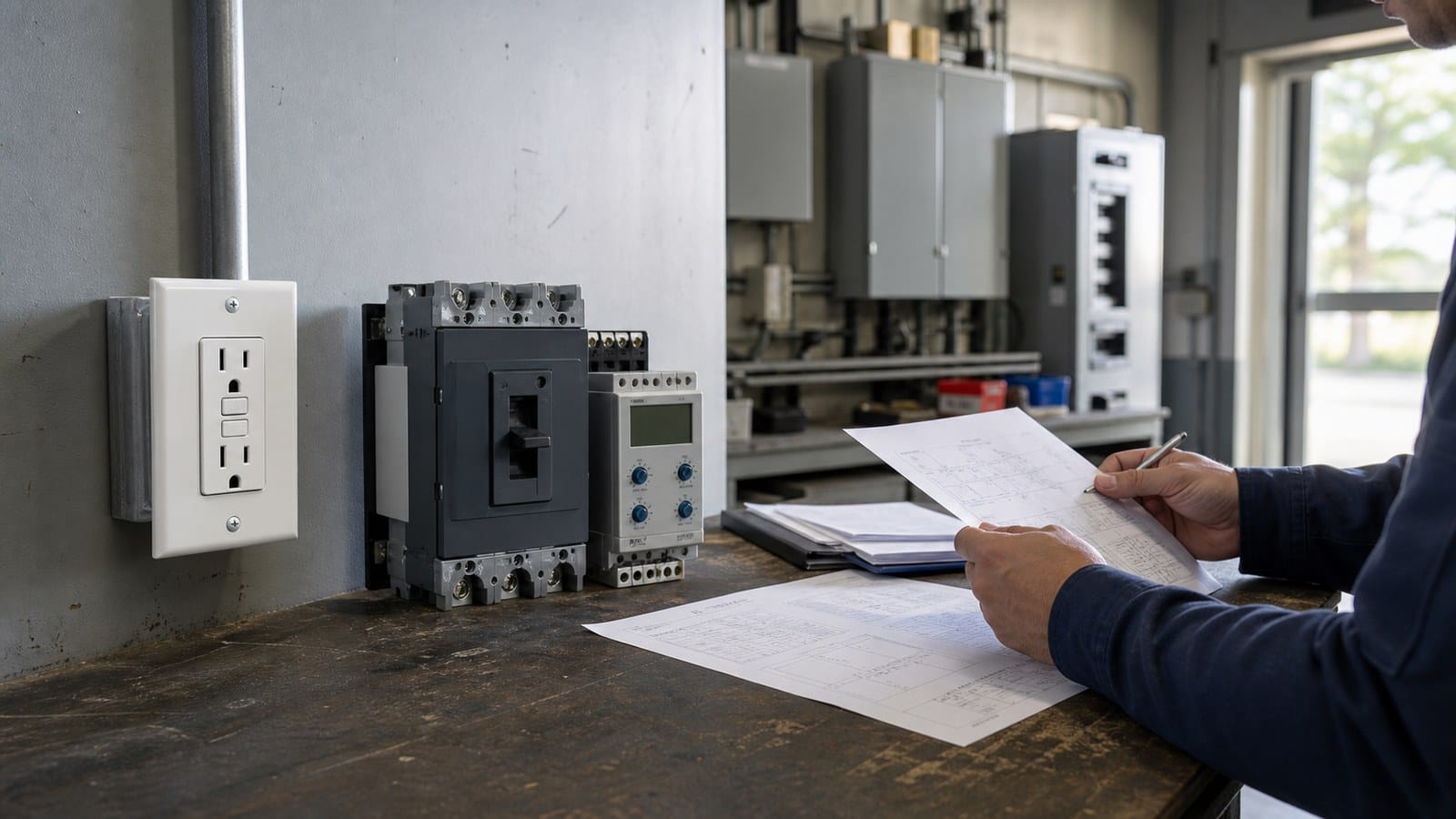
An electric bidet seat or sma toilet normally needs a grounded, GFCI-protected receptacle that matches the product’s voltage and circuit instructions and is positioned within the factory cord’s reach. A non-electric bidet attachment needs no receptacle. Do not plan the outlet from a generic drawing: cord exit, cord length, peak heating load, required circuit, plug orientation, and recommended outlet side vary by model.
Bathroom receptacles fall unrtder GFCI location rules in modern NEC editions. The outlet must also comply with bathroom branch-circuit rules, manufacturer instructions, local amendments, and any restrictions on receptacles near tubs or showers. The reset should remain readily accessible; hiding a receptacle where the toilet must be removed to press RESET is a poor design.
Extension cords, ungrounded adapters, and cords routed across a wet floor are not a proper rough-in solution. During a remodel, coordinate the electrical box before tile and cabinetry are complete.
Research and review method: Faith Editorial Team reviewed NFPA 70 (2023) Sections 210.8(A)(1) and 210.11(C)(3) through NFPA LiNK, Brondell’s current electrical-requirements FAQ, public installation guidance from bidet manufacturers, and UL Solutions information on GFCIs. No licensed-electrician, plumber, manufacturer, or AHJ review is claimed.
Quick planning table
| Product | Electricity needed? | Outlet planning |
|---|---|---|
| Non-electric bidet attachment | No | No receptacle for the attachment |
| Heated bidet seat | Yes | Grounded 120V GFCI-protected outlet; verify load and cord reach |
| Integrated smart toilet | Yes | Follow model-specific circuit and rough-in dimensions |
| Commercial washroom bidet seat | Yes | Coordinate accessibility, cleaning, cord protection, and circuit schedule |
| Bidet near tub or shower | Yes, if electric | Additional location restrictions can apply; verify adopted code and listing |
| Existing bathroom with only vanity outlet | Maybe inadequate | Check circuit permissions, loading, and whether a new outlet can be supplied |
Why GFCI protection is expected
NFPA LiNK provides the formal 2023 NFPA 70 text. Section 210.8(A)(1) covers dwelling-unit bathroom receptacles. The general rule requires listed Class A GFCI protection and a readily accessible protective device. The adopted edition and local amendments determine the enforceable details.
Manufacturer instructions reinforce the same design direction. Brondell’s electrical-requirements FAQ states that its electronic bidets and heated seats use a standard 15/20A, 120V/60Hz GFCI outlet and directs buyers to the manual for the exact product. That is a manufacturer-family statement, not permission to ignore a model-specific manual.
GFCI protection does not waterproof the receptacle, eliminate grounding, or make a damaged cord safe. The product and electrical installation must work as a system.
Where should the bidet outlet go?
Place the receptacle on the cord-exit side shown in the installation manual, within the unmodified factory cord’s reach, and away from routine spray, cleaning impact, and physical damage. Many bidet seats have relatively short cords. A position that works for one brand can put another model’s cord under tension.
During rough-in, collect these dimensions:
- finished-wall location of the toilet centerline;
- finished-floor height;
- outlet side and height permitted by the appliance instructions;
- cord exit and usable cord length;
- plug body dimensions and orientation;
- toilet shutoff valve and supply-hose path;
- baseboard, trim, access panels, and cleaning clearances; and
- any tub/shower boundary affecting receptacle placement.
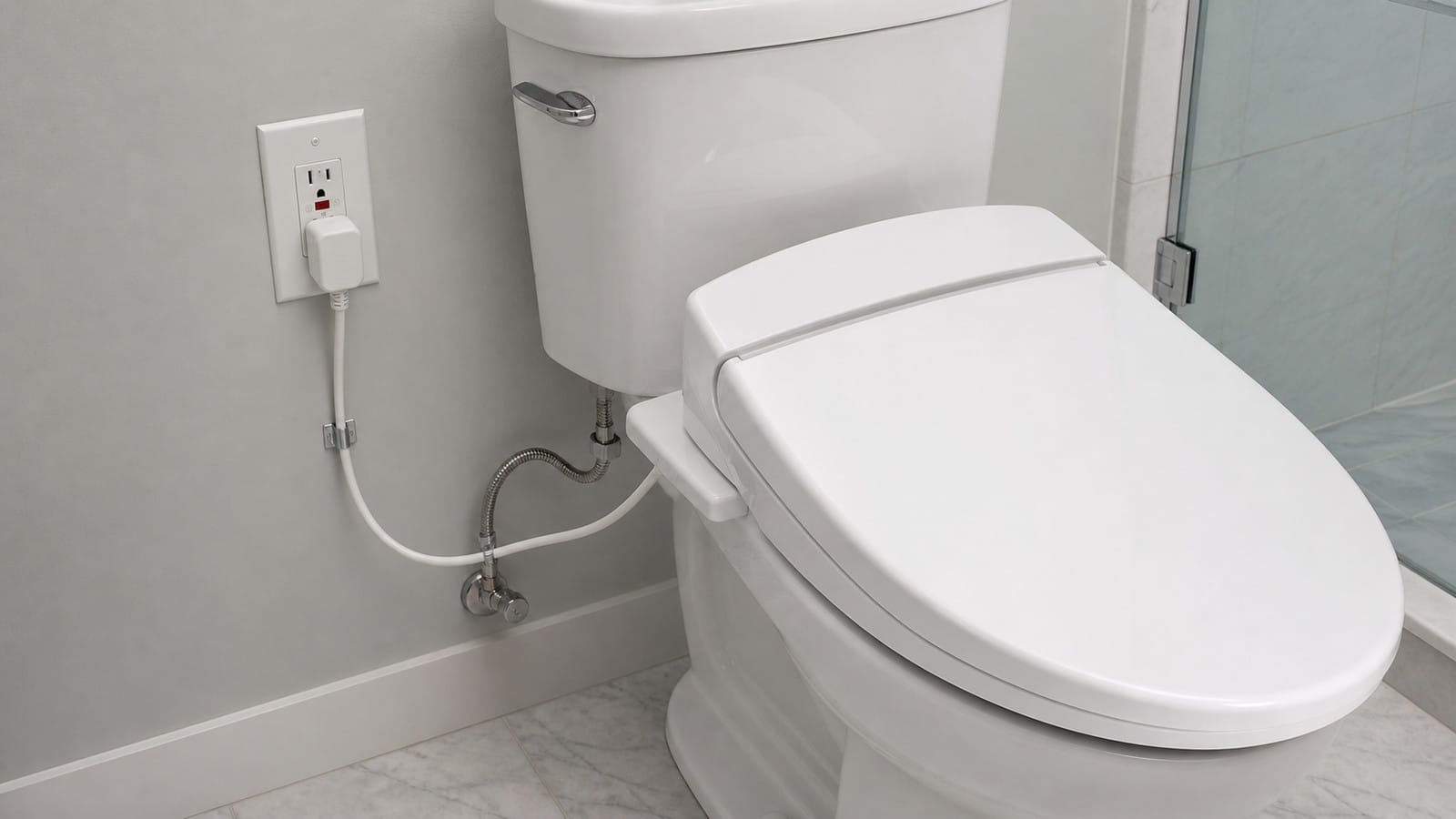
Avoid placing the outlet directly behind a solid toilet base or where a leak would discharge onto it. “Hidden” and “protected” are not the same. Staff or occupants need to reach the TEST/RESET control without moving a fixed fixture.
Does a bidet need a dedicated circuit?
Not every electric bidet automatically requires an individual circuit, but instantaneous water heaters, seat heaters, dryers, and deodorizing systems can produce meaningful demand. The exact manual may require or recommend a dedicated circuit.
Bathroom branch-circuit rules also restrict what the required 20-amp receptacle circuit may supply. Under the 2023 NEC framework, Section 210.11(C)(3) and its exception need to be read carefully when extending an existing bathroom circuit. A circuit serving receptacles in multiple bathrooms is not the same design as a circuit serving a single bathroom’s loads.
Before tapping a vanity outlet, verify:
- which circuit supplies it;
- what other bathrooms or loads are connected;
- conductor and breaker rating;
- existing GFCI protection boundary;
- bidet maximum input, not just standby power;
- hair dryer and grooming appliance demand; and
- exact local interpretation and permit scope.
If simultaneous bidet heating and a high-wattage hair dryer would overload the circuit, a dedicated circuit can improve reliability even when the model does not explicitly require one.
Receptacle GFCI, upstream GFCI, or breaker?
Any method must provide the required listed protection and accessible testing.
- Local GFCI receptacle: easy to identify and test, but needs enough box space and a dry, reachable location.
- Upstream GFCI receptacle: can protect a standard receptacle by correct LOAD wiring; labels and outage scope matter.
- Blank-face GFCI: provides TEST/RESET without another plug point; its location and listing must fit.
- GFCI breaker: protects the circuit at the panel and avoids a bulky device beside the toilet; panel access and compatibility matter.
Faith’s GFCI receptacle versus breaker guide compares these arrangements. Do not place two devices in series without understanding nuisance diagnosis and reset sequence.
TR and WR ratings: do not add them by habit
Tamper-resistant (TR) requirements may apply to dwelling receptacles, including bathroom locations, subject to adopted-code rules and exceptions. Weather-resistant (WR) construction is intended for applicable damp or wet outdoor-style conditions; an ordinary indoor bathroom is not automatically a WR location merely because it contains plumbing.
Faith’s WR versus TR GFCI guide explains the distinction. Specify each attribute from the actual location and code, not from a “more labels must be better” assumption.
What if the bidet trips the GFCI?
| Symptom | Possible cause | Safe action |
|---|---|---|
| Trips immediately when plugged in | Cord, plug, appliance, receptacle, or wiring fault | Unplug; do not retry repeatedly |
| Trips when water heating starts | Internal heater or insulation leakage | Manufacturer-authorized service and electrical check |
| Trips with hair dryer use | Circuit overload may be opening the breaker; identify which device tripped | Reduce load and have circuit design checked |
| Trips after cleaning or a leak | Moisture at outlet, plug, cord, or appliance | De-energize; dry area and arrange inspection |
| Upstream vanity GFCI trips | Bidet outlet may be LOAD-protected | Map protection boundary before replacing devices |
| GFCI will not reset unplugged | Circuit/device issue or no power | Qualified diagnosis; do not bypass |
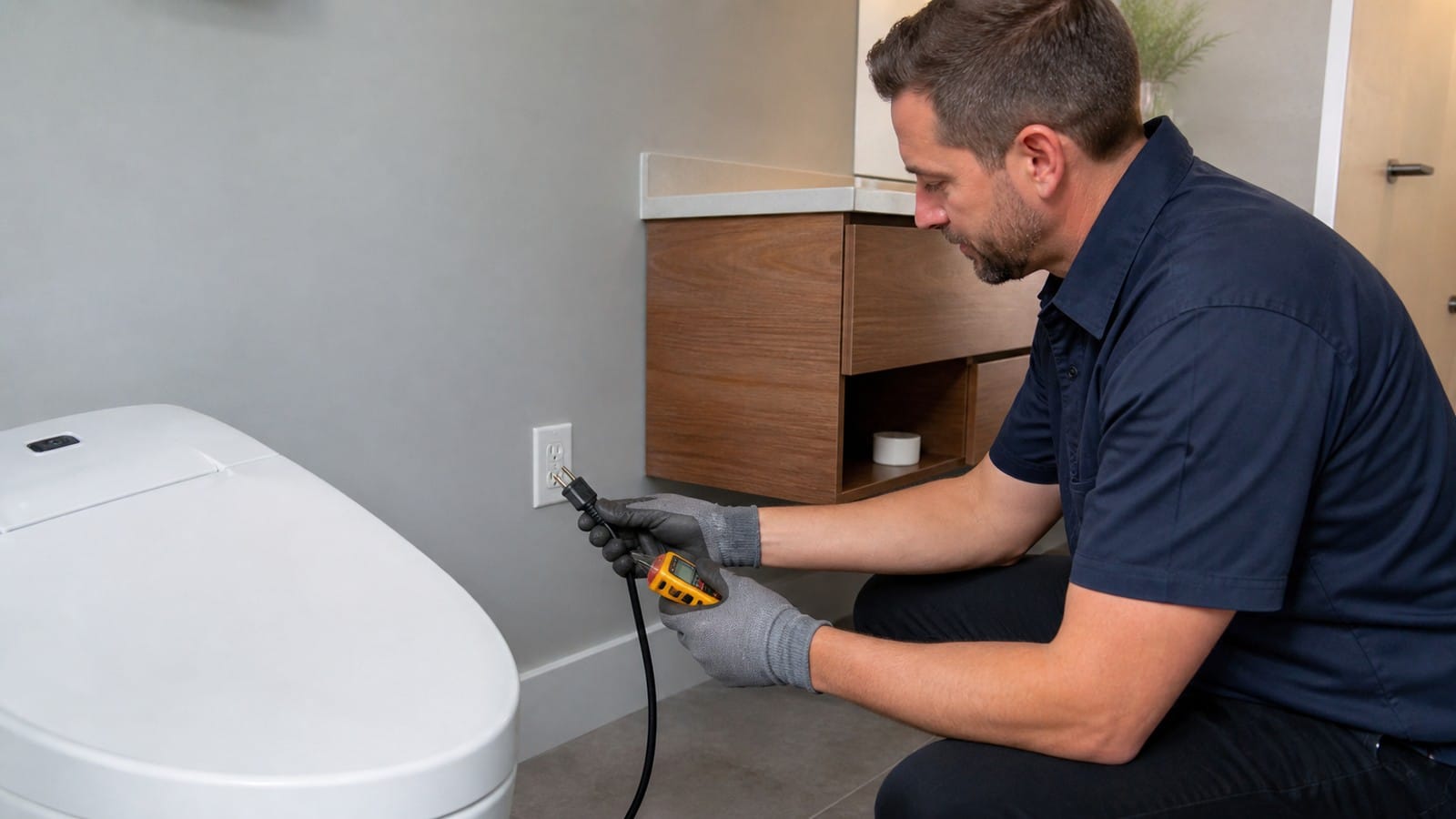
First identify whether the GFCI or the overcurrent breaker operated. Unplug the bidet without touching wet surfaces, stop water leakage, and inspect only for obvious external damage. Do not open the appliance or energize a wet receptacle.
Buyer and rough-in checklist
- Exact bidet or smart-toilet model approved before electrical rough-in
- Installation manual and dimension drawing obtained
- Voltage, frequency, maximum current, and plug type recorded
- Dedicated-circuit requirement or recommendation noted
- Adopted NEC edition and bathroom circuit rules checked
- GFCI method and TEST/RESET location documented
- Outlet side, height, cord reach, and plug clearance confirmed
- Tub/shower restrictions and local amendments reviewed
- Grounding and TR requirements confirmed
- No extension cord or adapter in the permanent design
- Box volume and conductor routing coordinated before tile
- Finished installation tested and labeled
- Owner receives reset, cleaning, and leak-response instructions
For bulk projects such as hotels or senior-living facilities, freeze the bidet model before repeating rough-in dimensions across rooms. Compare the approved electrical drawing with the actual delivered cord exit and plug. One model substitution can make hundreds of outlets unreachable.
Faith has manufactured wiring devices since 1996. Buyers should still approve the exact device catalog number, ratings, certification evidence, markings, and instructions for the project.
FAQ
Does a non-electric bidet need an outlet?
No. Mechanical attachments and sprayers that use no electricity do not need a receptacle.
Can I use the bathroom vanity GFCI for a bidet?
Possibly, if circuit permissions, capacity, wiring, and the product instructions allow it. Do not assume the required bathroom receptacle circuit can supply any new load.
Can the outlet be behind the toilet?
Only if the exact location remains suitable, dry, within cord reach, and readily accessible as required. A solid toilet base must not block testing or service.
Does the bidet outlet need to be weather-resistant?
An indoor bathroom is not automatically a WR location. Determine the environmental classification and adopted-code requirements.
Why does my bidet trip the GFCI when heating?
Heating may reveal appliance leakage or insulation trouble. Stop use and arrange appliance and circuit diagnosis rather than bypassing protection.
Can I use an extension cord?
Do not make an extension cord the permanent rough-in solution. Follow the exact manufacturer instructions and install a properly located receptacle.
Sources / References
Accessed August 12, 2026.
- NFPA 70, 2023 edition, Sections 210.8(A)(1) and 210.11(C)(3), via NFPA LiNK
- NFPA 70 formal document page
- Brondell – Electric bidet installation and compatibility FAQ
- Brondell – Bidet toilet seat installation overview
- UL Solutions – GFCI personal protection devices testing and certification
This article provides general U.S. planning and product-selection information. It does not replace the locally adopted electrical or plumbing code, manufacturer instructions, listing conditions, accessibility requirements, permits, or AHJ approval. Electrical work should be performed by qualified persons.