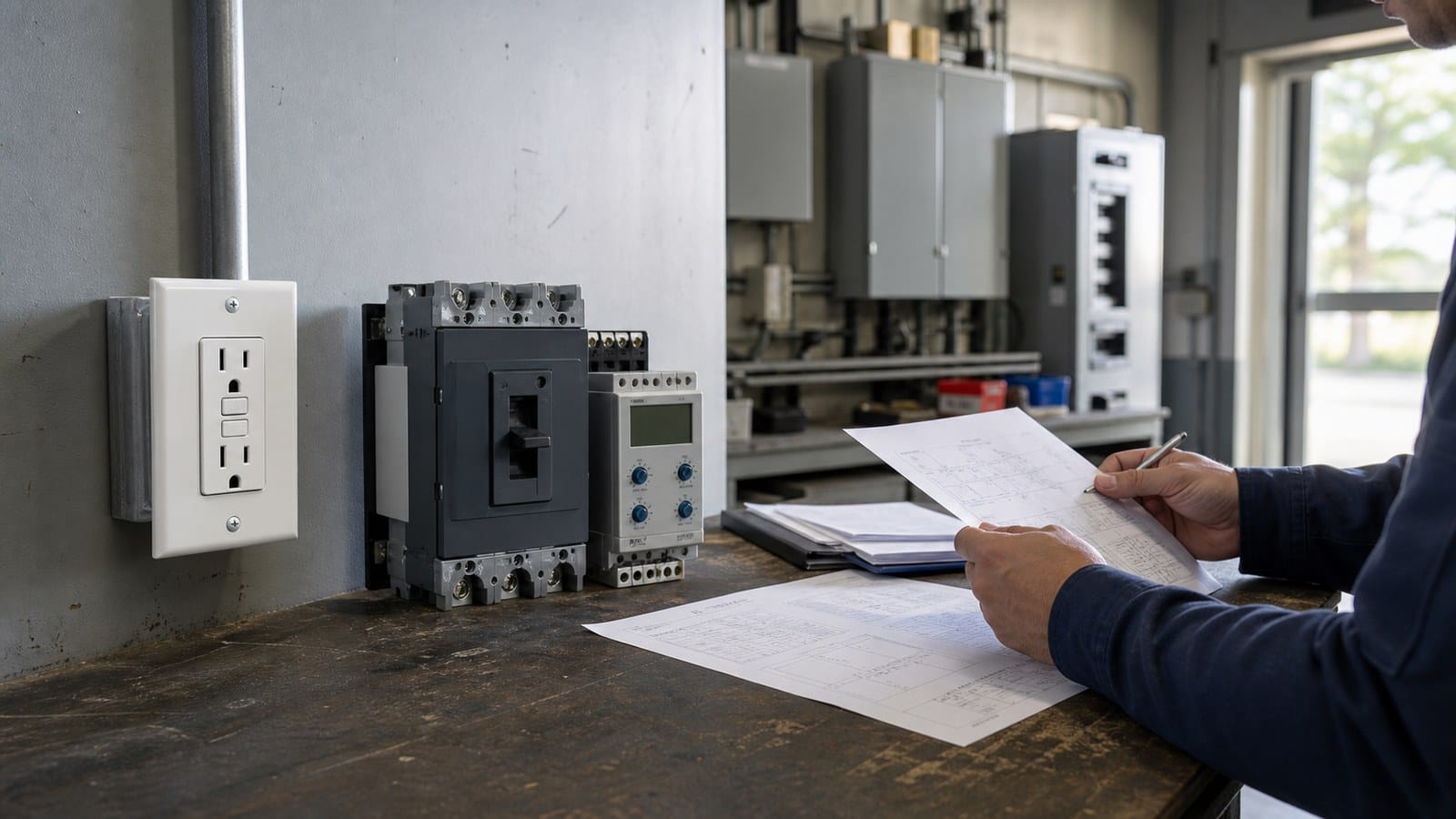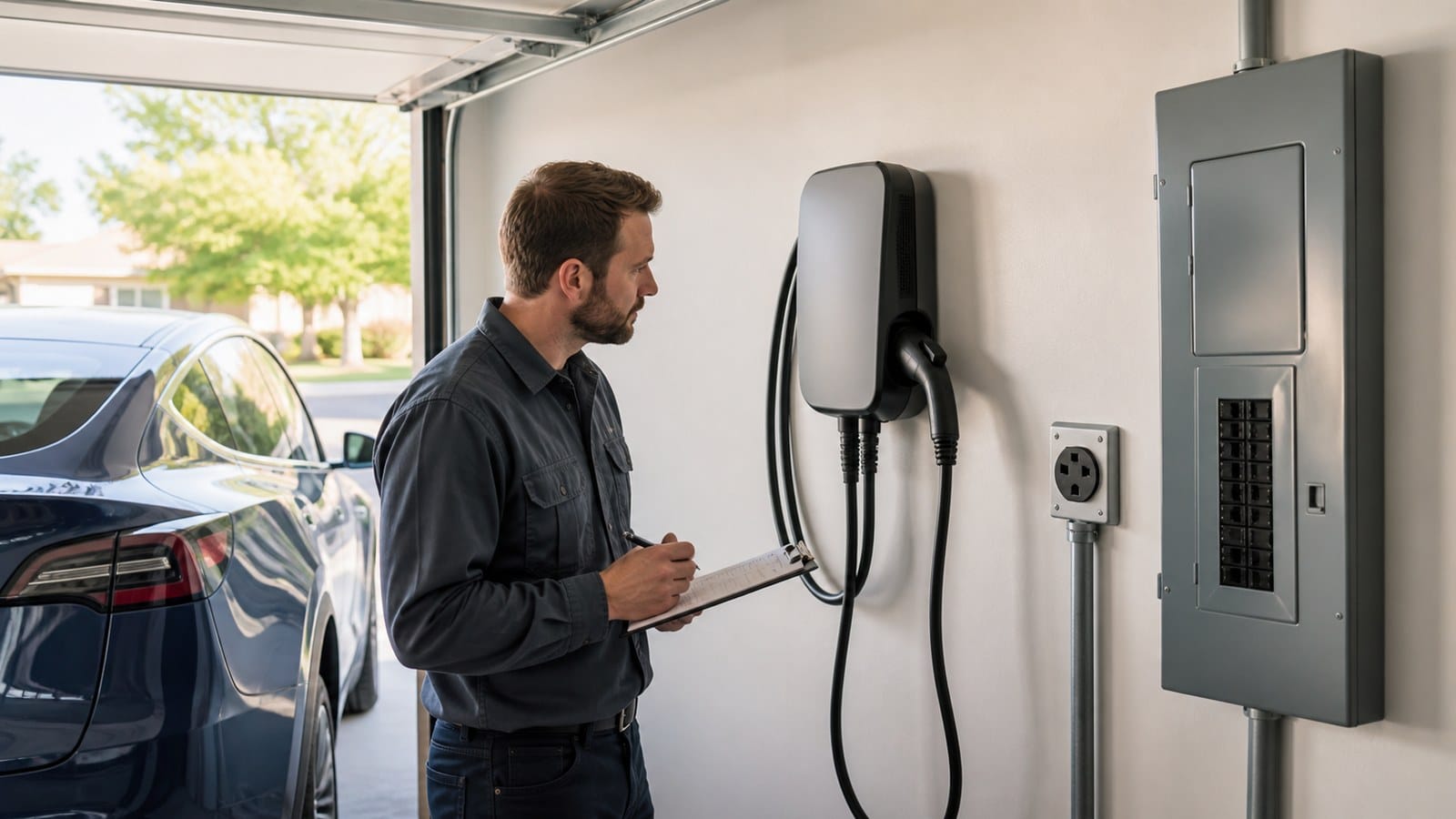
A microwave may need GFCI protection because of its location, its connection method, or a specific-appliance rule in the locally adopted electrical code. Under the 2023 edition of NFPA 70, Section 210.8(D) includes microwave ovens among the appliances whose supplying branch circuit or outlet requires GFCI protection when the stated voltage and current limits apply. Earlier editions and local amendments can produce a different result, so the adopted code—not the publication year on a web article—controls the project.
Countertop microwaves are usually straightforward: a receptacle in a dwelling kitchen is within the modern kitchen GFCI rules. Built-in and over-the-range models need closer review because the receptacle may be hidden in a cabinet or the unit may be hardwired. The protection can often be provided by a compatible GFCI breaker or an upstream device; the test and reset control must remain readily accessible.
Do not remove GFCI protection merely because a microwave trips. A recurring trip can indicate moisture, a damaged cord, an appliance fault, incorrect shared-circuit loading, wiring trouble, or an unsuitable protection arrangement. Identify whether the GFCI or the overcurrent breaker opened before deciding what to inspect.
How this article was prepared: Faith Electric’s editorial team used AI-assisted drafting to organize cited public sources, then checked the cited code and product documents. The checked materials included NFPA 70 (2023) Section 210.8(D) in NFPA LiNK, Leviton’s licensed NEC change portal, Eaton’s 2023 appliance guidance, UL Solutions information on UL 943 GFCIs, and KitchenAid manual W11659085B for models KMCS324PPS and KMCS324PBS. The manual example confirms why the model number matters: it identifies a grounded connection and model-specific electrical requirements, but it does not determine which NEC edition a city has adopted. No field testing, licensed-electrician review, manufacturer approval, or AHJ approval is claimed.
Start with the microwave installation, not the appliance name
| Installation | Typical modern-code path | Planning point |
|---|---|---|
| Countertop microwave | Kitchen receptacle location rules generally require GFCI | Confirm the receptacle is on an appropriate small-appliance circuit |
| Over-the-range microwave with cabinet receptacle | The 2023 specific-appliance rule can apply even when the receptacle is not near a sink | Put the reset at an accessible breaker or upstream device |
| Built-in microwave | Connection may be cord-and-plug or hardwired | Review both the adopted code and the exact installation manual |
| Commercial break-room microwave | Other-than-dwelling kitchen or preparation-area rules may apply | Do not assume residential circuit layouts apply |
| Existing older installation | It may have been installed under an earlier adopted edition | Alteration and replacement rules are local questions |
| Microwave that trips immediately | Treat as a fault symptom | Unplug it and stop repeated resetting |
What changed in the 2023 NEC
NFPA LiNK provides access to the 2023 edition of NFPA 70. Section 210.8(D) addresses specific appliances. In the 2023 NEC, Section 210.8(D) applies to the listed appliances when they are rated 150 volts or less to ground and 60 amperes or less, single- or three-phase. The list includes microwave ovens. The wording focuses on the branch circuit or outlet supplying the appliance, so it is not limited to a visible countertop receptacle.
Leviton’s 2023 Captain Code explanation of Section 210.8(D) notes that the revision covers listed appliances regardless of whether the appliance is cord-connected or hardwired. Eaton’s appliance GFCI guide likewise explains that protection can be placed at the breaker, receptacle, or another upstream location.
This is a model-code explanation, not a nationwide effective date. States and cities adopt different NEC editions and may amend them. A jurisdiction using an earlier edition may reach the requirement through the kitchen-location rule for a receptacle, through manufacturer instructions, or not at all for a particular built-in connection. Record the adopted edition on the project worksheet.
For a concrete document check, KitchenAid manual W11659085B covers models KMCS324PPS and KMCS324PBS and provides their grounding and electrical-connection instructions. Use that kind of exact model/manual pair during submittal review; do not treat one microwave manual as a universal circuit specification.
Countertop, over-the-range, and built-in microwaves are not the same installation
Countertop microwave
A countertop microwave normally plugs into a kitchen receptacle. Under recent editions, dwelling-unit kitchen receptacles are broadly covered by GFCI requirements. The practical questions are circuit capacity, receptacle rating, cord reach, and whether the appliance shares a circuit with other high-demand countertop loads.
Do not use a power strip or light-duty extension cord to solve a reach problem. Follow the microwave manual and provide a permanently installed receptacle where required.
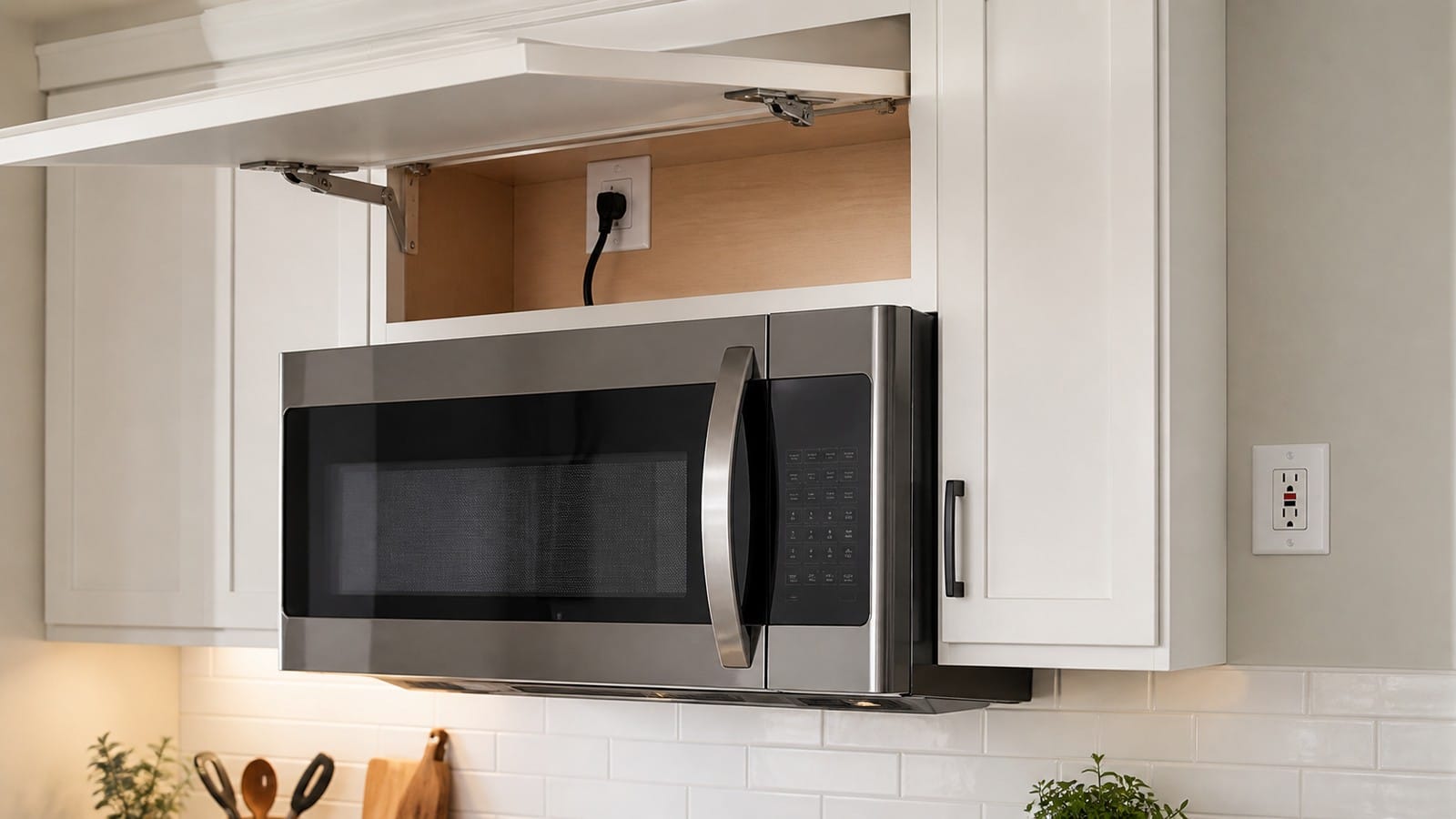
Over-the-range microwave
An over-the-range unit commonly plugs into a receptacle in the cabinet above it. Hiding a receptacle does not automatically remove the GFCI requirement. It does create a maintenance problem if the only reset button is behind stored cookware or requires removing the appliance.
A compatible GFCI breaker is often the cleanest way to protect a dedicated microwave circuit. An upstream receptacle-type or blank-face GFCI may also be possible when its listing, wiring, location, and downstream labeling fit the design.
Built-in microwave or combination appliance
Built-in equipment can be cord-connected or hardwired. Combination microwave/oven products may have ratings and connection requirements that differ substantially from a countertop unit. The buyer must use the model-specific installation sheet, not a generic “microwave circuit” assumption.
Capture voltage, phase, maximum current, branch-circuit size, overcurrent protection, connection type, conductor requirements, and any GFCI or AFCI instruction before approving the panel schedule.
Does a microwave need a dedicated circuit?
GFCI protection and an individual branch circuit answer different questions. A GFCI detects current imbalance associated with a ground-fault hazard; the branch-circuit rating and overcurrent device address conductor and load protection.
Many microwave instructions call for a properly grounded circuit and may recommend or require an individual circuit. Use the nameplate and installation manual for the exact model. A buyer should not copy a circuit size from a similar-looking appliance.
For a procurement schedule, record:
- exact model and configuration;
- voltage, frequency, phase, and rated input;
- cord-and-plug or hardwired connection;
- plug and receptacle configuration, if applicable;
- required branch-circuit and overcurrent rating;
- GFCI method and reset location;
- AFCI requirement under the adopted code;
- conductor and neutral requirements; and
- installer-access clearances.
Faith’s GFCI receptacle versus GFCI circuit breaker guide explains the device-location tradeoffs. The selected device must match the circuit and panel; “GFCI” alone is not a complete specification.
Where should TEST and RESET be located?
The GFCI protective device should be readily accessible for testing and resetting. A receptacle buried behind a fixed microwave, inside a cabinet packed with items, or above an inaccessible ceiling does not create a sound maintenance plan.
Common arrangements are:
- a listed GFCI circuit breaker in an accessible panel;
- an upstream GFCI receptacle with correctly wired LOAD protection;
- a blank-face GFCI at an accessible wall location; or
- a receptacle-type GFCI at the appliance outlet only when it remains readily accessible.
Label downstream protected receptacles as required and document which device controls the microwave. Facility staff should not have to trip unrelated kitchen circuits to discover the protection boundary.
Why a microwave may trip a GFCI
| Symptom | Possible cause | Safe next step |
|---|---|---|
| Trips as soon as plugged in | Cord, plug, filter, wiring, or internal insulation fault | Leave unplugged; arrange qualified diagnosis |
| Trips when cooking starts | Appliance leakage under load, moisture, shared fault, or compatibility issue | Test the circuit and appliance separately by qualified personnel |
| Breaker trips, GFCI does not | Overload, short circuit, or overcurrent issue | Stop and identify every load on the circuit |
| Trips after steam or cleaning | Moisture at receptacle, plug, cabinet, or appliance | De-energize and allow qualified inspection before reuse |
| Several outlets lose power | Upstream GFCI protected multiple loads | Map the downstream circuit and reduce outage scope if needed |
| New appliance trips on an old circuit | Existing wiring/device issue or genuine appliance leakage | Do not assume the new appliance is defective or the GFCI is “too sensitive” |
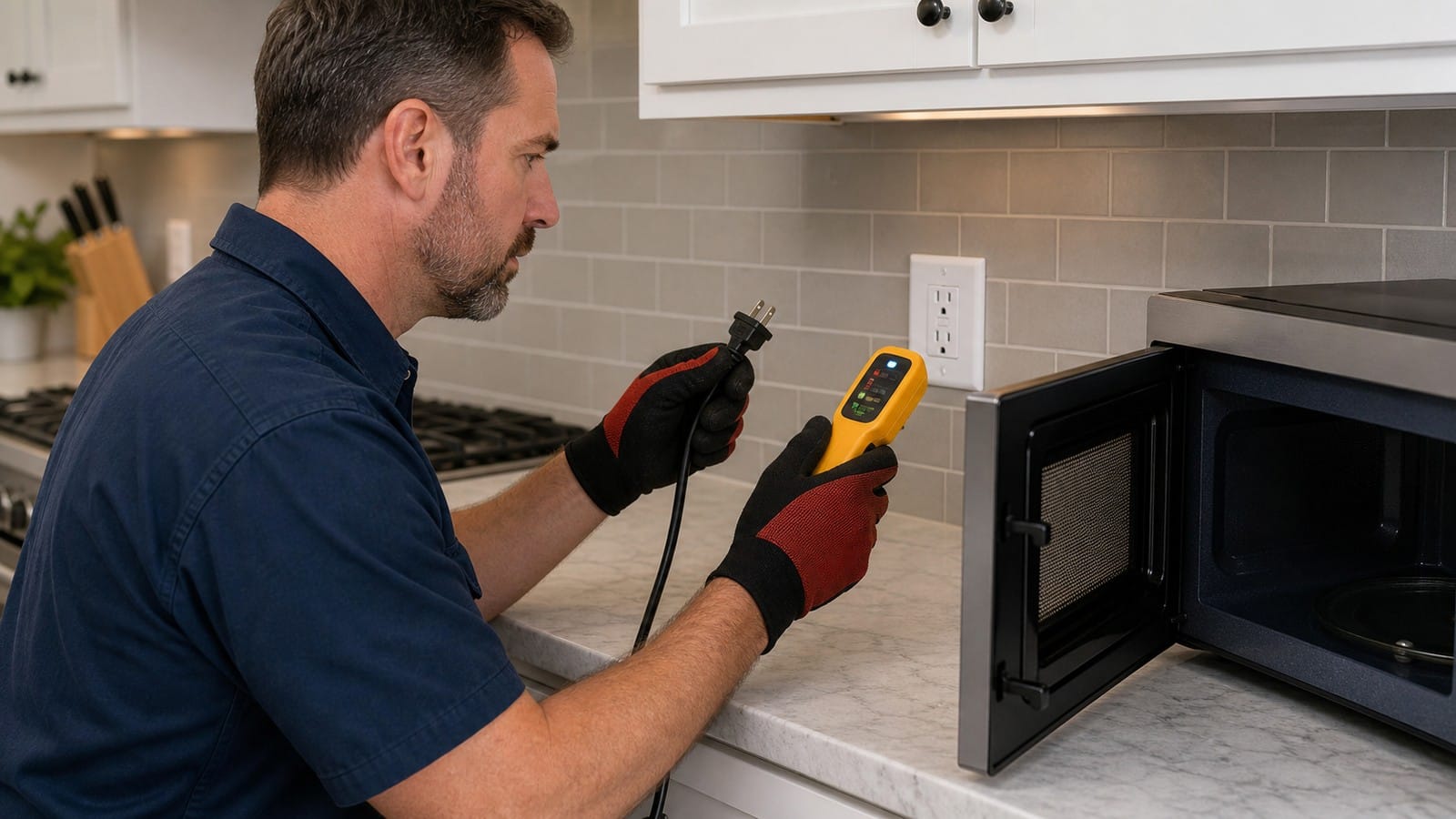
Pressing RESET repeatedly is not troubleshooting. Disconnect the microwave, inspect only for obvious external damage or moisture without opening equipment, and note which protective device operated. If the GFCI will not reset with the appliance unplugged, the circuit or device requires attention. If it resets unloaded but trips with the microwave, the appliance and circuit need a coordinated diagnosis.
Buyer checklist for microwave GFCI protection
- Confirm the jurisdiction and adopted NEC edition.
- Obtain the exact microwave installation manual before rough-in.
- Distinguish countertop, over-the-range, built-in, and combination units.
- Verify voltage, current, connection method, and circuit rating.
- Decide whether GFCI protection is at the breaker, receptacle, or upstream device.
- Keep TEST and RESET controls readily accessible.
- Confirm the breaker is listed for the panel and the receptacle configuration matches the plug.
- Check whether AFCI protection also applies; dual-function protection may be relevant.
- Avoid sharing the microwave with loads that exceed the circuit design.
- Record the protection boundary and downstream labels.
- Verify the exact product certification rather than relying on an unlinked logo image.
- Test the completed installation according to device and appliance instructions.
For purchasing, treat the GFCI model, circuit rating, panel compatibility, certification record, markings, and installation instructions as one approval set.
FAQ
Does a countertop microwave need GFCI protection?
In a modern dwelling kitchen, the receptacle generally falls under kitchen GFCI rules. Verify the locally adopted edition and amendments.
Does an over-the-range microwave need GFCI protection?
Under the 2023 NEC specific-appliance framework, a qualifying microwave-supply branch circuit or outlet is included. Earlier adopted editions may differ.
Can I install the GFCI receptacle behind the microwave?
The protection must remain readily accessible. A breaker or upstream device is often more serviceable than a reset hidden behind fixed equipment.
Does GFCI protection replace grounding?
No. GFCI protection and equipment grounding perform different functions. Follow grounding instructions and never remove a grounding pin.
Should I remove the GFCI if the microwave keeps tripping?
No. Repeated trips require diagnosis of the appliance, wiring, moisture, circuit loading, and protection arrangement.
Can one GFCI protect the microwave and other kitchen receptacles?
Feed-through protection can protect downstream receptacles, but shared outage scope, circuit requirements, LINE/LOAD wiring, labeling, and appliance instructions must be evaluated.
Sources / References
Accessed August 17, 2026.
- NFPA 70, National Electrical Code, 2023 edition, Section 210.8(D), via NFPA LiNK
- NFPA 70 formal document page
- Leviton Captain Code 2023 – GFCI Protection for Specific Appliances
- Eaton – 2023 NEC Section 210.8(D) appliance GFCI requirements
- KitchenAid microwave manual W11659085B – models KMCS324PPS and KMCS324PBS
- UL Solutions – GFCI personal protection devices testing and certification
This article provides general U.S. code-planning, procurement, and troubleshooting information. It is not a substitute for the locally adopted code, project documents, appliance instructions, listing conditions, or AHJ approval. Electrical work and energized diagnosis should be performed by qualified persons.