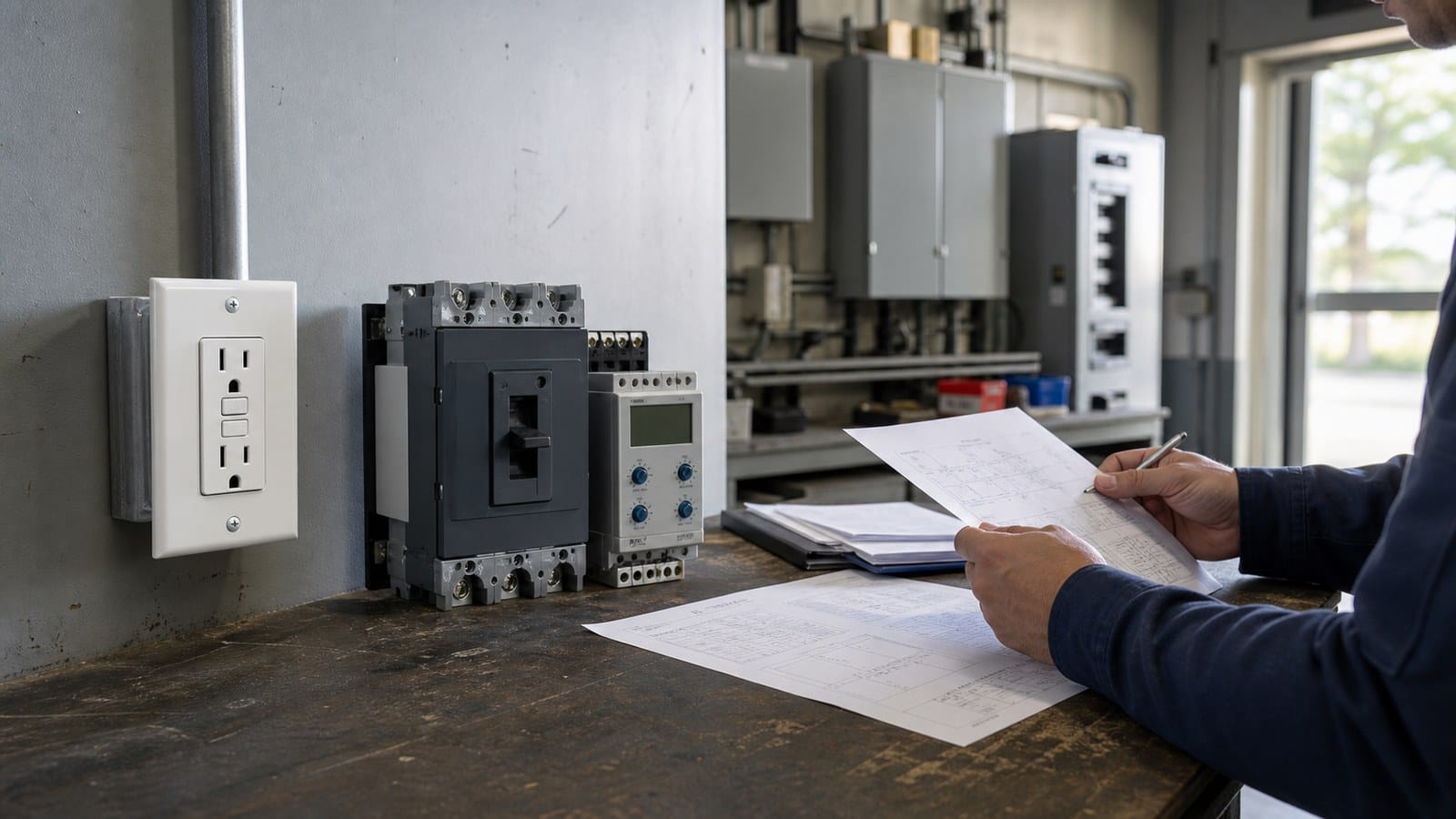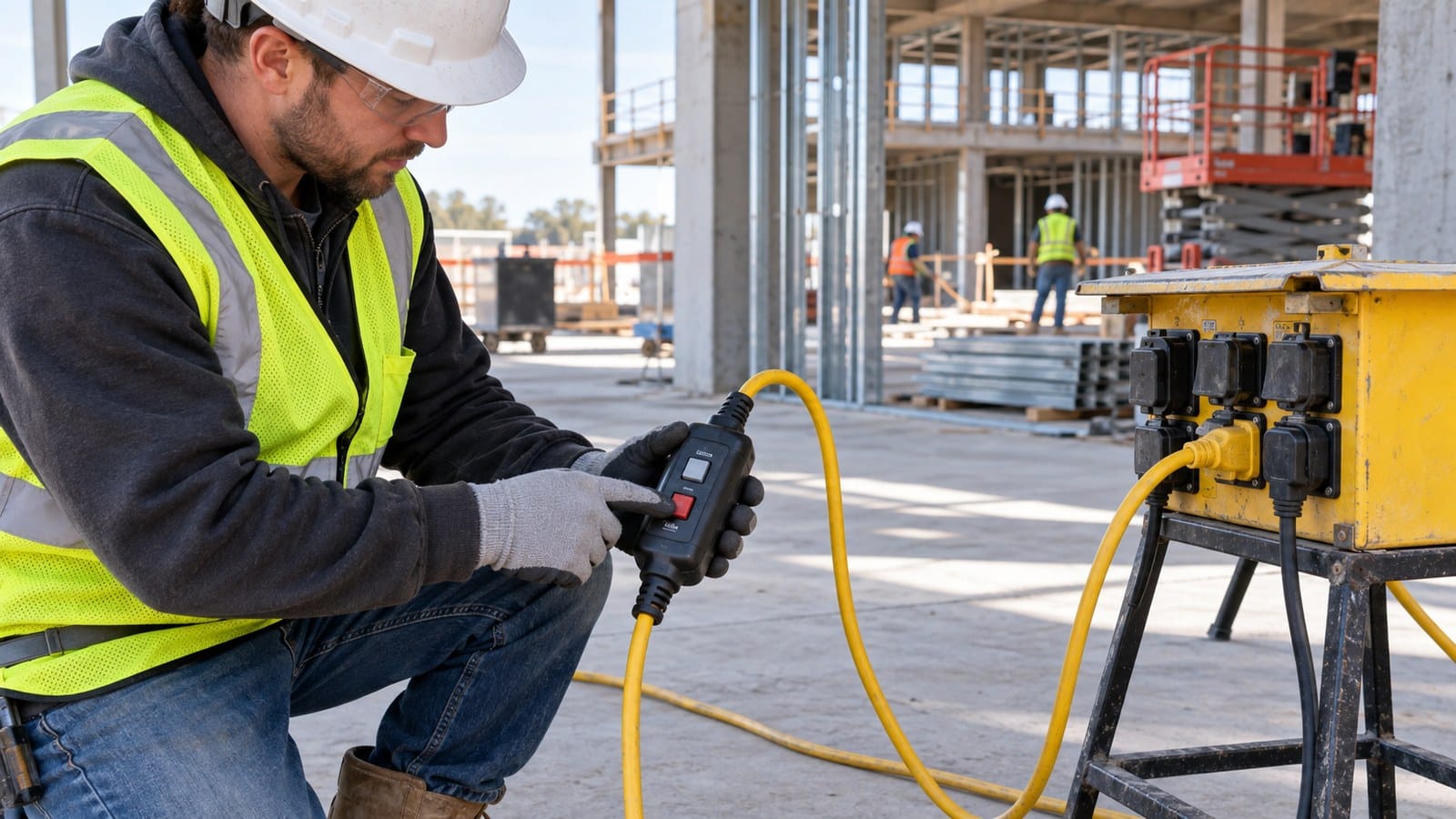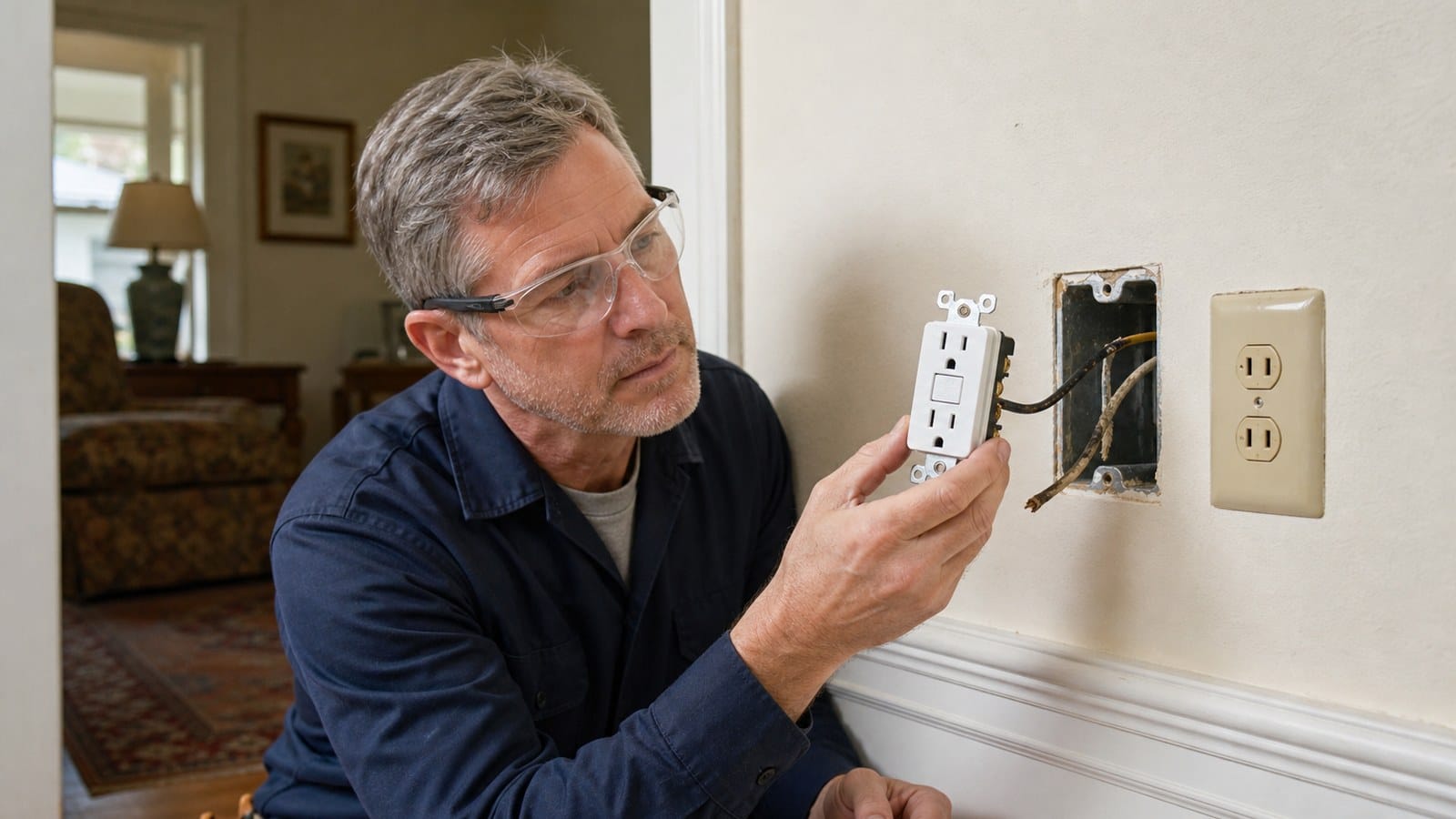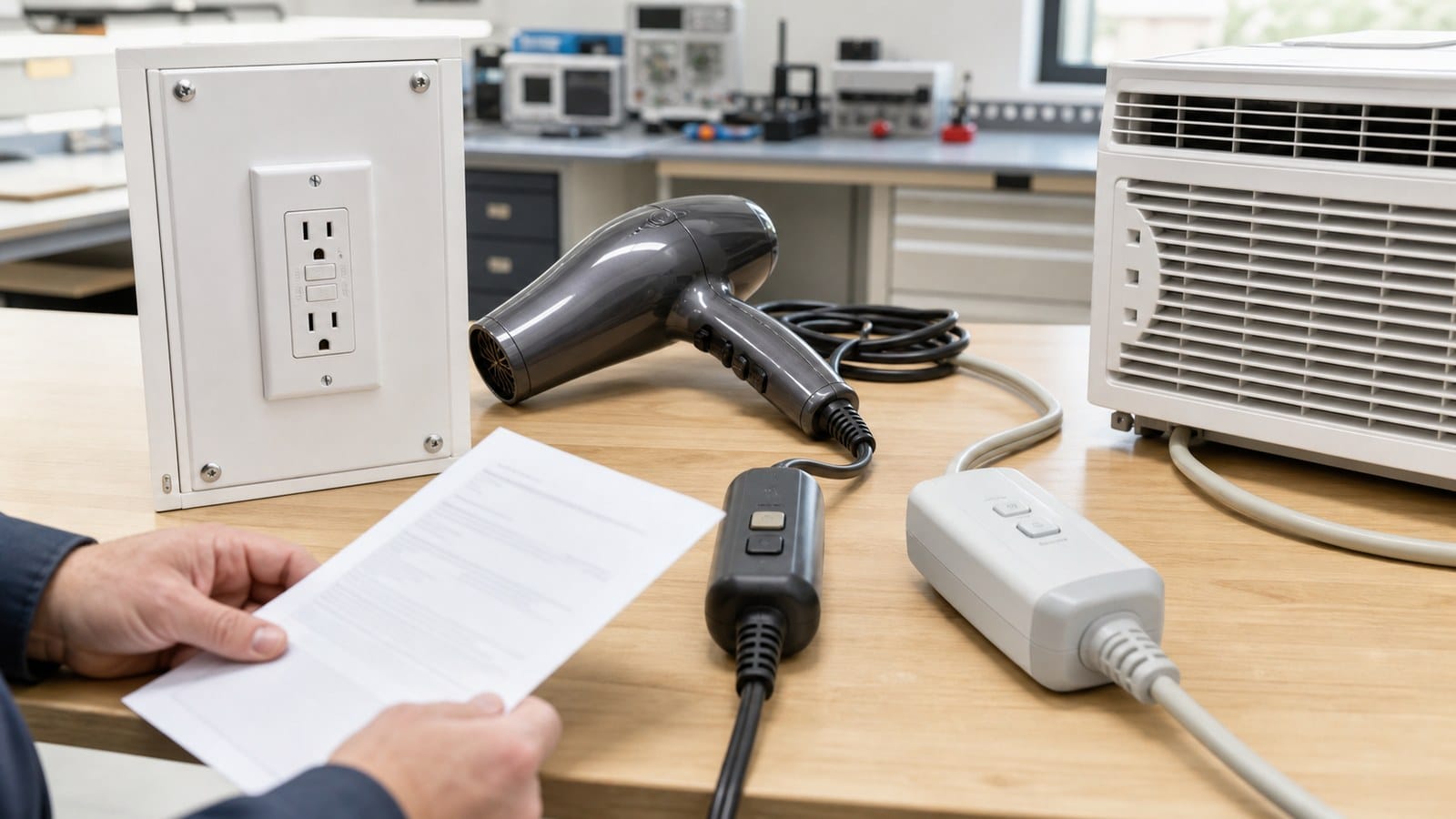
A GFCI and a surge protector are not substitutes. A GFCI is designed to reduce electric-shock risk by interrupting power when current leaves its intended path. A surge protector is designed to limit transient overvoltage that can damage electronics. In locations where both hazards matter, you may need both forms of protection.
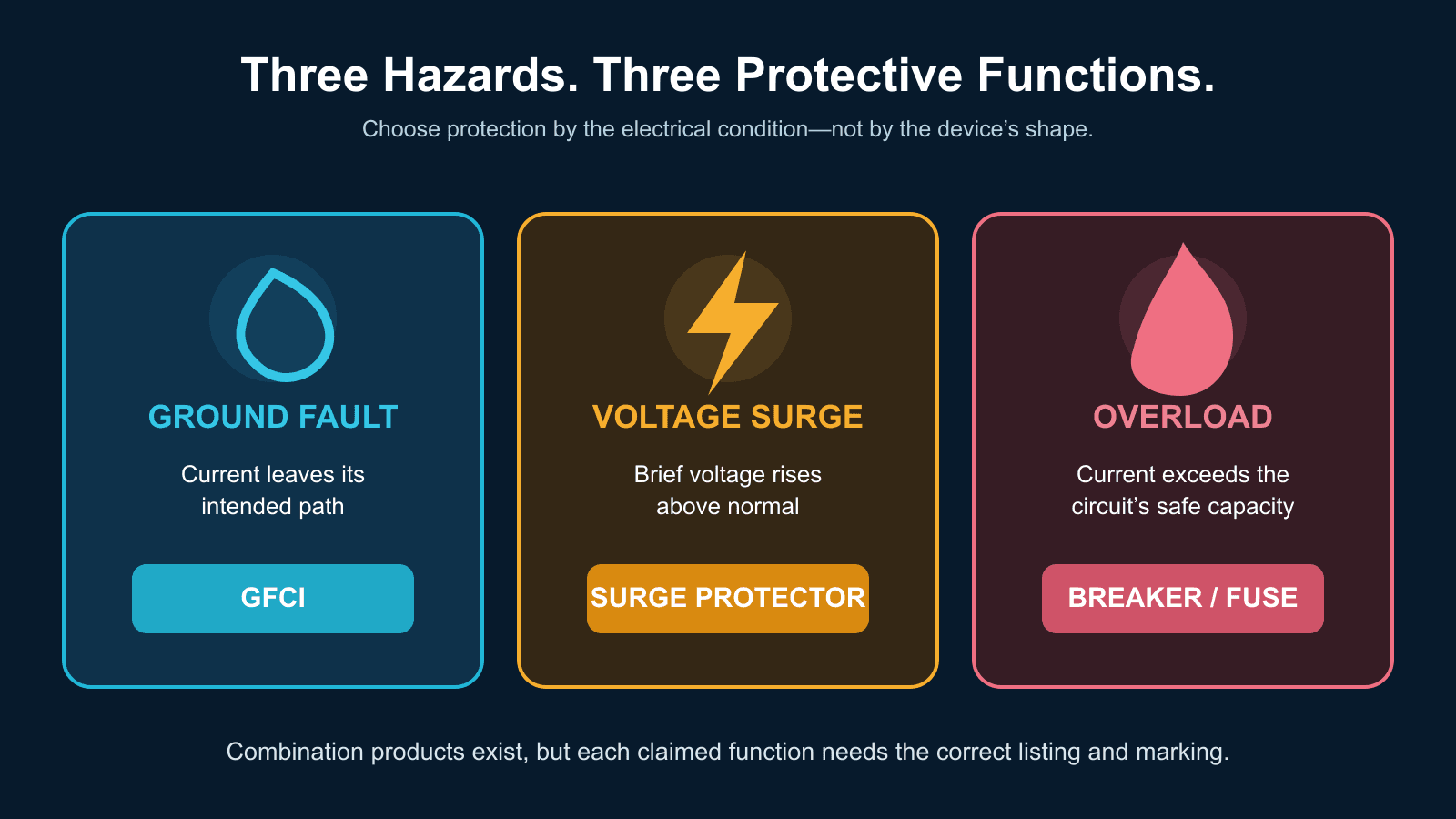
The simplest way to remember the difference is: GFCI protects people from ground-fault shock; surge protection helps protect equipment from voltage spikes. A standard circuit breaker addresses overloads and short circuits, so it performs a third job. No single device should be assumed to cover all three hazards unless its listing and markings explicitly say so.
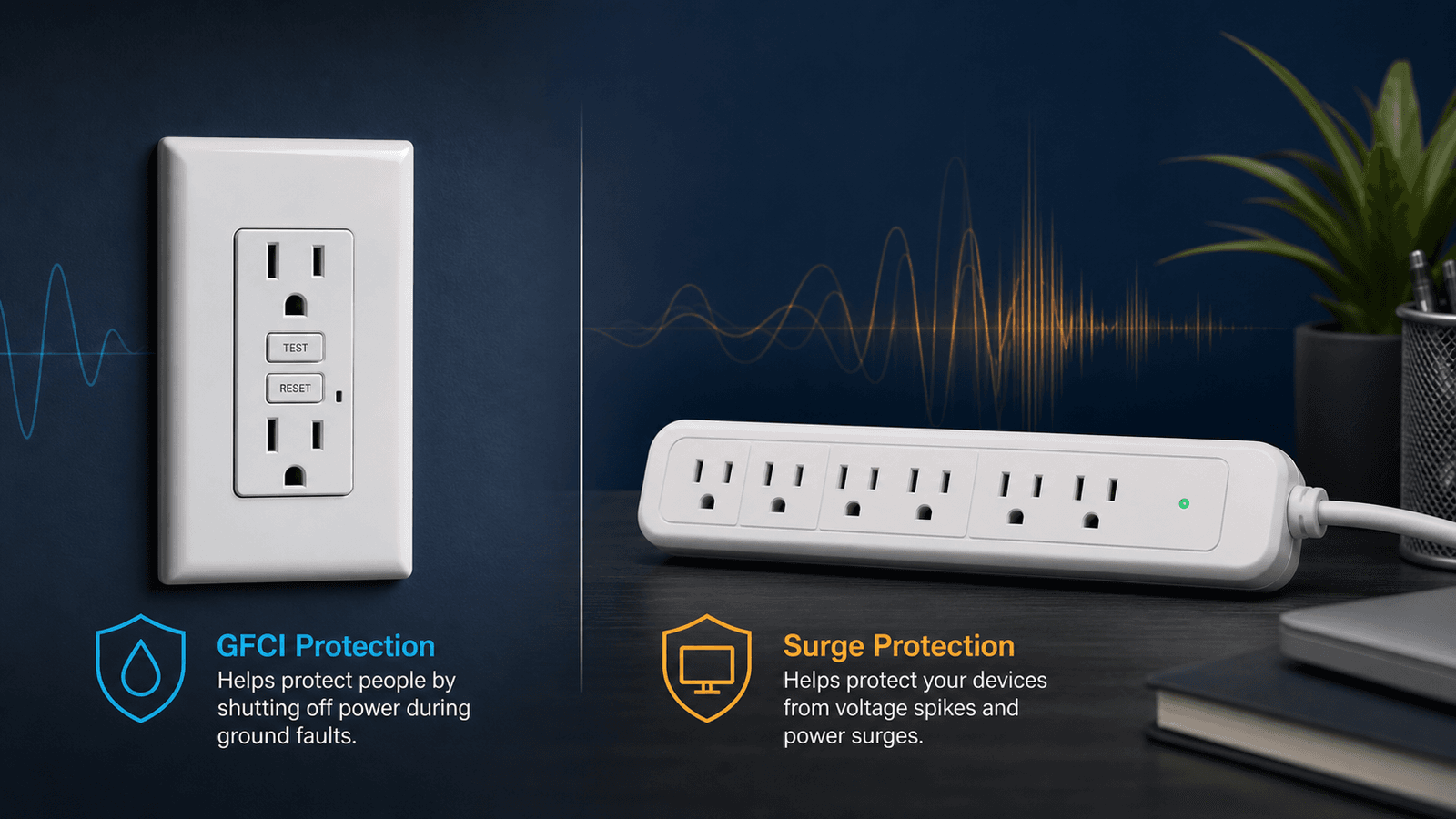
GFCI vs. Surge Protector at a Glance
| Question | GFCI | Surge protector |
|---|---|---|
| Primary purpose | Reduce shock and electrocution risk from ground faults | Limit transient voltage reaching connected equipment |
| What it monitors | Difference between outgoing and returning current | Voltage transient above normal operating conditions |
| Typical standard | UL 943 for common Class A GFCIs | UL 1449 for surge protective devices |
| Common formats | Receptacle, breaker, portable, blank face | Plug-in strip, receptacle-type SPD, panel/whole-building SPD |
| Protects against overload? | No, unless paired with an overcurrent device | No, although a strip may include a supplemental breaker |
| Protects against every lightning event? | No | No; protection has limits and depends on system design |
What a GFCI Actually Does
A ground-fault circuit interrupter compares the current traveling through the ungrounded conductor with the current returning through the grounded conductor. If some current is taking another path—possibly through a person or wet surface—the device opens the circuit quickly.
The U.S. Consumer Product Safety Commission describes GFCIs as devices that help protect against severe electrical shock and notes that receptacle, breaker, and portable versions are available. For common U.S. personnel-protection applications, GFCIs are evaluated under UL 943.
A GFCI does not need an equipment grounding conductor to compare hot and neutral current, but grounding, installation rules, markings, and replacement provisions remain separate code issues. It also does not replace a circuit breaker or fuse. The branch circuit still needs proper overcurrent protection.
What a Surge Protector Actually Does
A surge protective device (SPD) responds to transient overvoltage—brief spikes created by utility switching, motors, internal equipment operation, or lightning-related events. The device diverts or limits part of the transient so less voltage reaches protected equipment.
The National Institute of Standards and Technology defines a surge protector as a device designed to protect electrical devices from voltage spikes or dips. Its consumer guide, Surges Happen!, explains that protection is a system question: service-entrance protection and point-of-use protection can play different roles, especially for equipment connected through power and communications paths.
UL Solutions explains that cord-connected or component surge protective devices for general-use applications are typically evaluated to UL 1449. A plain power strip is not automatically a surge protector. Buyers should look for the appropriate listing, product markings, voltage protection rating, and status indication.
Why a GFCI Does Not Replace Surge Protection
A voltage spike can occur without creating the hot-to-neutral current imbalance that a GFCI is designed to detect. The GFCI may remain set while sensitive electronics experience damaging overvoltage. Installing GFCIs throughout a building therefore does not create surge protection for computers, controls, televisions, appliances, or networking equipment.
Likewise, the TEST and RESET buttons on a GFCI are not surge-status controls. The button test checks the GFCI function according to the manufacturer’s design; it does not confirm that connected electronics are protected from transients.
Why a Surge Protector Does Not Replace a GFCI
A surge protector can limit voltage transients yet still allow normal 120-volt current to flow. If current leaks through damaged insulation, wet equipment, or a person, the surge protector may see no abnormal voltage condition that requires it to act. A surge-protector strip plugged into an ordinary receptacle does not create GFCI protection unless the product is specifically listed and marked as incorporating that function.
This matters in bathrooms, kitchens, garages, basements, crawl spaces, laundry areas, outdoors, and other locations covered by the locally adopted electrical code. A surge strip cannot be used to avoid required GFCI protection.
Do You Need Both?
Often, yes. If a receptacle is in a location that requires GFCI protection and it serves surge-sensitive equipment, the practical arrangement is a properly installed GFCI-protected branch circuit plus an appropriate SPD strategy.
Home office or entertainment equipment
Computers, monitors, routers, televisions, and audio systems benefit from surge protection. If the receptacle is in a basement, garage office, near a sink, or another GFCI-required location, the circuit also needs GFCI protection. A UPS may add battery backup and voltage-conditioning features, but its listing and specifications should be checked; “UPS” does not automatically mean every model provides the same surge performance.
Garage and workshop
GFCI protection addresses shock risk from cord-connected tools and grounded surfaces. Surge protection may be valuable for battery chargers, electronic controls, door openers, and diagnostic equipment. High-current tools should not be connected through a light-duty power strip.
Outdoor equipment
Outdoor receptacles often require GFCI protection and weather-appropriate devices, boxes, covers, and cords. Surge protection may help connected controls or electronics, but an indoor-only surge strip should never be used outdoors. Environmental ratings apply to the entire assembly.
Appliances with electronic controls
Modern appliances can include control boards, inverters, displays, and communication interfaces. The GFCI and appliance must be compatible with the branch-circuit design, while the SPD strategy should follow manufacturer instructions and local code. Do not defeat a GFCI because an appliance trips it; investigate leakage, wiring, moisture, and compatibility.
Can You Plug a Surge Protector Into a GFCI Outlet?
Generally, a listed cord-connected surge protector may be plugged into a properly wired GFCI receptacle when the product is suitable for the location and connected load. The upstream GFCI continues to provide ground-fault protection, and the surge protector provides its stated transient-voltage function.
However, several limits matter:
- Use only a product listed for the intended application.
- Do not exceed the strip’s current or wattage rating.
- Do not daisy-chain power strips or extension cords.
- Do not use an indoor strip outdoors, in damp locations, or where the instructions prohibit it.
- Do not connect space heaters, air conditioners, refrigerators, or other high-load appliances unless the product and appliance instructions expressly allow it.
- Stop using a damaged, hot, discolored, loose, or recalled product.
- Check both the GFCI status and the SPD “protected” status; one indicator does not verify the other function.
The CPSC warns that overloaded or defective power strips and surge protectors can create fire, shock, and electrocution hazards. Its guidance recommends independent-laboratory certification, proper grounding/polarization, full plug insertion, and avoiding overloads. See the agency’s power-strip and surge-protector safety notice.
Will a Surge Protector Make a GFCI Trip?
A sound, compatible surge protector should not normally make a healthy GFCI trip during ordinary operation. But some combinations of connected equipment can contribute leakage current through filters or suppression components. If total leakage becomes high enough, the GFCI may open.
Do not assume the GFCI is “too sensitive.” Troubleshooting should consider:
- a damaged or contaminated surge protector;
- connected equipment with insulation or leakage problems;
- moisture in a receptacle, cord, or appliance;
- shared-neutral or wiring errors;
- several electronic loads contributing cumulative leakage;
- a worn or failed GFCI;
- an SPD that has reached end of life.
Unplug connected loads and have a qualified person follow a safe isolation process. Faith’s guide on what causes a GFCI outlet to keep tripping explains the most common fault categories.
Power Strip, Surge Protector, GFCI, AFCI, and Breaker: Five Different Labels
| Device | Main job | What it does not automatically provide |
|---|---|---|
| Power strip | Adds plug-in outlets | Surge, GFCI, or AFCI protection |
| Surge protective device | Limits transient voltage | Ground-fault or arc-fault protection |
| GFCI | Interrupts ground-fault current for personnel protection | Surge or arc-fault protection |
| AFCI | Detects certain hazardous arcing conditions | Surge protection or all GFCI functions |
| Circuit breaker/fuse | Protects conductors from overload and short-circuit current | GFCI, AFCI, or surge protection unless specifically combined |
Combination devices exist, but buyers must read the listing and markings carefully. A button labeled “RESET” on a power strip may reset a supplemental overcurrent protector; it does not prove the strip includes GFCI protection.
Buyer Checklist: Choosing the Right Protection
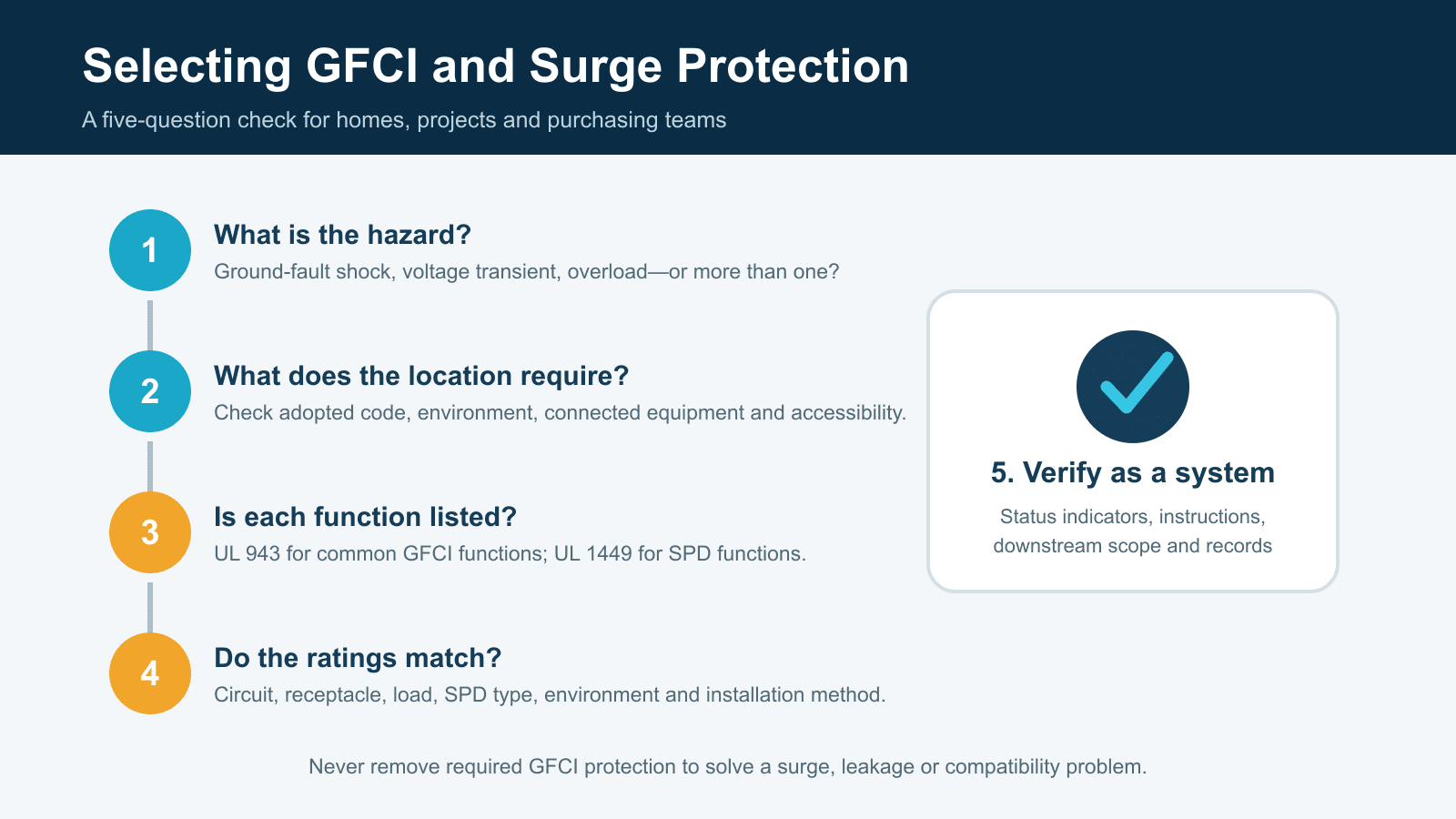
For GFCI devices
- Verify the exact model’s UL or ETL listing and applicable standard.
- Match voltage, amperage, receptacle configuration, and feed-through rating.
- Select TR and WR variants when the location requires them.
- Review self-test, indicator, and end-of-life behavior.
- Confirm LINE/LOAD markings and installation instructions.
- Evaluate reset accessibility and downstream protection scope.
For surge protection
- Confirm the product is an SPD, not merely a power strip.
- Look for evaluation to UL 1449 and verify the exact listing.
- Review voltage protection rating, nominal discharge current, modes of protection, SCCR where applicable, and maximum continuous operating voltage.
- Check whether a visible status indicator shows that protection remains active.
- Match Type 1, Type 2, or Type 3 placement to the system design and manufacturer instructions.
- Consider service-entrance and point-of-use protection as layers rather than assuming one plug-in strip protects every path.
For OEM and distributor purchasing
Do not combine unrelated certification claims in marketing copy. A GFCI listing under UL 943 does not cover surge performance under UL 1449, and an SPD listing does not cover GFCI performance. If a product claims multiple protection functions, verify each function, standard, model, rating, and marking with the certification body.
Faith’s guide to UL Listed versus ETL Listed GFCI outlets explains why the certification organization and the safety standard are different parts of a product claim.
Common Misunderstandings
“My power strip has a breaker, so it is a GFCI.”
No. A resettable strip breaker usually responds to overload. GFCI protection must be explicitly identified and listed.
“A whole-house surge protector protects me from shock.”
No. It addresses transient voltage. Required GFCI protection remains necessary.
“A GFCI will save electronics during lightning.”
A GFCI is not designed as an SPD. Lightning and surge protection also have physical limits; no plug-in device should be marketed as protection from every direct or nearby lightning event.
“Any six-outlet strip is a surge protector.”
No. A relocatable power tap may only distribute power. Verify the UL 1449 SPD listing and protection-status information.
FAQ
Does a GFCI protect electronics?
Its primary function is personnel protection from ground faults, not protection from voltage surges. It may interrupt some faults before further damage occurs, but that is not a substitute for an SPD.
Does a surge protector protect against electric shock?
Not in the way a Class A GFCI does. Use code-required GFCI protection even when a surge protector is present.
Can a surge-protector strip be used outdoors?
Only if the exact product is identified for outdoor use and the entire installation meets environmental requirements. Most household strips are intended for dry indoor locations.
Can I plug a GFCI adapter into a surge protector?
Product stacking can create mechanical, listing, grounding, and overload concerns. Prefer a permanent, code-compliant GFCI-protected receptacle or a single listed product intended for the complete application. Follow each manufacturer’s instructions.
Which device should be installed first?
There is no universal answer for every SPD type and branch-circuit arrangement. Panel-mounted and point-of-use SPDs occupy different locations, while GFCI protection may be at the breaker, receptacle, or portable device. A qualified designer or electrician should follow the adopted code and both manufacturers’ instructions.
How often should each device be checked?
Test a GFCI using its TEST/RESET procedure at the interval stated by the manufacturer. Check an SPD’s protection-status indicator and replacement instructions regularly; many surge components wear as they absorb transients.
Bottom Line
Choose protection by hazard, not by how similar the devices look. A GFCI responds to current leaving its intended path. A surge protector responds to transient overvoltage. A breaker responds to excess current. When a U.S. project includes wet or grounded locations and sensitive electronics, the correct solution may include all three.
Faith Electric has developed wiring devices for the U.S. market since 1996. Contractors, distributors, and OEM buyers can review Faith’s GFCI and wiring-device product range and request model-specific ratings, listing information, and project documentation.
Safety note: Electrical code adoption and amendments vary by jurisdiction. Product selection and installation should be reviewed by the authority having jurisdiction and performed by qualified electrical professionals.