Yes, you can plug an extension cord into a GFCI outlet. But only when the cord matches the load, stays undamaged, suits the location, and serves temporary use.
A GFCI outlet reduces shock risk. It does not turn an undersized, damaged, wet, or overloaded extension cord into a safe one.
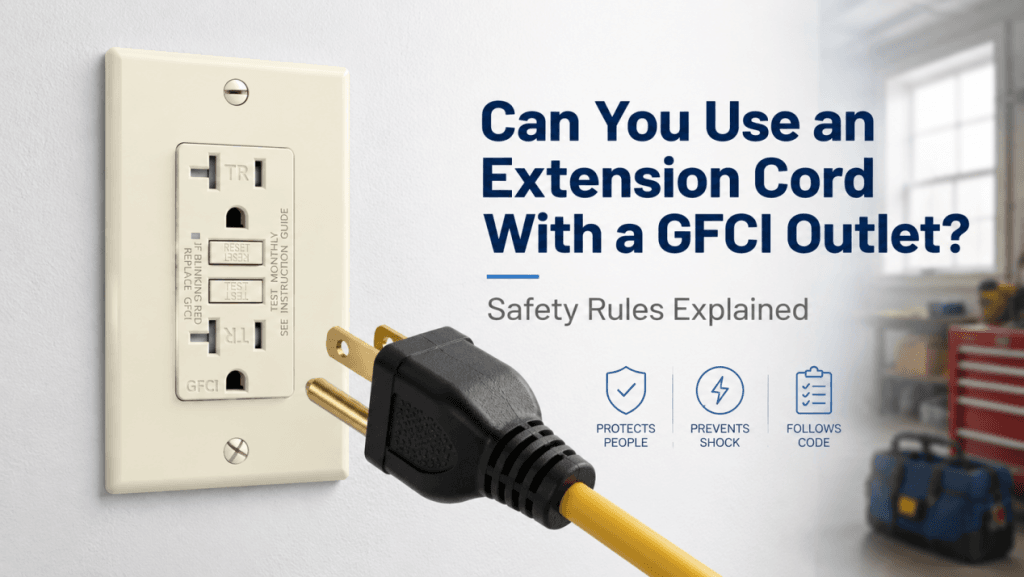
Can You Plug an Extension Cord Into a GFCI Outlet?
Plug the GFCI-protected outlet first, then attach the extension cord. This order keeps protection active for everything downstream.
GFCI stands for Ground Fault Circuit Interrupter. It monitors current flow between hot and neutral wires. When it detects an imbalance — usually 4-6 milliamps of leakage — it cuts power in milliseconds to prevent shock.
This matters in garages, basements, kitchens, and outdoors where moisture or accidental contact raises danger. Yet many assume GFCI makes any cord safe. It does not.
A worn 16 AWG cord running a 12-amp pressure washer will still overheat and create fire risk even on a GFCI circuit. The GFCI protects against ground faults. It cannot fix poor cord choices or misuse.
What a GFCI Outlet Protects Against — and What It Does Not
A GFCI outlet protects people from lethal shocks caused by ground faults. Current leaking through a person to ground triggers it fast. This protection covers tools, appliances, and lighting plugged downstream.
It does not act as:
- A circuit breaker for overload or short circuits
- A surge protector against voltage spikes
- A fix for damaged or wrong-gauge cords
- Protection against heat buildup from undersized wire
GFCI also does not rely on the ground wire to detect faults. It works even without ground. Still, use three-prong grounded cords for equipment that needs them. Never cut off the ground pin or use cheater adapters. That defeats equipment safety design.
How to Choose the Right Extension Cord for a GFCI Outlet
Check the Cord Rating, Gauge, and Length
Always read the label. Match amperage and wattage rating to your equipment.
AWG numbers work backwards: lower number means thicker wire and higher capacity. For typical 15A household circuits:
- 14 AWG handles most light-to-medium loads up to 50 feet
- 12 AWG works better for heavier loads or longer runs
Longer cords create more voltage drop and heat at the same gauge. A 100-foot 16 AWG cord running a space heater drops voltage and gets warm fast. Check your tool’s nameplate and stay under the cord’s rated capacity.
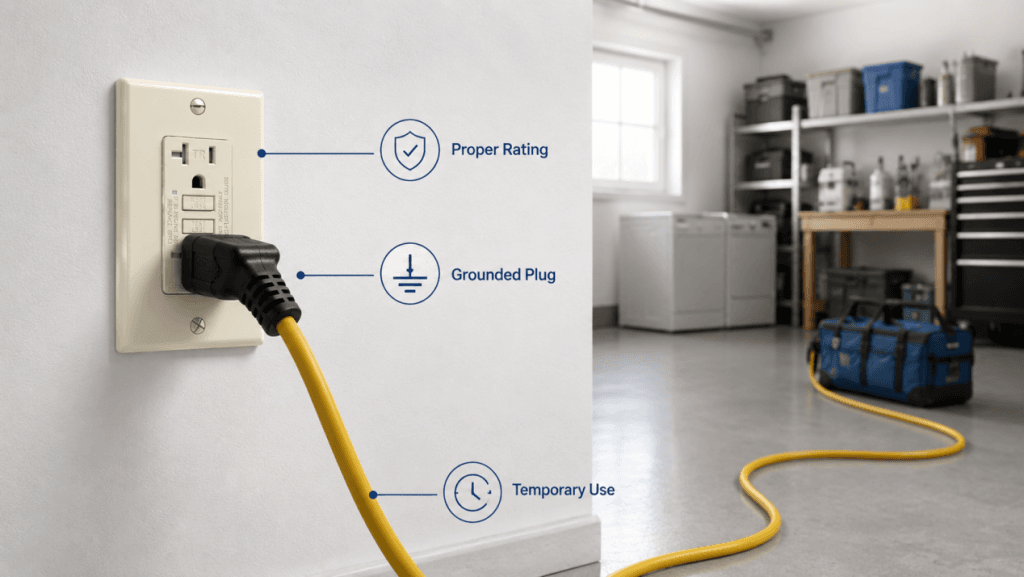
Use a Grounded Cord When the Equipment Requires It
Three-prong tools need three-prong extension cords. The ground pin provides a safe fault path. Skipping it leaves the equipment less safe even with GFCI protection.
Choose Certified Products
Buy only UL Listed or ETL Certified cords and devices. These marks confirm testing to North American safety standards. Cheap no-name cords often fail basic insulation and strain relief tests.
Essential Safety Rules for Using an Extension Cord With a GFCI Outlet
Follow these rules every time.
Do Not Overload the Cord
Space heaters, hair dryers, pressure washers, circular saws, and air compressors draw heavy current. A thin cord under high load heats up, melts insulation, and starts fires. GFCI will not stop this. Match cord capacity to the actual running amps.
Do Not Use Damaged, Loose, or Hot Cords
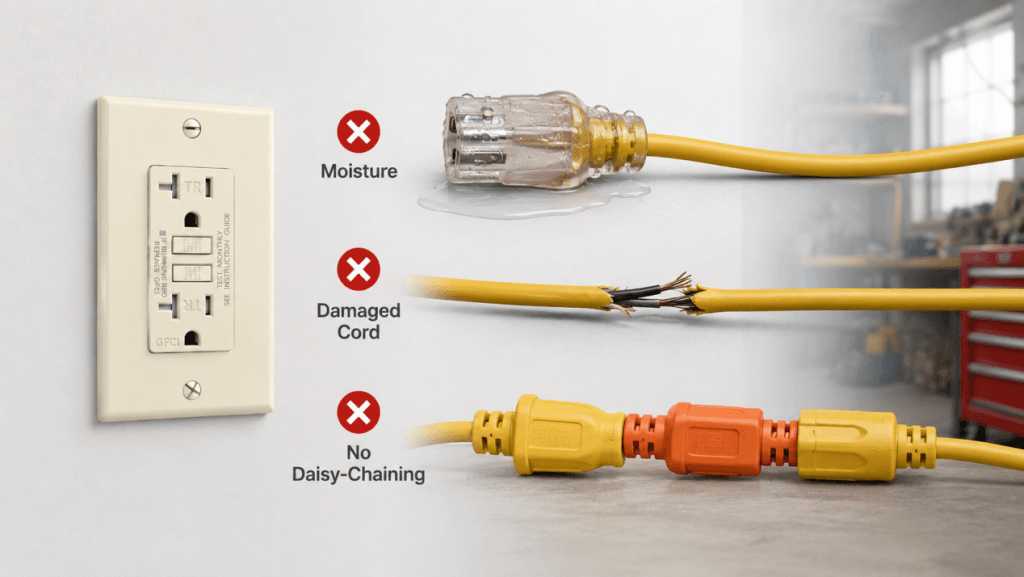
Inspect before every use. Replace immediately if you see:
- Cracked or brittle insulation
- Frayed outer jacket
- Exposed wires
- Loose or bent prongs
- Burn marks
- Hot spots during operation
Do Not Daisy-Chain Extension Cords
Multiple cords create extra connection points, resistance, and failure chances. Use one properly rated longer cord instead.
Route the Cord Safely
Keep cords out of walkways, doorways, and high-traffic areas. Never run them under rugs, through walls, or over sharp edges. Avoid nails, staples, or heavy objects pressing on them. Pull by the plug, never the cord.
Can You Use an Extension Cord With a GFCI Outlet Outdoors?
Yes, but outdoor use demands stricter standards.
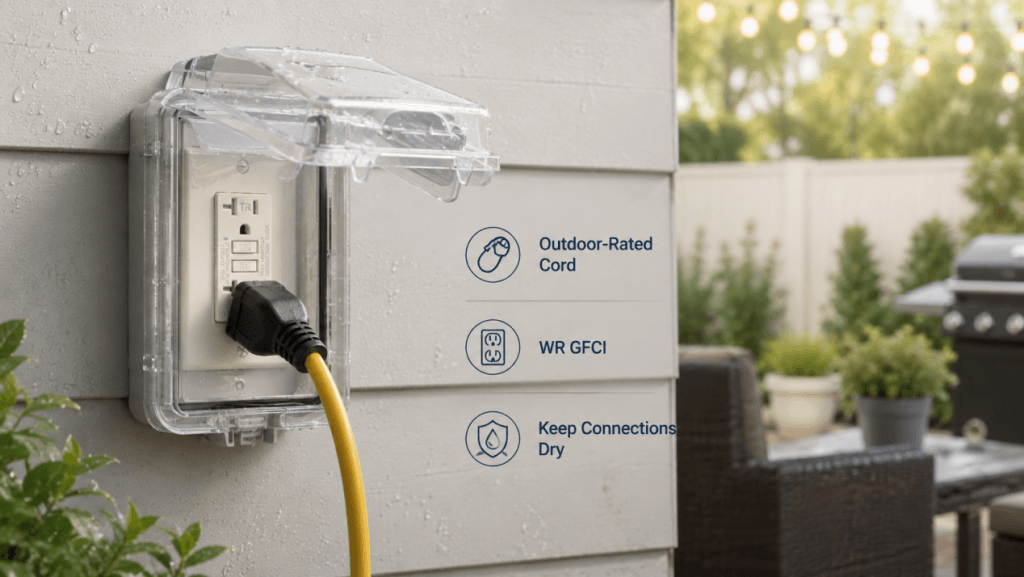
Use an Outdoor-Rated Extension Cord
Look for SJTW or similar markings. These cords resist UV, water, oil, and cold temperatures. Indoor cords degrade quickly outside.
Use Weather-Resistant GFCI Outlets and In-Use Covers
Pair outdoor-rated cords with weather-resistant (WR) GFCI receptacles and in-use bubble covers. Mount connections high and dry when possible. Keep plugs elevated from puddles and snow.
Keep Plugs and Connectors Dry
Moisture at connections causes nuisance trips or real faults. Dry everything before plugging in. Wet tools or cords often trigger GFCI immediately.
Why Does a GFCI Trip When You Plug In an Extension Cord?
Trips usually signal a real or potential ground fault, not a bad GFCI.
Moisture in the Cord, Plug, or Connected Tool
Common in garages, outdoors, or after rain. Even small condensation inside connectors leaks current.
Damaged Insulation or Faulty Equipment
Frayed cords, pinched wires, or failing motors create leakage paths. Old tools often develop internal faults over time.
What to Do Before Resetting the GFCI
- Unplug the extension cord and all devices.
- Inspect cord and plugs for damage or moisture.
- Test with a different known-good cord.
- Press TEST then RESET on the GFCI.
- If it still trips, call a qualified electrician.
When You Should Not Use an Extension Cord With a GFCI Outlet
A GFCI outlet does not give permission for unsafe practices. Avoid extension cords when:
- The cord shows any damage or heat
- Using indoor cord outdoors
- Running high-power tools for long periods
- Daisy-chaining multiple cords
- Routing through water or snow
- Hiding cords under carpets or inside walls
- Replacing permanent wiring
- Removing ground pins
Extension cords serve temporary power only.
Better Long-Term Solutions Than Relying on Extension Cords
Frequent extension cord use signals a need for proper installation. Add new receptacles on dedicated circuits. Install weather-resistant GFCI outlets outdoors with proper covers. Have a qualified electrician assess your load and wiring.
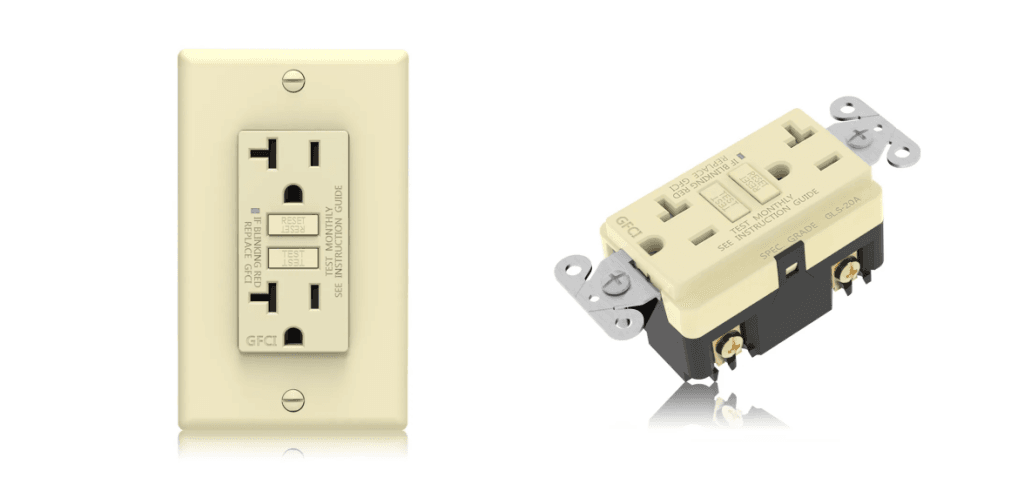
Faith Electric supplies UL/ETL certified GFCI outlets, weather-resistant receptacles, in-use covers, and complete in-wall electrical solutions for residential and commercial projects across the US market. Our 28 years of manufacturing experience focus on reliable, code-compliant products that solve these exact safety challenges.
FAQ
Does a GFCI outlet protect the entire extension cord?
It protects against ground faults along the cord and connected equipment. It cannot prevent overload, physical damage, or overheating.
Can I plug a power strip into a GFCI outlet?
Yes, if the strip is rated properly and not overloaded. Avoid using it outdoors or in wet areas.
Can I use an indoor extension cord outside if plugged into a GFCI outlet?
No. GFCI does not add weather resistance. Use outdoor-rated cords only.
Can a GFCI outlet replace a circuit breaker?
No. They serve different purposes. GFCI handles ground faults. Breakers protect against overload and short circuits.
How often should I test a GFCI outlet?
Monthly for home use. Press the TEST button and confirm it trips, then RESET. Commercial or jobsite locations need more frequent checks per local codes.
An extension cord remains a temporary power solution. For regular or long-term needs, install proper GFCI-protected receptacles and circuits. This delivers both safety and convenience.
Contact Faith Electric for UL/ETL certified wall electrical devices tailored to your project requirements. Our team helps select the right solutions for North American installations.