By Faith
A GFCI outlet that keeps buzzing, crackling, or sizzling needs attention from a qualified electrician. Stop using it and do not keep pressing RESET to see whether the noise disappears. A sound heard once during a button operation and an alarm documented for a particular model are different observations; neither explains an ongoing, unidentified buzz.
The Electrical Safety Foundation International lists buzzing, flickering lights, discoloration, unusual warmth, and burning smells as reasons to have an electrical system inspected. You do not need to identify the failed component before getting help.
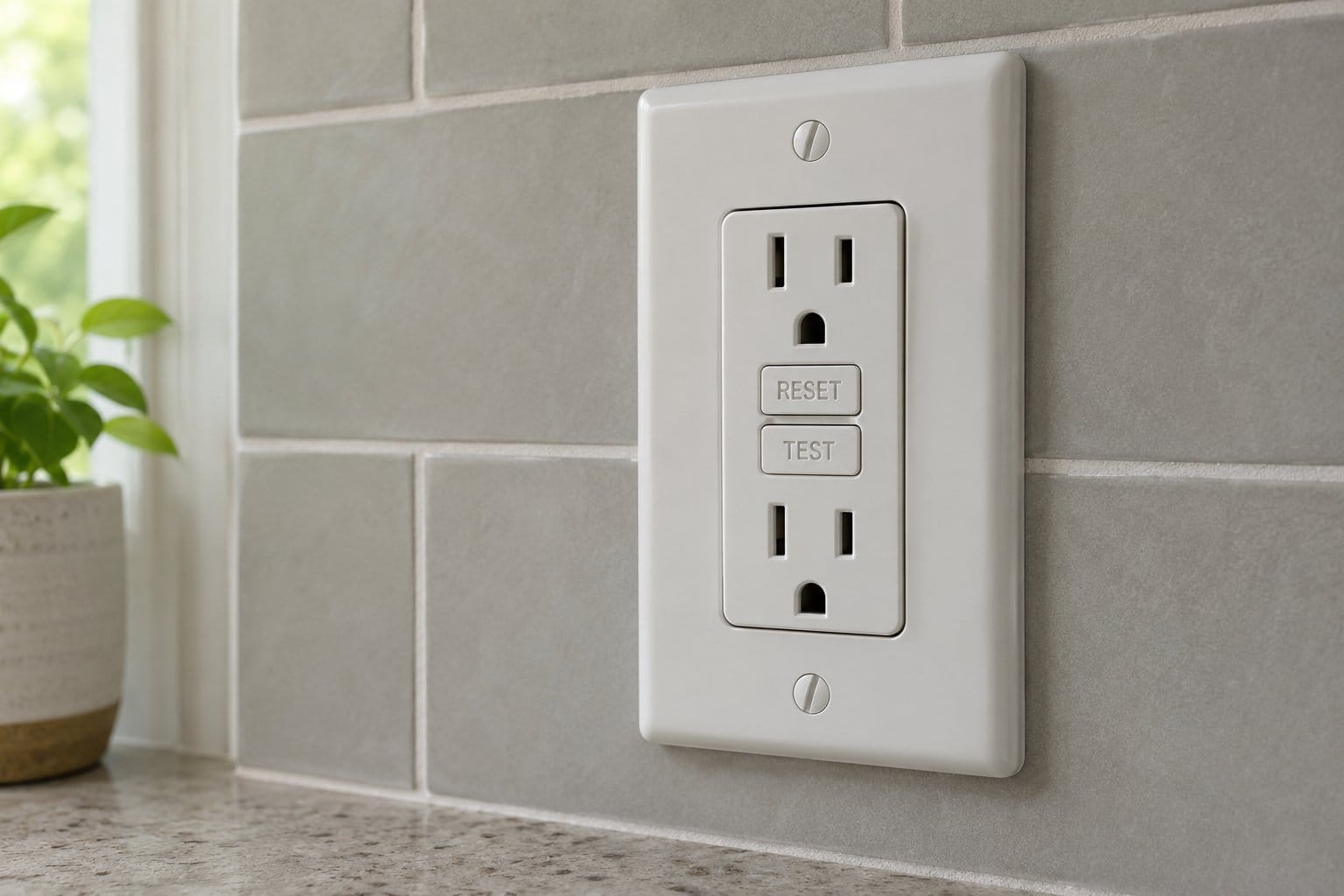
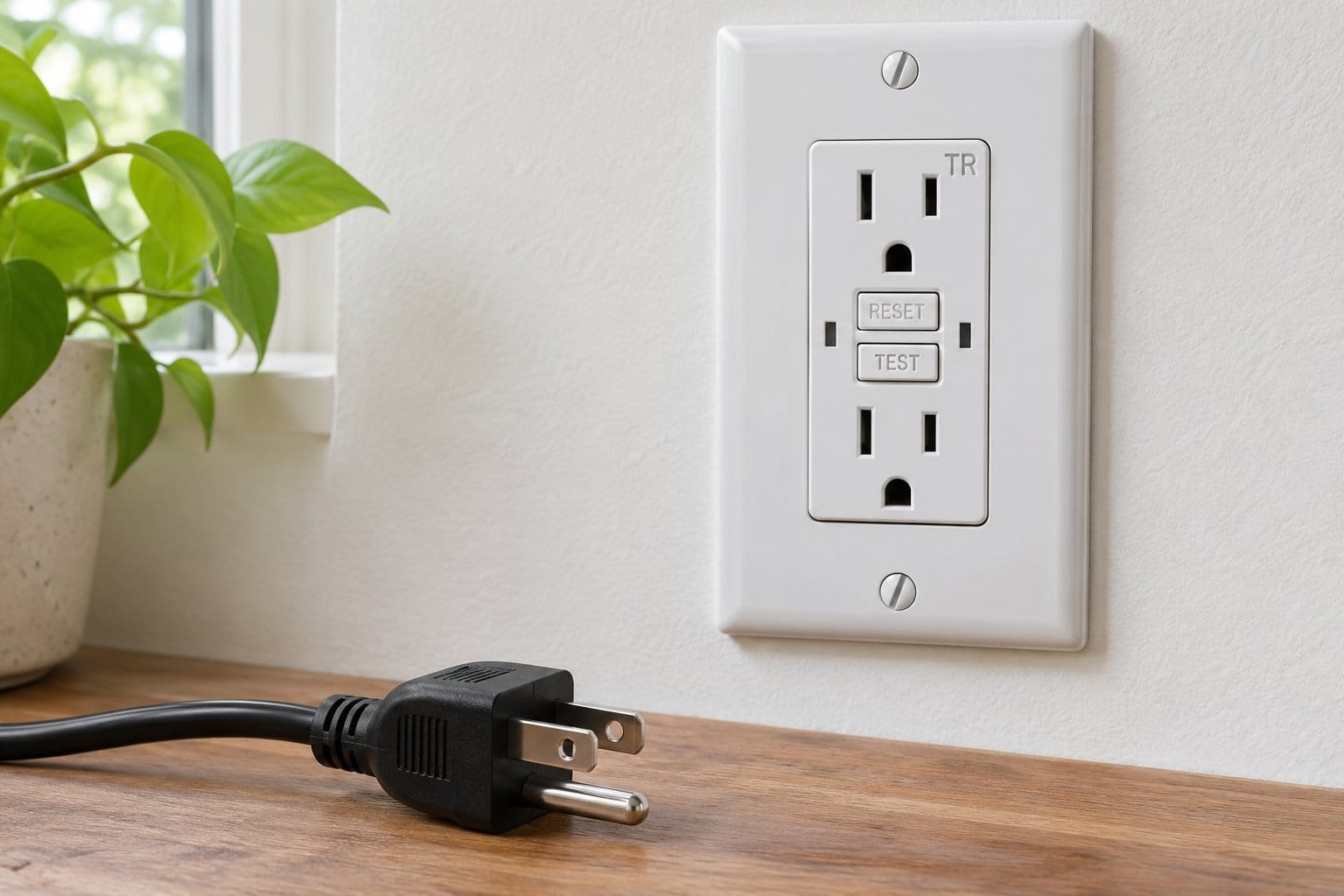
AI-generated illustration. This is not a photograph of a diagnosed fault, an inspected installation, or a specific FAITH product.
What to do first
Keep people away from a receptacle making a persistent unexplained noise. Do not touch the faceplate to check its temperature, wiggle a plug, or press buttons to reproduce the sound. Do not unplug equipment that is hot, damaged, sparking, or smoking.
If you can clearly identify the affected circuit and safely reach its breaker, switch that circuit off and leave it off for inspection. If you cannot safely identify or isolate it, stay away and contact a qualified electrician. Do not open the panel or try breakers at random.
Smoke, flames, or a suspected fire take priority: leave the building and call 911 or your local emergency number from a safe location. Do not delay leaving to reach the breaker or record a video. FirstEnergy’s electrical-fire guidance emphasizes moving outside, calling for help, and staying out.
Buzzing, clicking, and an audible alarm are different clues
A continuing buzz or crackle
Describe whether the sound is continuous, intermittent, or tied to an appliance starting. Do not assume the cause is a harmless vibration, an overloaded circuit, or a worn-out GFCI solely from its sound.
Leviton’s outlet safety guide identifies buzzing, popping, and sizzling as warning signs that can suggest arcing or electrical faults. It also describes damaged contacts and faulty connections among outlet problems. Those possibilities need inspection; an online description cannot establish which one is present.
One click during TEST or RESET
If you heard one click while operating a button during a routine test, record that separately from a continuing noise. The useful question is whether the device performed its specified test sequence—not how loud the click was.
For example, Leviton’s manual test instructions check that TEST interrupts power to an operating lamp or radio and that RESET restores it. Hearing a click alone does not complete that check. This is an explanation of normal maintenance, not a recommendation to test a currently buzzing or damaged outlet.
Beeping from a model with an alarm
Some GFCI receptacles intentionally sound an alarm. Legrand’s 2097TRAI product support states that its alarm sounds when the GFCI has tripped.
That is a model-specific feature, not a rule for every GFCI. Check the model’s manual before calling a sound an alarm, and do not reset a tripped device merely to silence it without addressing the trip condition. Heat, burning smells, smoke, or crackling still require the safety response above.
Does self testing explain the noise
The words “self test” on a receptacle do not identify the source of a noise. Leviton confirms that its Smart GFCI performs automatic periodic tests, but that statement does not establish that an unexplained buzz is normal.
Use the exact model’s instructions for its indicator and alarm behavior. Do not apply another brand’s light colors, test interval, or alarm pattern to your device. If you also see a red indicator, our GFCI red-light guide addresses that separate symptom; the light is not a reason to disregard the sound.
What if nothing is plugged in or the noise stops
Empty sockets do not establish that a receptacle is de-energized. Leave inspection of the device and its wiring to the electrician rather than inserting a tester or opening the faceplate to investigate.
If the sound has stopped, record when it happened and whether an appliance was operating at the time. Do not repeatedly reconnect appliances or reset the GFCI to recreate it. A symptom disappearing does not tell you what caused it or whether a repair is needed.
Give the electrician useful observations
Without approaching a hazard or recreating the noise, note:
- Where it seemed to come from: the receptacle, a plugged-in device, or somewhere nearby.
- Whether it was continuous, a series of clicks, or a recognizable alarm; include any indicator light you already observed.
- Whether power was interrupted, lights flickered, or an appliance had just started.
- Whether it followed recent installation, painting, water exposure, or appliance changes.
These details help distinguish a device problem from a plug, connection, or circuit problem. Replacing the GFCI without identifying the cause can leave the underlying issue unresolved. Keep the receptacle out of use until the required inspection and repair are complete.