By Faith
If a tamper-resistant outlet won’t accept a plug, first check that the plug is undamaged, correctly oriented, and lined up squarely with both slots. The internal shutters are designed to open when both blades enter together. A little additional resistance can be normal; a plug that remains blocked or needs excessive force should not be pushed harder.
This also applies to a tamper-resistant GFCI outlet. Its TEST and RESET buttons do not open the shutters. Start with the physical fit, rather than repeatedly resetting the device.
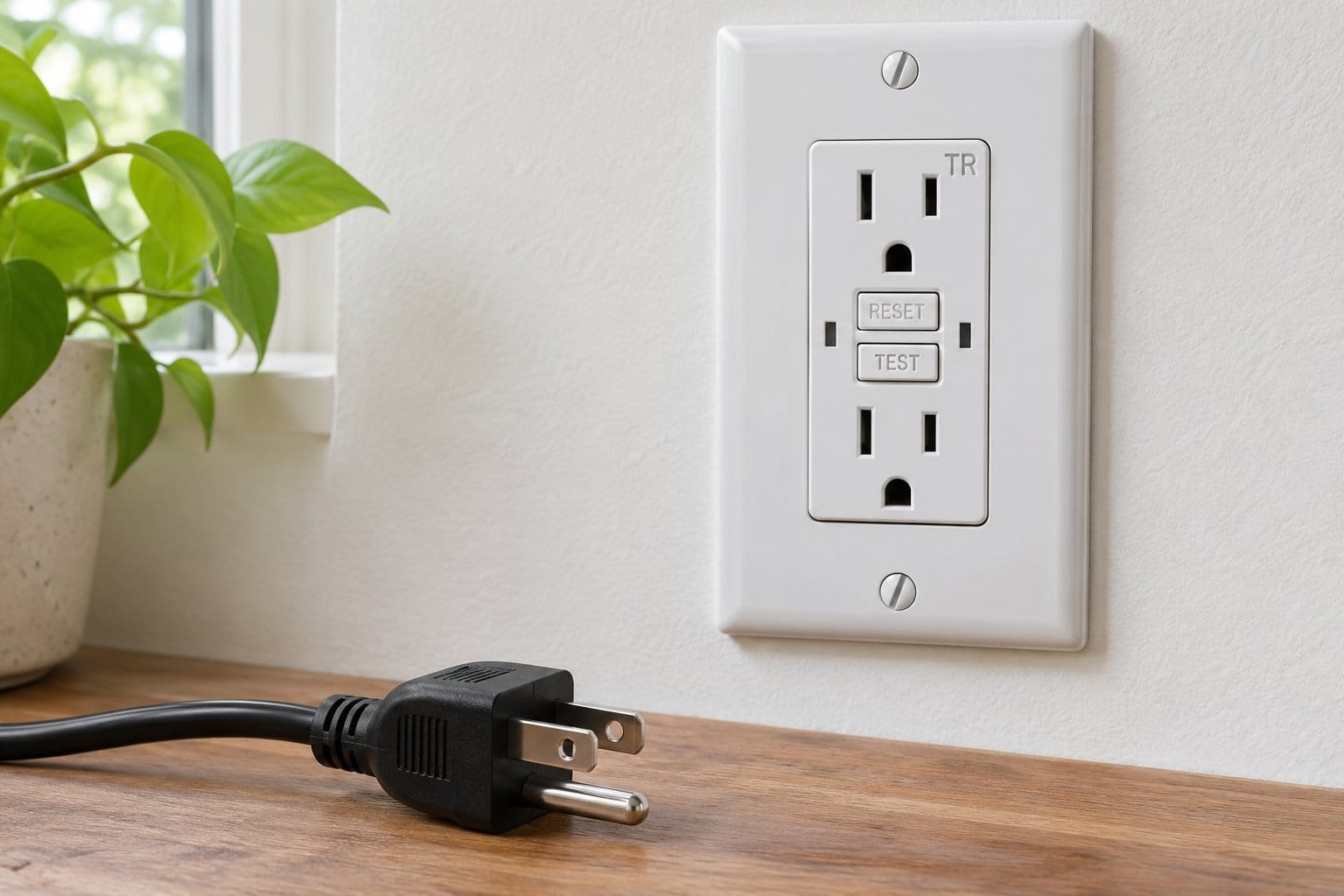
AI-generated illustration of a generic receptacle and plug; not a photograph of an inspected installation or a specific FAITH model.
Why the plug can stop at the slots
A TR receptacle has protective shutters behind the blade openings. They help keep a single foreign object from reaching the contacts. Leviton’s safety guide describes how simultaneous pressure on both sides opens them. If one blade arrives ahead of the other, the shutters may stay closed.
Leviton’s plug-insertion instructions explain that ordinary two- and three-prong plugs must enter evenly, and that shuttered receptacles can require somewhat more insertion effort than unshuttered ones. That is a reason to check alignment, not permission to force a stuck plug.
Look for a TR marking or check the receptacle’s model information. TEST/RESET buttons alone identify a different function and do not establish that the device has tamper-resistant shutters. See our guide to identifying a tamper-resistant outlet if you are unsure which device you have.
Four checks before trying again
1. Inspect the unplugged plug and the outlet face
Check the plug for bent or misaligned blades, cracked plastic, scorching, or a damaged cord. Do not straighten a blade and keep experimenting. A damaged appliance plug needs appropriate repair or replacement before use. ESFI recommends checking plugs and cords for damage and taking damaged cords out of service.
Look at the receptacle without touching or probing its openings. If there is paint in the slots, a crack, distortion, or evidence of overheating, stop here. Do not scrape the slots clean or remove the cover to investigate.
2. Match the blade orientation
A polarized two-prong plug has one blade wider than the other. Match that blade to the wider slot. A grounded three-prong plug must also line up with the ground opening. Never trim a wide blade, remove a ground pin, or use an adapter to overcome a physical mismatch.
If the blade arrangement differs from the receptacle, stop and identify the plug and outlet ratings. A different arrangement can mean a different receptacle configuration; it is not a shutter problem to solve by pushing harder.
3. Align both blades together
Only if the plug and receptacle appear sound and dry, hold the insulated plug body and bring it straight toward the matching openings. Keep both flat blades level with each other so they meet the shutters together. Use steady, even pressure, following the device manufacturer’s instructions.
Do not tilt one blade into a slot first, lever the plug sideways, or push on the cord. If correcting the alignment does not allow normal insertion, stop. There is no universal force threshold that makes a persistently blocked receptacle safe to use.
4. Check that the plug seats fully
Do not leave the plug halfway in just because the appliance starts working. Leviton’s insertion instructions also stress full seating. If the plug cannot seat properly, leave that receptacle unused and have the fit checked.
If it seats but is loose or falls out, that is another fault—not evidence that the shutters have finally “broken in.” ESFI advises replacing receptacles that no longer hold plugs securely.
Normal resistance or a receptacle that needs attention?
Some initial resistance followed by smooth, complete insertion is different from a repeated hard stop. Stop using the receptacle if a correctly aligned, undamaged, matching plug still cannot enter normally, or if the device moves in the wall when you try.
Do not keep retrying when you notice heat, discoloration, a burning smell, buzzing, cracking, or melting. These are warning signs covered in Leviton’s outlet safety guide. Do not touch the hot or damaged receptacle or try to unplug anything from it. Keep others away and get qualified help. Only switch off the affected circuit if you can clearly identify it and reach its breaker safely; if you cannot, stay away and have a qualified electrician disconnect it. Do not open the panel or test breakers by trial and error.
If you see smoke or flames, or suspect a fire, leave the building and call 911 or your local emergency number from a safe location. Do not delay leaving to reach a breaker or take a photograph. FirstEnergy’s electrical-fire guidance prioritizes getting outside and calling emergency services.
For a simple fit problem with no warning signs, take a photo of the outlet face and the already-unplugged plug from a safe position for the electrician or manufacturer. Record whether the problem began after installation, painting, or damage. Do not retry with different plugs to diagnose a suspect receptacle.
Questions about TR GFCI outlets
Will pressing RESET unlock the plug slots?
No. Resetting the GFCI and opening the TR shutters are separate functions. A plug can be mechanically blocked regardless of the GFCI’s electrical state. Conversely, fitting a plug successfully does not prove that the GFCI protection works; follow that model’s testing instructions.
Do I need a special plug for a tamper-resistant outlet?
TR receptacles are designed for ordinary matching two- or three-prong plugs. Check orientation and condition first. Do not buy a “shutter-opening” tool or insert another object to release the mechanism.
Can I lubricate the slots or break the shutters in?
Do not spray lubricant into the outlet, insert tools, or repeatedly force a plug to loosen it. If normal insertion remains difficult, contact the manufacturer with the model number or have a qualified electrician inspect the device. Keep the required safety features when selecting any replacement.