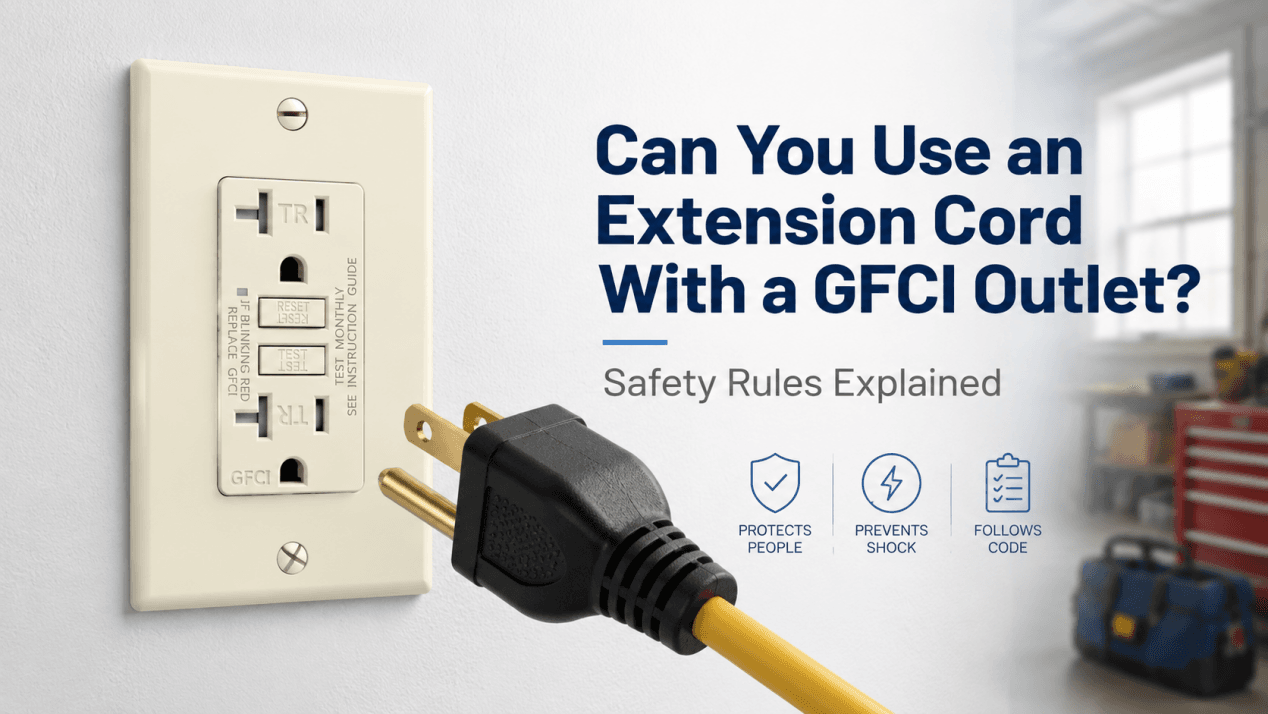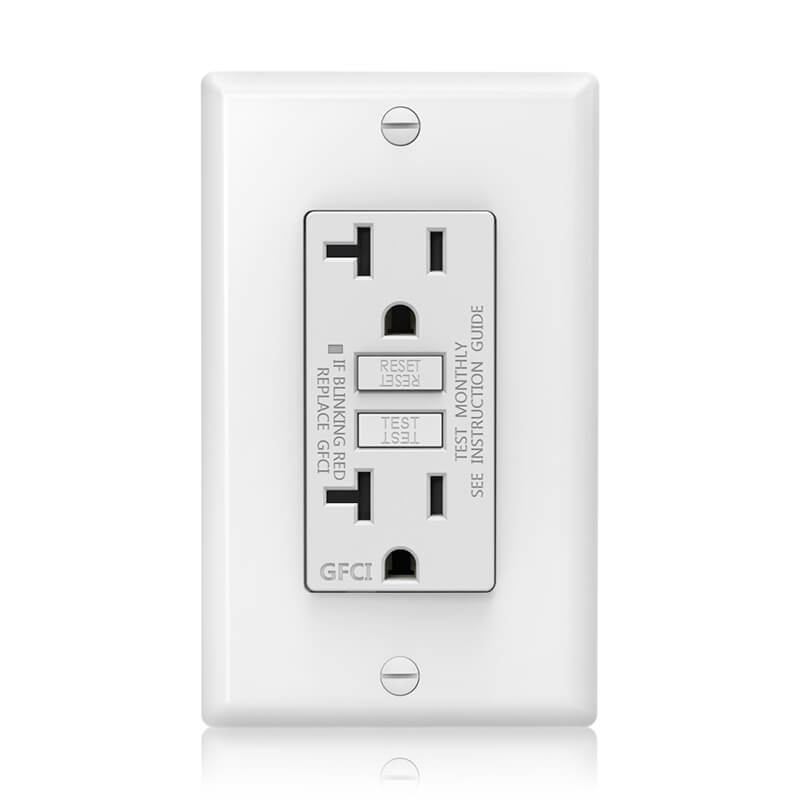
If you’re familiar with electrical outlets, you may have noticed the abbreviations “GFI” and “GFCI” printed on outlets or product packaging. Many people wonder what the difference is and whether these terms refer to different products. In fact, GFI and GFCI refer to the same type of device, designed to protect people from electric shock caused by ground faults.
In this guide, we’ll take a closer look at GFCI/GFI outlets and explain everything you need to know to better understand what they are and how they work.
What is a GFCI?
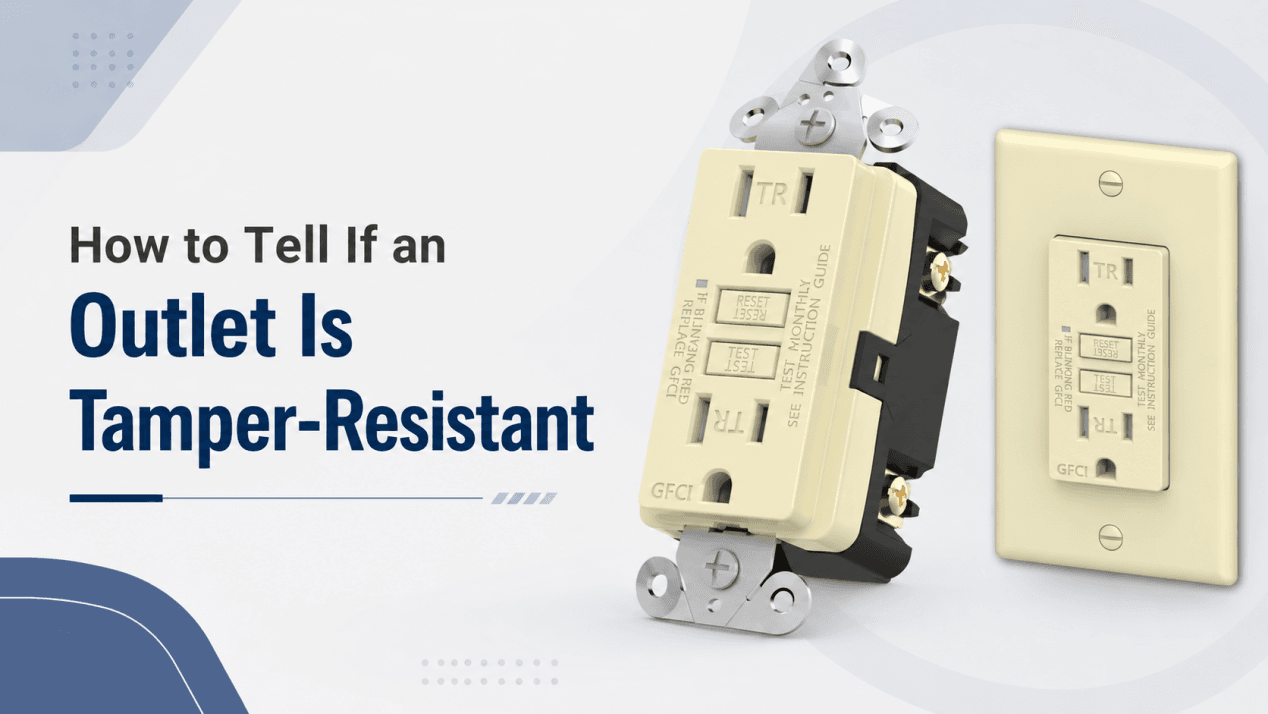
A GFCI (Ground Fault Circuit Interrupter) is a specialized electrical outlet designed to protect against ground faults – dangerous situations where electricity escapes its intended path. These outlets constantly monitor the current flowing through the hot and neutral wires. Under normal conditions, these currents should be identical. If a difference as small as 4-6 milliamps is detected (indicating current leakage, possibly through a person), the GFCI cuts power within 1/40th of a second to prevent serious shock or electrocution.
GFCIs are required by electrical codes in areas where water and electricity might come into contact, including:
- Bathrooms
- Kitchens
- Garages
- Outdoor areas
- Basements
- Laundry rooms
What is a GFI?
Here’s where confusion often arises: GFI is simply another name for GFCI. The terms are interchangeable, with “GFI” being an abbreviation for “Ground Fault Interrupter” while “GFCI” stands for “Ground Fault Circuit Interrupter.” Both refer to the same protective device.
How GFCI/GFI Outlets Work
These safety devices operate by comparing the current going out to the current returning through the neutral wire. If there’s an imbalance (meaning some current is leaking elsewhere, possibly through a person), the device trips immediately. This is fundamentally different from standard circuit breakers, which only respond to overloads or short circuits.
For example, Class A GFCI outlets manufactured by our company for residential use in the North American market are designed to trip at a leakage current of approximately 4–6 milliamps, in compliance with recognized safety standards such as UL 943.
Key features of GFCI outlets include:
- Test and Reset buttons: Allow users to verify proper operation and restore power after a trip
- Fast response time: Can react in as little as 25 milliseconds
- Self-testing capability: Modern units automatically check their functionality and indicate when replacement is needed
GFCI vs. AFCI: Complementary Protections
While GFCI outlets protect against ground faults (electricity escaping to ground), AFCI (Arc Fault Circuit Interrupter) devices protect against dangerous arc faults that can cause fires. AFCIs are typically installed at the breaker panel but are sometimes available as combination AFCI/GFCI outlets.
Arc faults occur when electricity jumps between conductors, creating intense heat that can ignite surrounding materials. The National Electrical Code now requires AFCI protection in most living areas of homes.
Installation and Maintenance
When installing or updating outlets:
- Always turn off power at the breaker before working on any electrical components
- Use a non-contact voltage tester to confirm power is off
- For maximum protection in modern homes, consider combination AFCI/GFCI devices where appropriate
Regular testing is crucial – press the TEST button monthly to ensure proper operation. The outlet should cut power immediately, and the RESET button should restore it.
Global Variations
In North America, GFCI protection is typically provided through outlets or breakers. Elsewhere, similar protection may be provided by devices called RCCBs (Residual Current Circuit Breakers). The fundamental safety concept remains the same, regardless of the specific implementation.
Conclusion
Whether you call it GFI or GFCI, these life-saving devices provide essential protection against electrical shocks in areas where water and electricity may meet. While the terms are interchangeable, “GFCI” is the more technically accurate designation. For complete home electrical safety, GFCI protection should be combined with AFCI protection – GFCI guarding against shocks and AFCIs preventing electrical fires.
Always consult a licensed electrician if you’re unsure about your home’s electrical safety needs or the proper installation of these critical safety devices.
Discover Faith Electric, your trusted manufacturer specializing in safety-focused electrical outlets. Our GFCI and AFCI outlets are built for durability and can withstand up to 20,000 trip/reset cycles, far exceeding the 6,000-cycle requirement set by UL standards.
Contact us today to request a free sample.

References / Data Sources:


![GFCI Outlet Requirements for U.S. Construction Projects [2026 Guide]](https://www.faithelectricm.com/wp-content/uploads/2026/06/图片10-1.png)