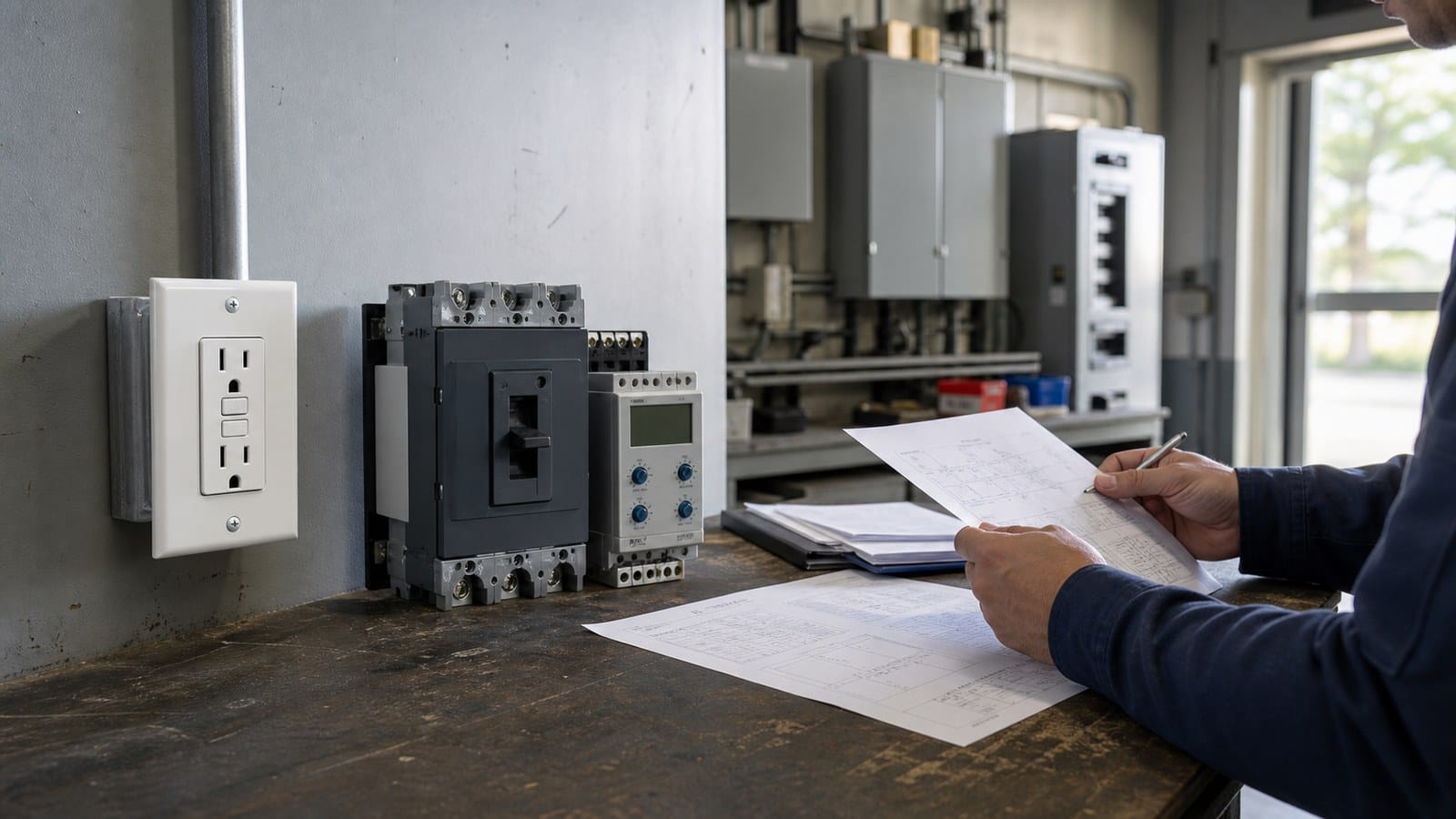
GFCI outlets save lives in wet and high-risk areas. Many homeowners and contractors still struggle to spot them or confirm they actually work. This guide walks through clear identification methods, testing steps, and common mistakes.

What Is a GFCI Outlet and Why Does It Matter?
A GFCI outlet stands for Ground Fault Circuit Interrupter. It monitors current flow between hot and neutral wires. When it detects a ground fault — current leaking to ground through water or a person — it cuts power in milliseconds.
This device focuses on shock protection. It does not replace standard circuit breakers for overloads or AFCI devices for arc faults. In a typical kitchen or bathroom, a person might touch a faulty appliance with wet hands. The GFCI limits exposure to dangerous current levels before injury occurs.
Contractors on renovation projects often find older homes missing GFCI protection in required spots. Adding them reduces liability and meets code.
The Easiest Way to Identify a GFCI Outlet
Start with a visual check. Most GFCI outlets reveal themselves immediately.
Look for TEST and RESET Buttons
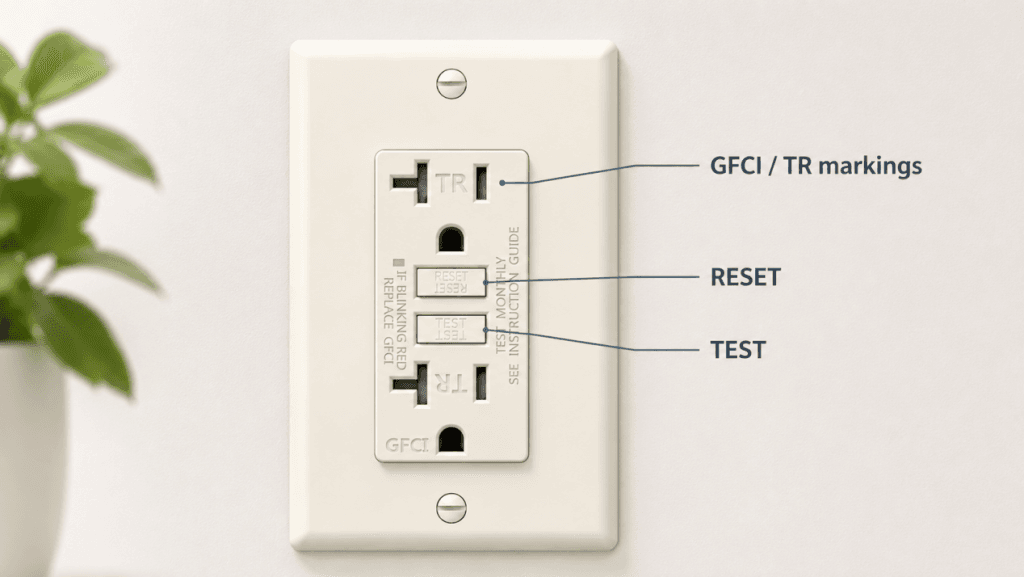
The clearest sign is two buttons on the face of the outlet, usually labeled TEST and RESET. These buttons distinguish GFCI receptacles from standard ones. Button colors vary — red, black, or matching the outlet face — so never rely on color alone.
In commercial kitchens or hotel bathrooms, these buttons appear on nearly every qualifying outlet.
Check the GFCI Markings and Labels
Inspect for printed markings: “GFCI,” “Ground Fault Circuit Interrupter,” “GFCI Protected,” or “Test Monthly.” Some outlets carry WR (Weather Resistant) or TR (Tamper Resistant) ratings.
A “GFCI Protected” label on a standard-looking outlet does not mean the outlet itself is the GFCI device. It often indicates protection from an upstream source.
Notice the Indicator Light
Newer models include LED status lights. These lights show power status or trip conditions, but logic differs by brand. Treat the light as supporting evidence only. Always combine it with buttons, labels, and actual testing.
Can an Outlet Be GFCI Protected Without TEST and RESET Buttons?
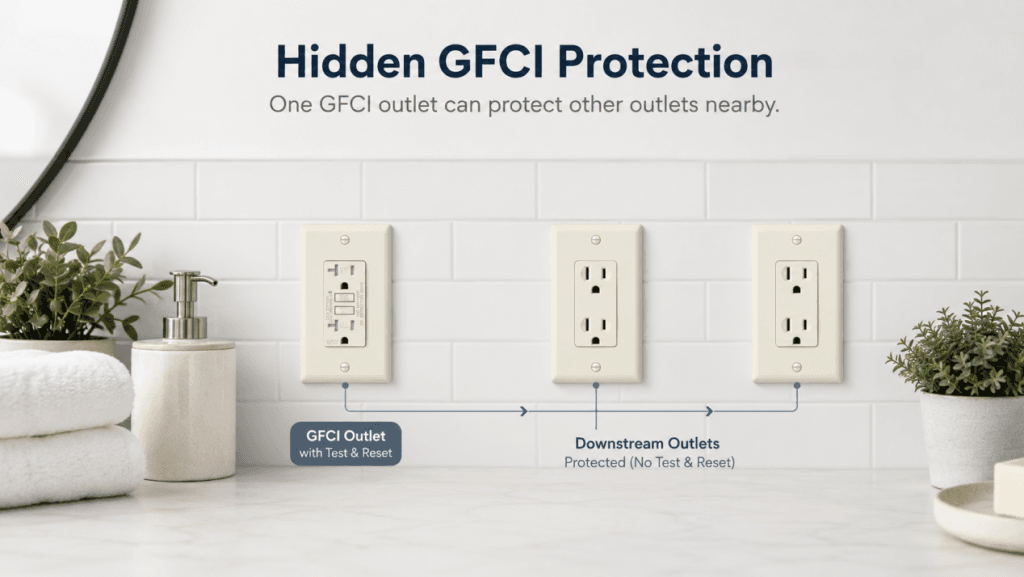
Yes. Many protected outlets look completely ordinary.
It May Be Protected by an Upstream GFCI Outlet
One GFCI receptacle can safeguard multiple downstream outlets on the same circuit. In a kitchen with six countertop receptacles, only one or two may carry the buttons. The rest stay silent but remain protected. Check nearby outlets if power is lost at a standard receptacle.
It May Be Protected by a GFCI Breaker
Protection sometimes originates in the electrical panel. A GFCI breaker with its own TEST button guards the entire circuit. Wall outlets then appear standard. Open the panel and look for breakers with test features in garages, basements, or outdoor circuits.
It May Be a Standard Outlet With No GFCI Protection
No buttons, no labels, no upstream protection, and no GFCI breaker means standard outlet. This situation violates code in bathrooms, kitchens, and outdoor areas. Fix it immediately in wet locations.
How to Test a GFCI Outlet
Visual checks alone are not enough. Test functionality.
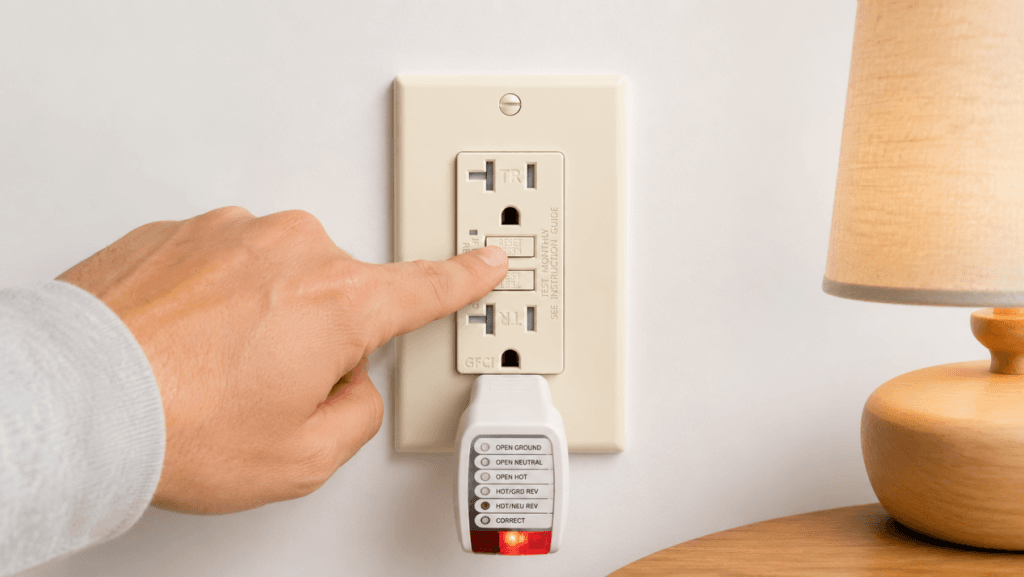
Test It with the Built-In TEST and RESET Buttons
- Plug in a lamp or known working device.
- Press the TEST button. The device should lose power.
- Press RESET. Power should return.
If TEST fails to cut power or RESET does not restore it, the device needs attention. Do not ignore repeated failures.
Test It with a GFCI Outlet Tester
A plug-in receptacle tester confirms correct wiring and GFCI trip function. It provides quick verification on job sites. Remember, these tools offer basic checks. Complex issues still require a licensed electrician.
What If the GFCI Will Not Reset?
Common causes include missing upstream power, tripped breaker, reversed line/load wiring, downstream leaks, moisture, or internal failure. Trace the circuit systematically rather than assuming the outlet itself is bad.
Where Are GFCI Outlets Commonly Used?
Codes mandate GFCI protection in specific locations.
Bathrooms, Kitchens, and Laundry Areas
These zones see constant water exposure and appliance use. All bathroom receptacles need protection. Kitchen countertops require it across the board under recent NEC updates. Laundry rooms follow the same rule.
Garages, Basements, and Utility Areas
Damp floors and power tools create risks. Check both wall receptacles and panel breakers.
Outdoor, Pool, Spa, and Wet Locations
Outdoor outlets demand GFCI plus weather-resistant features. Use proper covers for in-use applications. Local code versions and inspections set final requirements.
GFCI Outlet vs Standard Outlet vs AFCI Outlet vs GFCI Breaker
Use this comparison for quick reference:
| Type | Main Protection | How to Identify | Common Use |
| Standard Outlet | None for ground faults | No TEST/RESET buttons | Dry interior locations |
| GFCI Outlet | Ground fault shock protection | TEST/RESET buttons on receptacle | Wet, damp, outdoor areas |
| AFCI Outlet/Breaker | Arc fault fire protection | AFCI markings, test features | Living areas, bedrooms |
| GFCI Breaker | Ground fault at panel level | TEST button on breaker in panel | Whole circuit protection |
GFCI prevents shocks. AFCI stops fires from arcing. They serve different purposes and often work together.
Signs That a GFCI Outlet May Need Replacement
Watch for these warning signs during maintenance.
TEST or RESET Does Not Work Properly
Failed tests or buttons that stick indicate internal wear.
The Outlet Trips Frequently
Frequent tripping points to moisture, leaking appliances, or aging components. Distinguish this from normal overloads handled by breakers.
There Are Signs of Physical Damage or Aging
Cracks, burn marks, discoloration, loose fit, or odd smells demand immediate replacement. Outdoor units degrade faster under sun and weather.
How to Choose the Right GFCI Outlet for Replacement or New Projects
Select devices that match project demands and code.
Look for UL or ETL Certification
For the US market, UL or ETL listing confirms compliance with safety standards. This matters for inspectors, insurers, and long-term reliability.
Match the Rating and Application
Choose 15A or 20A based on circuit requirements. TR ratings suit residential areas with children. WR ratings fit outdoor and damp locations.
Consider Self-Test and Indicator Features
Self-testing models reduce manual maintenance. Indicator lights help facility teams spot issues quickly.
FAQ
How do I know if my outlet is GFCI?
Check for TEST/RESET buttons, look for markings, and run the test procedure.
Can an outlet be GFCI protected without buttons?
Yes. Upstream GFCI outlets or breakers often protect standard-looking receptacles.
What does a GFCI outlet look like?
It typically features two buttons in the center, GFCI labels, and sometimes a status light.
Why won’t my GFCI outlet reset?
Possible causes include no upstream power, wiring errors, downstream faults, or a failed unit.
Do outdoor outlets need GFCI protection?
Yes. Most outdoor receptacles require GFCI. Combine with WR ratings and weatherproof covers.
Final Thoughts
Spotting a GFCI starts with buttons and labels, continues with understanding hidden protection, and ends with proper testing. Regular checks keep systems safe and code-compliant.
Faith Electric manufactures UL/ETL certified GFCI outlets, standard receptacles, switches, and complete wall electrical solutions with 28 years of experience serving the North American market. Contact us for product specifications, samples, or project support.