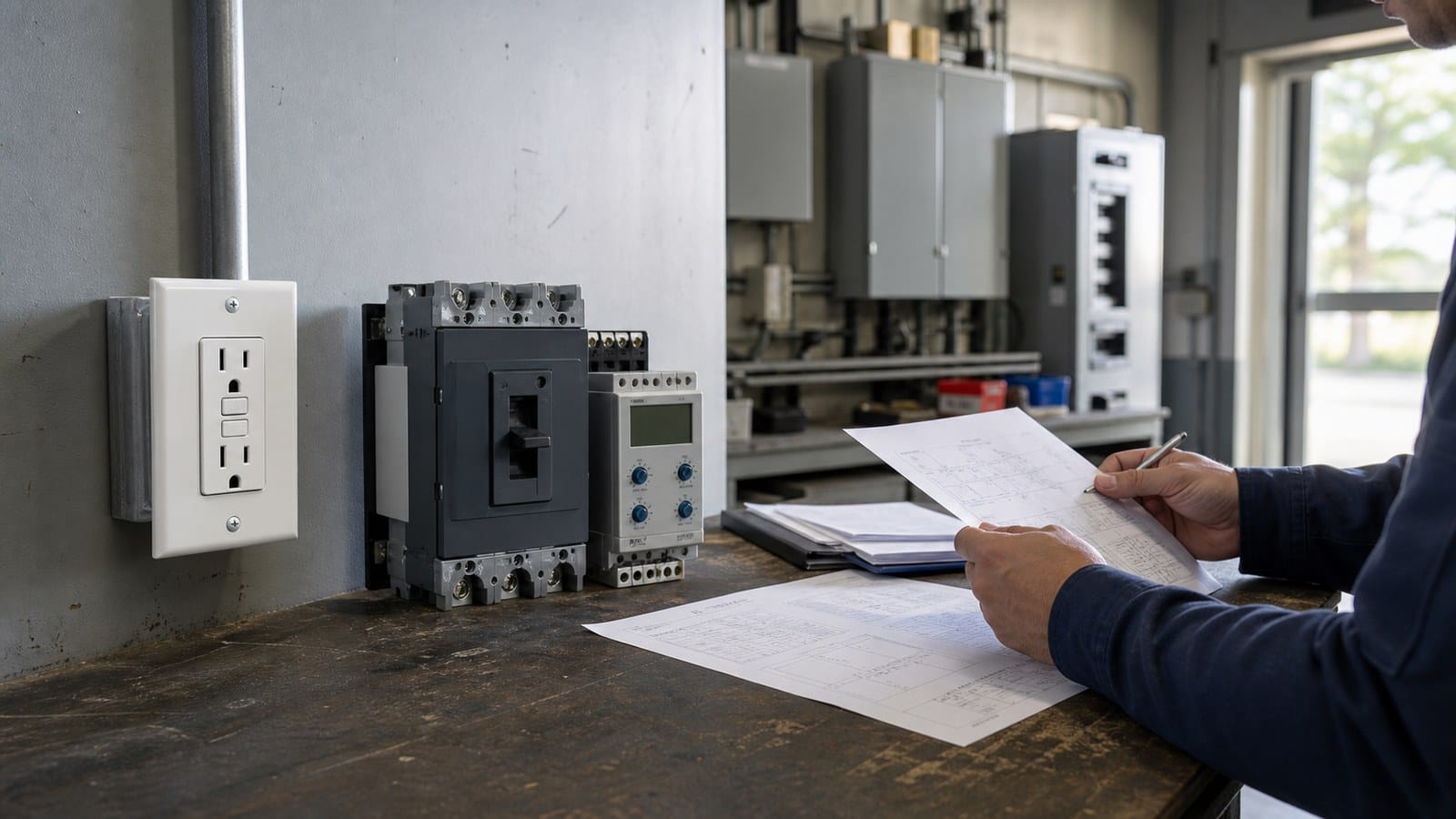
Self-test GFCI requirements are not a cosmetic product feature. They are part of how modern GFCI receptacles and circuit breakers are expected to maintain safety over time under UL 943.
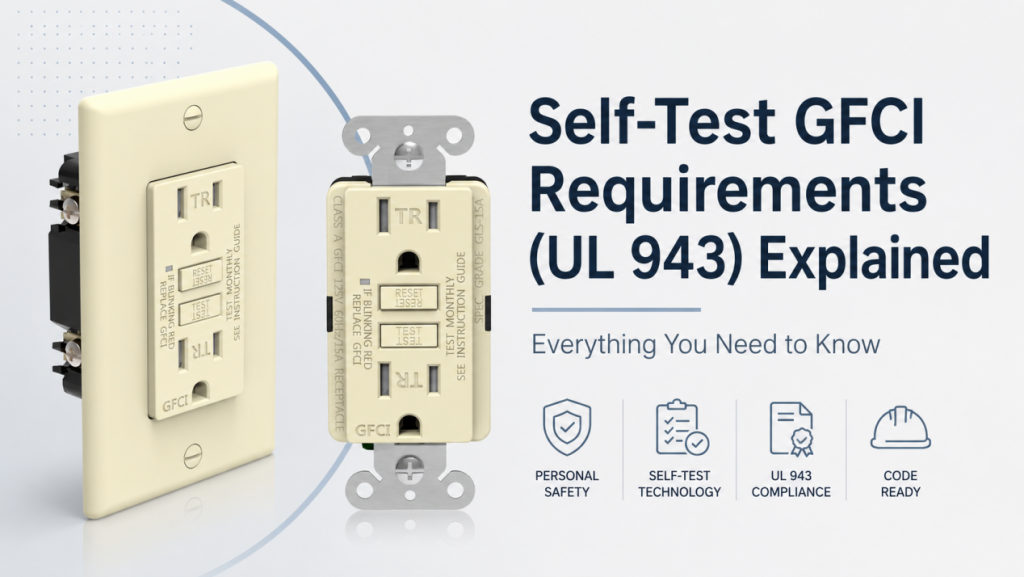
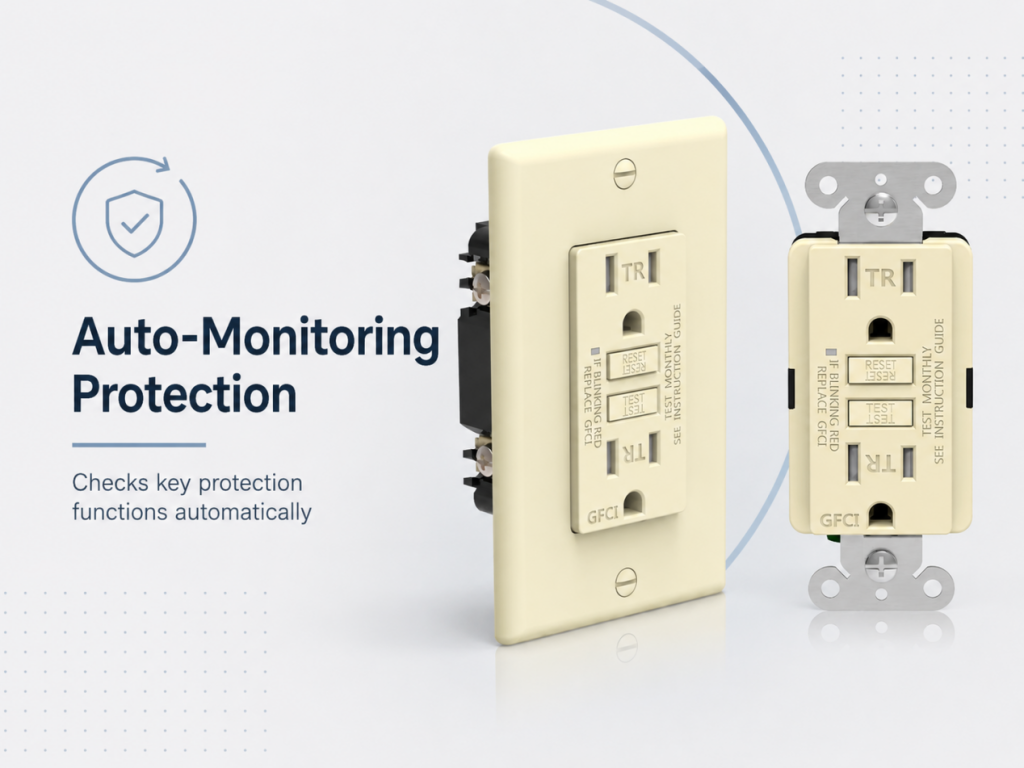
Since June 29, 2015, newly manufactured GFCI receptacles and GFCI circuit breakers covered by UL 943 have been required to include an auto-monitoring, or self-test, function. This function periodically checks key internal protection functions and helps detect failures that users may not notice.
But there is one point that should be clear from the beginning:
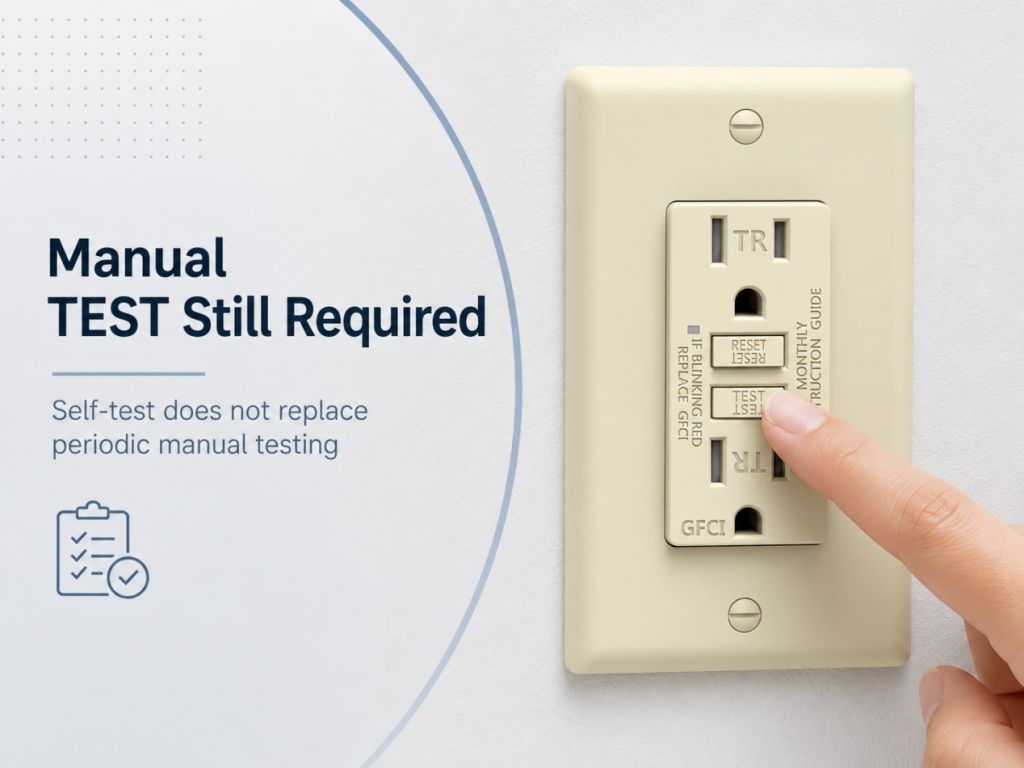
A self-test GFCI still needs a manual TEST button.
The self-test feature improves long-term safety, but it does not replace periodic manual testing. Some mechanical failure modes can only be verified when the device actually trips.
For contractors, distributors, and electrical product buyers serving the U.S. market, this topic matters for more than code language. It affects product selection, certification review, installation confidence, and after-sales risk.
Are Self-Test GFCIs Required Under UL 943?
A self-test GFCI, also called an auto-monitoring GFCI, is a ground-fault circuit interrupter that automatically checks whether its key protection functions are still working.
Under UL 943, modern GFCI receptacles and circuit breakers are expected to include this auto-monitoring function. The requirement was added because installed GFCIs often stay in service for years, while many users rarely press the TEST button.
That is the real problem.
A GFCI can look normal from the outside but lose its ability to provide ground-fault protection. If no one tests it, the failure may stay hidden. Self-test technology reduces that risk by letting the device monitor important internal functions on its own.
This does not mean every older installed GFCI must be treated the same way as a new product. Products manufactured before the effective date were not built under the same self-test requirement. For new U.S. market supply, though, self-test is now part of the expected GFCI safety baseline.
What Is a Self-Test GFCI?
A GFCI, or Ground-Fault Circuit-Interrupter, is a safety device designed to protect people from electric shock caused by ground faults. It is commonly seen as a receptacle with TEST and RESET buttons, but it can also be built into a circuit breaker.
A GFCI is not mainly designed to protect equipment from overload. That is the job of a breaker or fuse. A GFCI is designed for personnel protection.
How a Standard GFCI Detects a Ground Fault
A standard GFCI monitors the current going out on the hot conductor and the current returning on the neutral conductor.
Under normal conditions, these two currents should be balanced. If a hair dryer, power tool, kitchen appliance, or outdoor device is operating correctly, the current leaving the source should return through the intended circuit path.
A ground fault changes that.
If part of the current leaks through water, a damaged appliance, a metal housing, or a person touching an energized part, the returning current becomes lower than the outgoing current. The GFCI detects this imbalance and disconnects power.
For Class A GFCIs used for personnel protection, the trip characteristic is in the small milliamp range. Commonly, these devices are designed around the 4–6 mA range, which is why they can react to leakage levels far below what a standard breaker would detect.
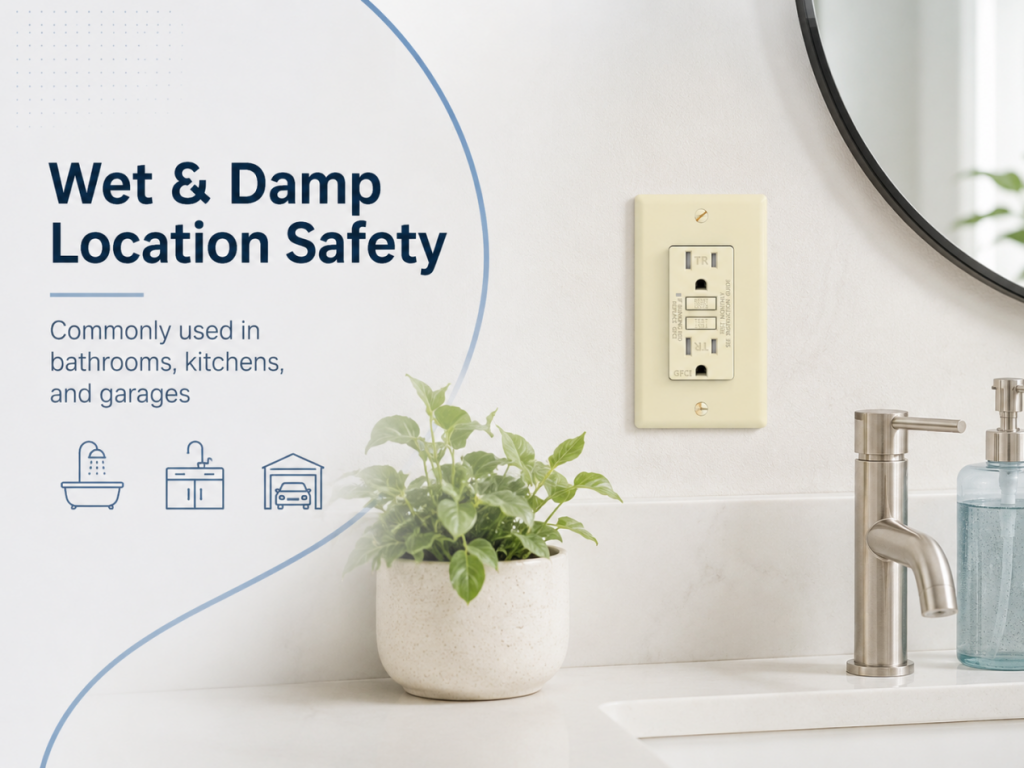
That sensitivity is the reason GFCIs are used in bathrooms, kitchens, garages, basements, laundry areas, outdoor receptacles, and other areas where shock risk is higher.
What the Self-Test Function Adds
The self-test function does not change the basic ground-fault protection principle.
It adds monitoring.
A self-test GFCI periodically checks key internal protection functions to confirm that the device can still detect and respond to ground-fault conditions. In simple terms, the device is checking whether the protection system inside the GFCI is still alive.
This is especially useful in real installations. A receptacle may be installed behind a refrigerator, in a garage, near a pool equipment area, or in an outdoor box where the homeowner rarely touches it. If the internal electronics fail, the user may not know.
Self-test helps close that gap.
Why Did UL 943 Add Self-Test / Auto-Monitoring Requirements?
The self-test requirement was added because manual testing alone was not reliable enough in real life.
Traditional GFCIs include a TEST button. Product instructions commonly tell users to test the device regularly. That is reasonable on paper. In the field, many people do not do it.
A homeowner may test a GFCI once after installation and never again. A tenant may not know what the TEST button does. A commercial maintenance team may only check receptacles during scheduled inspections. In a warehouse, hotel, apartment building, or retail renovation project, dozens or hundreds of devices may be installed, but not all of them receive routine manual testing.
That creates a safety gap.
Past field findings showed that some installed GFCIs were no longer operative. This helped push changes in the safety standard so that GFCIs would rely less completely on users remembering to test them.
UL 943 has also evolved in other areas, including surge resistance, corrosion protection, and protection against line/load miswiring. Self-test is part of that broader movement: making GFCI protection more dependable after installation, not only during laboratory testing.
The goal is not to make the device more complicated for the user. The goal is to prevent a dead protective device from silently staying in service.
What Does UL 943 Require for Self-Test GFCI Devices?
UL 943 is the main product safety standard for Ground-Fault Circuit-Interrupters in the U.S. market. For self-test GFCI devices, the key requirement is that the product must be able to monitor important internal protection functions and respond properly if those functions fail.
There are three areas buyers and installers should understand.
Auto-Monitoring of Key Protection Functions
UL 943 requires covered GFCI devices to include an auto-monitoring circuit. This circuit periodically and automatically checks the device’s ability to perform its protective function.
The self-test process is aimed at detecting failures in much of the internal sensing and control chain. In a typical GFCI, the protection system includes current sensing, electronic processing, and a trip mechanism that opens the contacts when a fault is detected.
Self-test is mainly about checking the parts of that system that can be monitored without actually tripping the device every time.
That last point matters. No one wants a GFCI randomly cutting power during every self-test cycle. A refrigerator, sump pump, commercial display case, or shop tool circuit cannot be interrupted just because the device is running a routine internal check.
So the self-test function is practical, not magical. It checks what can be checked during normal operation.
Power Denial or Failure Indication
A major part of the UL 943 self-test requirement is how the device behaves when it can no longer provide proper protection.
One common response is power denial.
Power denial means the GFCI prevents power from being delivered when it has reached an end-of-life condition or when the self-test function detects a failure that affects protection. In a receptacle, this may mean the device will not reset. In some cases, downstream devices connected to the LOAD terminals may also lose power.
Some failure modes may be handled with visual or audible indication, depending on the design and the type of failure. For example, an indicator light may change status, or the device may signal that it needs replacement.
The exact light pattern should always be checked against the product manual. A red light, green light, blinking light, or no light does not mean the same thing across all brands.
For installers and distributors, this is why product documentation matters. The manual should clearly explain what the indicator means and what the user should do when the device fails self-test.
Manual TEST Button Is Still Required
This is the most common misunderstanding.
Self-test does not replace the manual TEST button.
A self-test circuit can detect many internal electronic failures, but it cannot verify every possible failure mode. For example, certain mechanical parts and final trip actions may only be confirmed by making the GFCI actually trip. If contacts are welded, a latch is stuck, or a trip solenoid cannot physically open the circuit, a real trip test gives information that an internal electronic check may not fully confirm.
That is why self-test GFCIs still have TEST and RESET buttons.
For users, the practical rule is simple: press the TEST button according to the manufacturer’s instructions. For contractors, this also means testing after installation is not optional. The device needs to be verified in the field, especially when downstream LOAD wiring is involved.
UL 943 vs. NEC: What Is the Difference?
Many users mix up UL 943 and the NEC. They are related in practice, but they are not the same thing.
What UL 943 Covers
UL 943 is a product safety standard. It deals with how GFCI devices are designed, tested, and evaluated.
For self-test GFCIs, UL 943 addresses areas such as ground-fault detection, trip performance, auto-monitoring, end-of-life response, and safe failure behavior.
In plain terms, UL 943 answers this question:
Does this GFCI device meet the required product safety performance?
That is why UL Listed or ETL Listed status matters so much in the U.S. market. Buyers should not rely only on a product page saying “GFCI.” They need to confirm that the product is listed and tested to the applicable standard.
What NEC Covers
The NEC, or National Electrical Code, is an installation code. It tells electricians, inspectors, contractors, and project teams where GFCI protection is required.
Common NEC-driven GFCI locations include:
- Bathrooms
- Kitchens
- Garages
- Outdoor areas
- Basements
- Laundry areas
- Wet or damp locations
The NEC does not exist to explain the internal self-test circuit design of a GFCI. That is the role of product safety standards such as UL 943.
Why Buyers and Contractors Need to Consider Both
A compliant installation needs both sides to be correct.
The product must be properly listed.
The installation must follow the NEC, local rules, and manufacturer instructions.
For example, a contractor installing outdoor receptacles may need weather-resistant GFCI devices, proper covers, correct wiring, and code-compliant placement. A distributor selling into the U.S. market needs a product line with clear ratings, valid certification, and documentation that matches the actual models being sold.
Product compliance and installation compliance work together. One cannot fix the absence of the other.
Self-Test GFCI vs. Standard GFCI: Key Differences
Older GFCIs and self-test GFCIs both provide ground-fault protection. The difference is what happens after the device has been installed and used for years.
A traditional GFCI depends heavily on the user pressing TEST. A self-test GFCI adds automatic internal monitoring and clearer failure response.
| Comparison Point | Older / Standard GFCI | Self-Test GFCI |
| Ground-fault protection | Yes | Yes |
| Detects hot/neutral imbalance | Yes | Yes |
| Auto-monitoring | Limited or not required in older designs | Periodically monitors key internal protection functions |
| Failure response | Failure may not be obvious to the user | May deny power, lock out, or show visual/audible indication |
| Manual TEST button | Required | Still required |
| Best fit | Existing older installations or legacy stock | Modern U.S. market supply and code-aware product selection |
This comparison should not be read as “all older GFCIs are unsafe.” Many older devices were listed under the requirements in place at the time.
The better judgment is this: for new product sourcing, modern self-test GFCI receptacles are the right baseline for the U.S. market。
What Happens When a Self-Test GFCI Fails?
A self-test GFCI failure can show up in several ways. Some are caused by the device itself. Others are caused by wiring, moisture, downstream loads, or an actual ground fault.
Do not assume every failed reset means the same thing.
The Device May Refuse to Reset
If a self-test GFCI detects that it can no longer provide proper protection, it may refuse to reset. This is not always a bad button. It may be the device doing what it was designed to do.
In field terms, this matters for troubleshooting. A contractor replacing a bathroom GFCI, for example, may find that the new device will not reset after installation. The cause might be an internal failure indication, but it could also be reversed line/load wiring or a downstream fault.
The reset behavior is a warning sign. It should be investigated, not bypassed.
Power May Be Denied to Downstream Devices
Many GFCI receptacles can protect downstream receptacles through the LOAD terminals. If the GFCI trips, fails self-test, or detects a wiring issue, downstream outlets may lose power.
This is common in kitchens, garages, outdoor runs, and bathroom circuits where one GFCI protects multiple receptacles. A user may think “three outlets are dead,” when the real issue is one upstream GFCI.
Possible causes include:
- Actual leakage current from an appliance
- Moisture in an outdoor box or cover
- Grounded neutral fault downstream
- Incorrect LINE and LOAD wiring
- End-of-life or self-test failure
- A damaged device or damaged wiring
This is why clear LINE and LOAD markings are more than a convenience. They reduce installation mistakes and help contractors identify the protected section of the circuit.
Indicator Lights Should Be Checked Against the Manual
Indicator lights are helpful, but they are not universal.
One brand may use a green light for normal operation. Another may use no light during normal operation. A red light may mean trip, failure, reversed wiring, or end-of-life depending on the product design.
For B2B buyers, this is not a small detail. If the same distributor carries several models with inconsistent indicator logic, customer support becomes harder. Good product instructions reduce confusion at the contractor and end-user level.
A self-test GFCI should not only meet the standard. It should also explain its status clearly.
How to Verify a UL/ETL Certified Self-Test GFCI for the U.S. Market
For buyers, the question is not only whether a product says “Self-Test” on the front.
The real question is whether the product is properly listed, documented, rated, and suitable for the target installation.
Check the UL or ETL Listing
A GFCI for the U.S. market should carry a valid listing mark from a recognized certification body, such as UL or ETL.
ETL Listed does not mean the product is “less certified” than UL Listed. ETL is a third-party certification mark. The key is whether the product has been evaluated to the applicable UL standard and whether the listed model matches the product being sold.
For distributors and OEM buyers, ask for:
- Certification file or listing information
- Model numbers covered by the listing
- Rated voltage and amperage
- Product family coverage
- Current packaging and marking samples
- Installation instruction sheet
Do not rely only on a sample photo. Certification must match the actual production model.
Review Product Markings and Instructions
A self-test GFCI should provide clear instructions for TEST, RESET, failure indication, and end-of-life behavior.
The product manual should explain:
- How to perform a manual test
- What the indicator light means
- What happens when the device fails self-test
- Whether the device denies power under failure conditions
- How LINE and LOAD terminals should be wired
- Whether downstream receptacles are protected
This matters because GFCIs are often installed by electricians, contractors, maintenance teams, and sometimes replacement users. Ambiguous instructions create field errors.
For a manufacturer, documentation quality is part of product quality.
Confirm Ratings and Application Fit
A self-test GFCI still needs to match the circuit and application.
Common selection points include:
| Selection Item | What to Check |
| Amperage | 15A or 20A, matched to the branch circuit and receptacle configuration |
| Voltage | Suitable for the target U.S. application |
| TR version | Tamper-resistant requirements for residential and many commercial locations |
| WR version | Weather-resistant version for outdoor or damp locations where required |
| Indoor / outdoor use | Match device, cover, enclosure, and installation environment |
| Downstream protection | Confirm LOAD terminal use and instructions |
| Product documentation | Manual, markings, listing, packaging, and model number consistency |
For U.S. market supply, the safest purchasing habit is to verify the full product package, not only the device face. Certification, markings, instructions, and batch consistency all matter.
Why Self-Test GFCI Matters for Contractors, Distributors, and OEM Buyers
For electrical contractors, self-test GFCI devices help reduce uncertainty in the field. A failed device is more likely to show a clear failure condition instead of silently staying in service. That helps during service calls, renovation work, and final project checks.
For distributors, UL/ETL certified self-test GFCI receptacles are easier to position in the U.S. market. Retail, wholesale, and project channels expect products that align with modern safety requirements. A weak certification file or unclear instruction sheet can create more cost than the device price saves.
For OEM and brand buyers, the issue is larger than one feature. A buyer should look at certification coverage, production consistency, packaging accuracy, indicator logic, TR/WR options, and long-term supply stability.
Self-test is a product requirement. Consistency is a supplier requirement.
Faith Electric is a professional electrical manufacturer with 28 years of experience serving the U.S. market. We provide UL/ETL certified in-wall electrical solutions, including GFCI and AFCI safety receptacles, USB receptacles, standard receptacles, switches, and wall plates.
If you are sourcing self-test GFCI receptacles for distribution, contractor supply, or OEM/ODM projects, contact Faith Electric to request product specifications, certification details, and sample options.

FAQ About Self-Test GFCI Requirements
When did UL 943 self-test requirements take effect?
The key effective date was June 29, 2015. From that date, newly manufactured GFCI receptacles and GFCI circuit breakers covered by UL 943 were required to include auto-monitoring or self-test functionality.
This does not mean every older installed GFCI instantly became non-compliant for its original installation. It means new products covered by the updated requirements needed to include the self-test function.
Does a self-test GFCI still need manual testing?
Yes. A self-test GFCI still needs manual testing according to the manufacturer’s instructions.
The self-test circuit can monitor many internal electronic functions, but it cannot fully verify every mechanical failure mode. The TEST button triggers an actual trip and helps confirm the device can open the circuit.
What does power denial mean on a GFCI?
Power denial means the GFCI prevents power from being delivered when it can no longer provide reliable protection.
In practice, the device may refuse to reset, stop feeding downstream LOAD terminals, or show a failure indication. This protects users from continuing to use a GFCI that appears normal but may no longer provide ground-fault protection.
Is ETL Listed acceptable for UL 943 compliance?
An ETL Listed GFCI can be acceptable when it has been evaluated to the applicable UL standard and the certification covers the actual model being purchased.
For B2B sourcing, the listing mark alone is not enough. Check the certification file, covered model numbers, ratings, product markings, and installation instructions.
Is a GFCI the same as an AFCI?
No. A GFCI protects people from electric shock caused by ground faults. An AFCI, or Arc-Fault Circuit Interrupter, detects arcing faults that may create fire risk.
Some products combine both types of protection, but the functions are different. For U.S. market product selection, buyers should confirm which protection type is required for the application.