You can usually tell if an outlet is tamper-resistant by looking for the “TR” marking on the receptacle face and checking whether the slots have built-in internal shutters.
The “TR” stands for tamper-resistant and appears on most listed devices. Shine a flashlight into the slots — you should see plastic barriers behind them. Regular outlets show open, dark holes instead.
Do not poke anything into the slots to test. Visual checks work best in most cases.
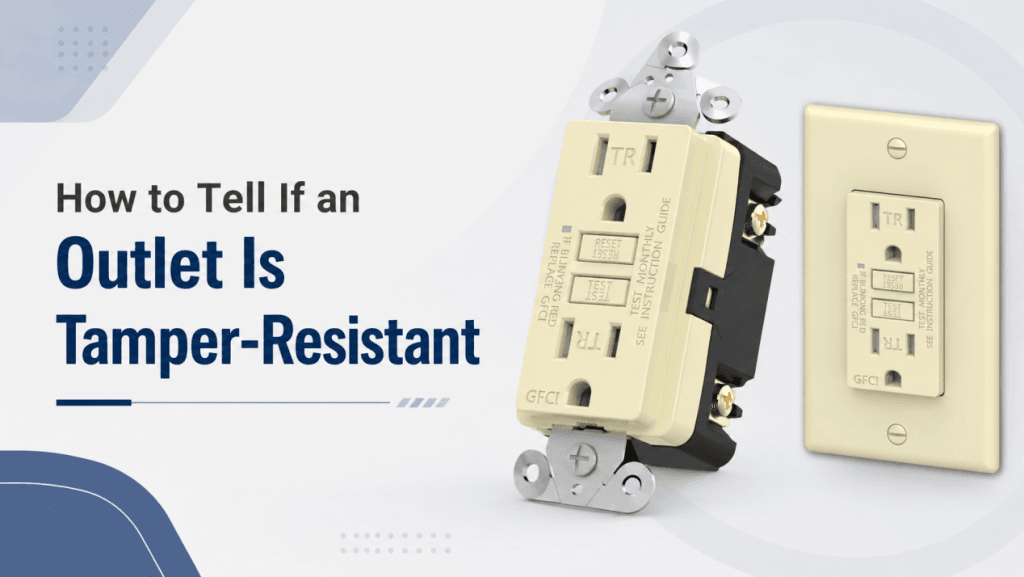
What Is a Tamper-Resistant Outlet?
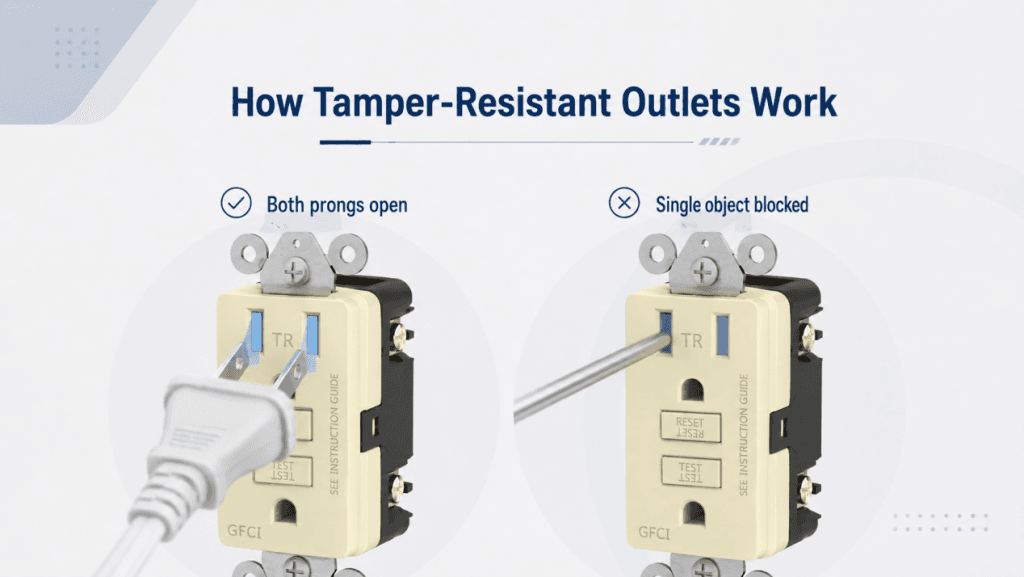
A tamper-resistant outlet, also called a TR receptacle, contains an internal spring-loaded shutter mechanism. This blocks single objects from making contact with the live parts. Only a standard plug inserted evenly with both prongs opens the shutters.
This design differs from external plastic caps or covers, which sit on the outside and can be removed. TR protection lives inside the receptacle itself, so it stays in place permanently.
Contractors and homeowners install these in homes with children, rental properties, and any area where small kids have access. The mechanism reduces the risk of a child inserting a key, hairpin, or toy and receiving a shock.
Look for the “TR” Marking and Other Visible Signs
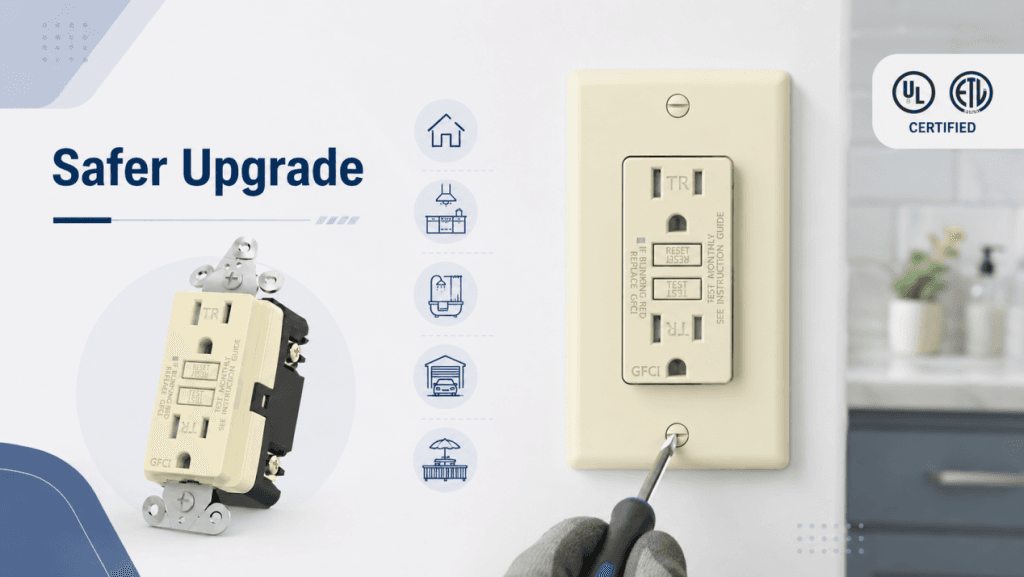
The most reliable way to identify a tamper-resistant outlet remains checking for the “TR” marking. Manufacturers stamp or mold these letters on the face or yoke of listed devices.
Where Is the “TR” Mark Usually Located?
- Between the two vertical slots
- Below the slots
- Near the brand name or ground hole
- On combination devices such as TR GFCI outlets, often near the TEST/RESET buttons
Position varies by brand. Some marks sit on the metal yoke and become visible only after removing the wall plate.
What If There Is No “TR” Mark?
Outlets without a visible “TR” are usually not tamper-resistant. However, heavy wear, paint, or certain installation angles can hide markings.
Never assume based on age alone. Check the product model number, packaging, or specification sheet. For project work, always verify the UL or ETL listing instead of relying only on surface appearance.
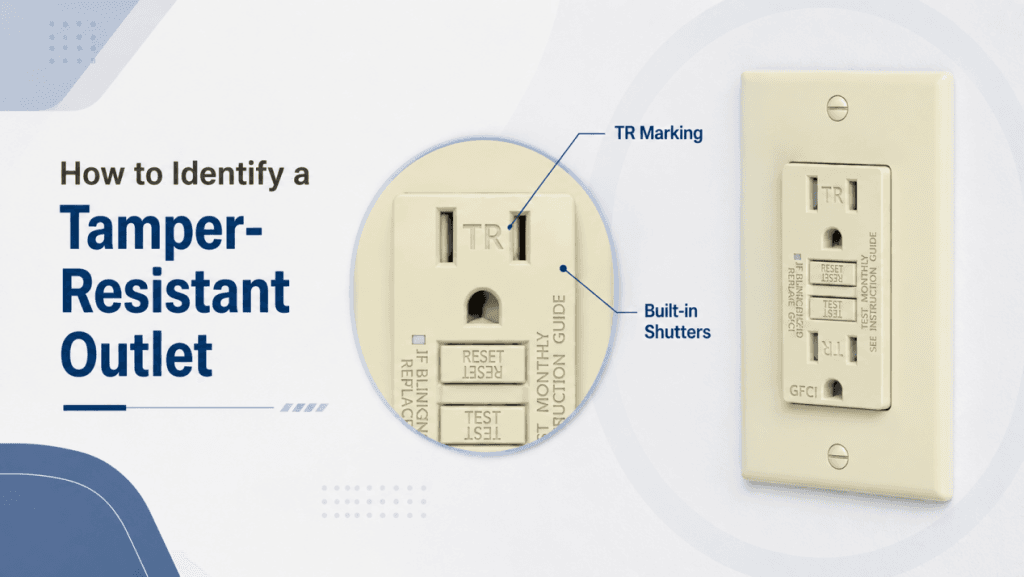
Check for Internal Shutters Behind the Slots
Tamper-resistant outlets use a safety shutter system. The shutters stay closed if pressure hits only one slot. They open only when both prongs apply even force at the same time. After you remove the plug, the shutters reset automatically.
In dim light, a flashlight reveals the plastic barriers inside the slots. Standard outlets lack these and show clear, open paths to the contacts.
Never insert screwdrivers, paper clips, or other objects for testing. Such actions defeat the purpose and create unnecessary risk. Leave detailed verification to licensed electricians when needed.
Why Tamper-Resistant Outlets Can Feel Hard to Plug Into
New TR outlets often feel tighter than regular ones. The internal shutters require straight, even pressure from both plug blades to open properly.
Slight resistance counts as normal behavior. Bent prongs, angled insertion, or damaged plugs cause problems. If an outlet feels excessively tight, loose, hot, or shows discoloration, stop using it and call an electrician.
Poor-quality TR receptacles sometimes stick or fail to reset cleanly. This highlights why certified products from established manufacturers matter in both residential and commercial work.
Tamper-Resistant Outlet vs Regular Outlet, Plastic Caps, GFCI, AFCI, and WR
Different safety features serve different purposes. Mixing them up leads to wrong selections on jobsites.
Tamper-Resistant Outlet vs Regular Outlet
| Feature | Tamper-Resistant Outlet | Regular Outlet |
| Surface Marking | Usually “TR” or “Tamper-Resistant” | None |
| Internal Structure | Spring-loaded shutters | Open contacts |
| Single Object Insertion | Blocked | Possible |
| Plug Insertion Feel | Firmer initially | Smoother |
| Common Use | New homes, child-access areas | Older non-upgraded installations |
Plastic Outlet Caps vs Tamper-Resistant Outlets
Plastic caps offer temporary protection only. Children can remove many types in seconds, and they get lost easily. TR receptacles deliver built-in, code-compliant safety that does not rely on user behavior.
TR vs GFCI, AFCI, and WR Outlets
- TR: Prevents foreign object insertion.
- GFCI: Cuts power during ground faults to prevent shock (required in wet areas).
- AFCI: Detects dangerous arcing to reduce fire risk.
- WR: Weather-resistant materials for outdoor or damp locations.
These features combine in many devices. A single outlet can carry TR + GFCI + WR ratings. Always match the combination to the installation environment and local code.
Are Tamper-Resistant Outlets Required by Code?
Yes, in most residential situations. The National Electrical Code (NEC) added the requirement for tamper-resistant receptacles in dwelling units starting with the 2008 edition. Later versions expanded coverage.
Common Places Where TR Outlets Are Used
- All areas in new homes and garages
- Bedrooms, living rooms, and child-accessible spaces
- Kitchens, bathrooms, and laundry areas
- Hotels, apartments, and childcare facilities
Why Local Code Still Matters
Adoption timing varies by state and municipality. Always check with the Authority Having Jurisdiction (AHJ) for the exact version of the NEC in force. For commercial or renovation projects, follow the project specifications and inspection requirements to avoid costly rework.
How to Choose a Tamper-Resistant Outlet for U.S. Projects
Select devices that carry proper listings and match the application.
Check UL / ETL Certification
For the U.S. market, prioritize UL Listed or ETL Certified receptacles. Certification confirms the product meets safety standards for performance and marking. Low-cost unlisted options often fail over time and create compliance problems.
Confirm the Correct Rating and Application
Common ratings include 15A and 20A at 125V (NEMA 5-15R or 5-20R). Choose based on circuit load and location needs:
- Standard TR for general rooms
- TR + GFCI for kitchens, bathrooms, and outdoors
- WR + TR combinations for damp or exterior areas
When Should Old Outlets Be Replaced?
Replace immediately if you see looseness, cracking, heat damage, or burn marks. Older homes, rental turnovers, and child-safety upgrades all justify switching to TR receptacles. Have a licensed electrician handle the work for proper installation and code compliance.
Faith Electric manufactures a full range of UL/ETL certified wiring devices for the U.S. market, including 15A/125V tamper-resistant receptacles, GFCI outlets, and complete wall solutions. With 28 years of production experience, we support contractors, distributors, and project buyers with reliable products and documentation.
Contact us for product specifications, pricing, or help selecting the right configurations for your next project.
FAQ About Tamper-Resistant Outlets
What does “TR” mean on an outlet?
TR means tamper-resistant. It indicates the receptacle contains internal shutters that block single foreign objects.
Is a GFCI outlet the same as a tamper-resistant outlet?
No. GFCI protects against ground faults and shock. TR protects against object insertion. Many devices combine both.
Why is my tamper-resistant outlet hard to plug into?
The shutters need even pressure from both prongs. Mild resistance is expected with new units. Excessive force, heat, or looseness signals a problem.
Can an outlet be both tamper-resistant and weather-resistant?
Yes. Many outdoor and damp-location receptacles carry both TR and WR ratings, often with GFCI protection as well.
Should I replace old outlets with tamper-resistant outlets?
In most upgrades, especially in homes with children or rental properties, switching to TR receptacles improves safety and helps meet current code.
This guide covers the core ways to identify and evaluate tamper-resistant outlets. Proper selection and installation deliver lasting protection for residential and commercial electrical systems.