GFCI protection cuts power when it detects a ground fault, typically at 4-6 mA for Class A devices. In U.S. construction projects, requirements come primarily from NEC Article 210.8, OSHA standards for temporary power, UL 943 for device performance, and local AHJ interpretations.
Projects cannot treat this as “install GFCI everywhere.” Specific locations matter: bathrooms, kitchens, garages, outdoor areas, laundry spaces, basements, and certain commercial wet or maintenance zones. Protection comes via GFCI receptacles or GFCI breakers. For 2026 projects, pay close attention to outdoor outlets up to 60A and the end of the HVAC equipment exception on September 1, 2026.
Contractors must also handle UL/ETL listing, correct wiring, weather-resistant ratings where needed, and final testing. Missing these steps leads to failed inspections, rework, and delays.
![GFCI Outlet Requirements for U.S. Construction Projects [2026 Guide]](https://www.faithelectricm.com/wp-content/uploads/2026/06/图片10-1-1024x577.png)
Why GFCI Compliance Matters More in 2026 Construction Projects
A ground fault happens when current takes an unintended path to ground, often through a person or water. GFCI devices stop that current fast enough to prevent serious injury or death.
On job sites, mistakes show up quickly. An inspector flags unprotected outlets near a sink in a new commercial kitchen. The general contractor orders rework on 40 outlets. The schedule slips two weeks. Nuisance tripping on rooftop HVAC circuits adds more frustration. These are not theoretical risks. They happen on real projects every month.
Compliance covers four elements: identifying required locations, using listed products, installing them correctly, and verifying operation before handover. In 2026, codes tighten further on outdoor applications and equipment circuits. Project specifications often exceed minimum NEC rules. Treating GFCI as a simple checkbox creates exposure that competent teams avoid.
Key Codes and Standards Behind GFCI Outlet Requirements
Multiple layers govern GFCI rules on construction projects.
| Code / Standard | What It Controls | Why It Matters |
| NEC (NFPA 70) | Required protection locations | Sets baseline for most permanent installations |
| OSHA 1926.404 | Temporary jobsite power | Protects workers using cord-and-plug tools |
| UL 943 | GFCI performance and self-test | Defines Class A trip levels and reliability |
| UL 498 | Receptacle construction and marking | Covers basic outlet durability |
| UL/ETL Listing | Third-party verification | Required for AHJ acceptance in most jurisdictions |
| AHJ | Local enforcement and amendments | Final say on acceptance |
| Project Specifications | Additional owner or designer requirements | Can exceed code minimums |
NEC and Local AHJ Requirements
NEC 210.8 defines where GFCI protection applies for personnel. It distinguishes between dwelling units and other occupancies. States and cities adopt the NEC on their own timelines, sometimes with amendments. Never assume the latest edition applies automatically. Check the AHJ for the specific jurisdiction and any local changes.
OSHA Rules for Temporary Construction Power
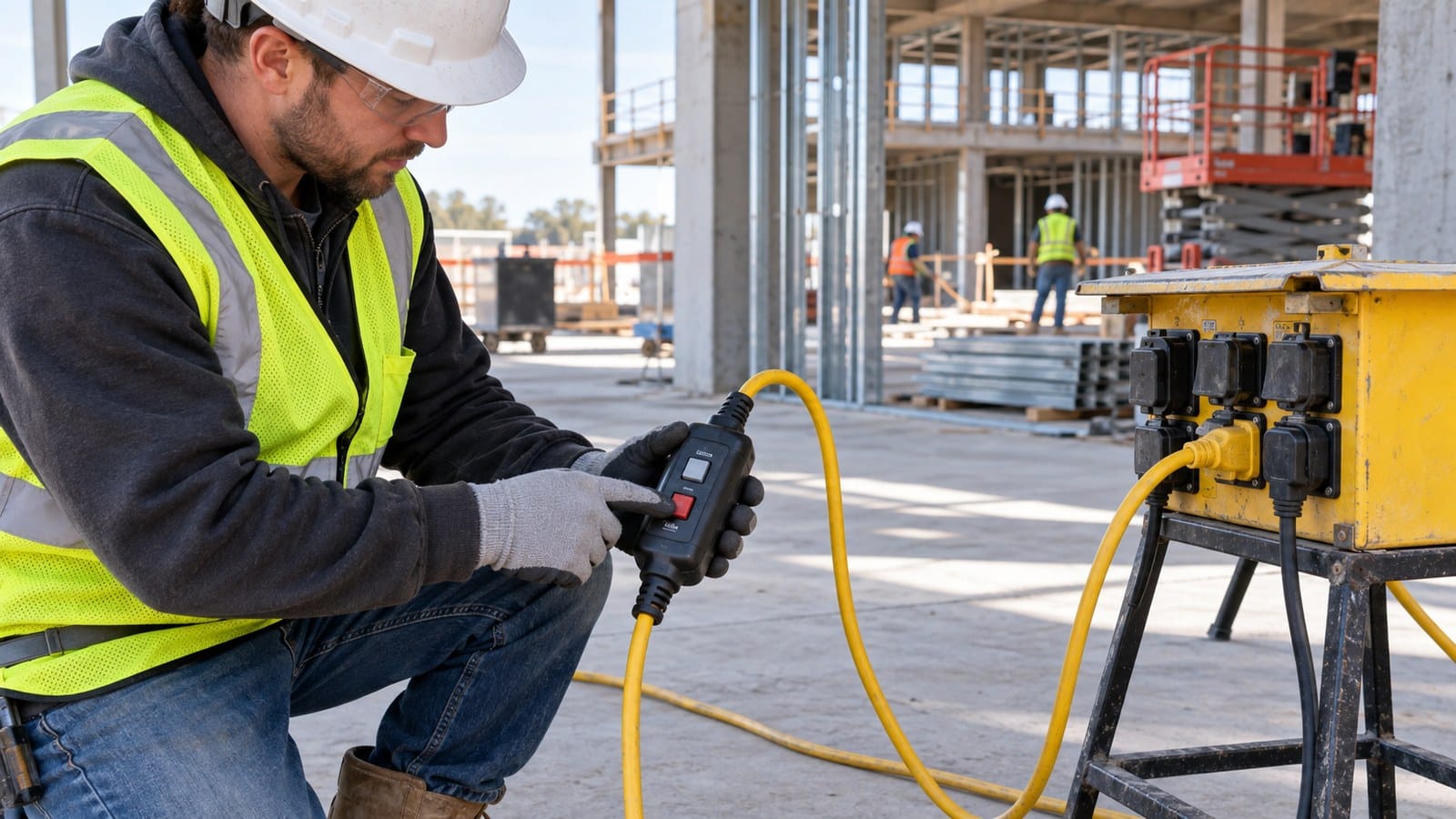
OSHA requires GFCI protection for all 125V, single-phase, 15- and 20-ampere receptacles on construction sites that are not part of the permanent wiring and are in use by employees. This covers extension cords, temporary power poles, and portable distribution boxes. Contractors can use an assured equipment grounding conductor program as an alternative in some cases, but most prefer GFCI for speed and simplicity.
UL 943, UL 498, and UL/ETL Certification
NEC tells you where protection is needed. UL standards tell you whether the product actually works. Look for UL Listed or ETL Listed markings. Self-test (auto-monitoring) GFCIs, required since 2015, periodically check their own electronics and indicate failure. For 2026 outdoor HVAC applications, new high-frequency (HF/HF+) or Class C SPGFCI options help reduce nuisance tripping on equipment with variable speed drives.
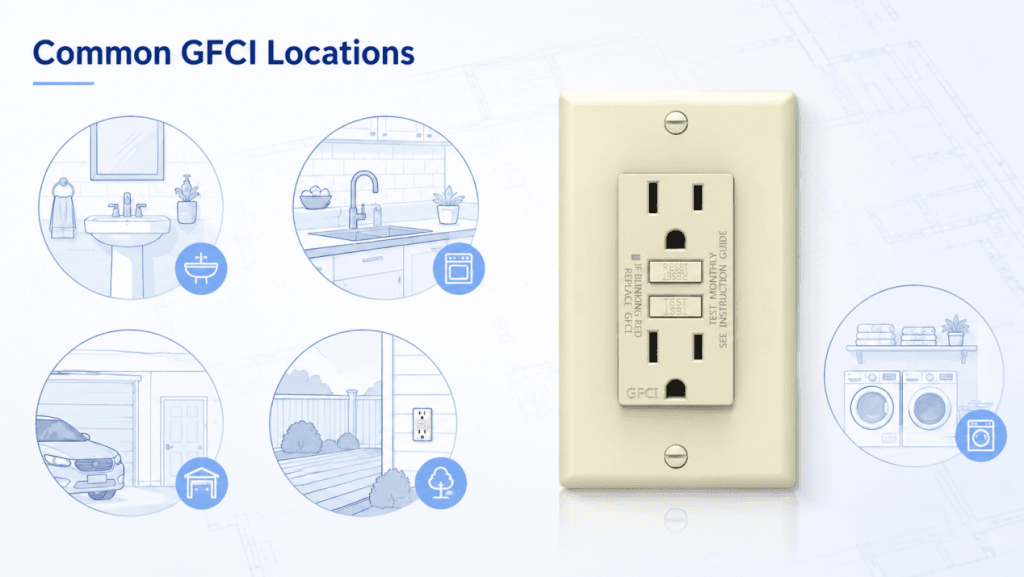
Where Are GFCI Outlets Required in U.S. Construction Projects?
Residential Construction Areas
Common locations include:
- Bathrooms
- Kitchens (countertop and most other receptacles)
- Laundry areas
- Garages and accessory buildings
- Basements and crawl spaces (at or below grade)
- Outdoor receptacles
- Wet or damp locations
Receptacle spacing rules address convenience. GFCI rules address shock protection. Projects need both.
Commercial and Public Building Areas
Commercial projects follow broader rules. Required areas often cover:
- Commercial kitchens and food prep zones
- Restrooms
- Break rooms with sinks
- Mechanical rooms
- Rooftop service receptacles
- Indoor damp and wet locations
- Laundry areas in multi-family or institutional buildings
Rooftop exceptions for accessibility exist but require careful documentation.
Outdoor, Garage, and Wet Locations
Outdoor receptacles need both GFCI protection and weather-resistant (WR) construction. GFCI does not replace weatherproof boxes or in-use covers. Use WR-rated devices with proper enclosures in damp or wet conditions.
Temporary Jobsite Power
This area separates construction-focused guides from residential ones. Temporary power on active sites carries high risk due to exposed cords, moving equipment, and changing conditions. OSHA focuses heavily here. Many projects use GFCI-protected temporary power centers or inline cord sets.
GFCI Receptacle vs GFCI Breaker: Which One Should Contractors Use?
When a GFCI Receptacle Makes Sense
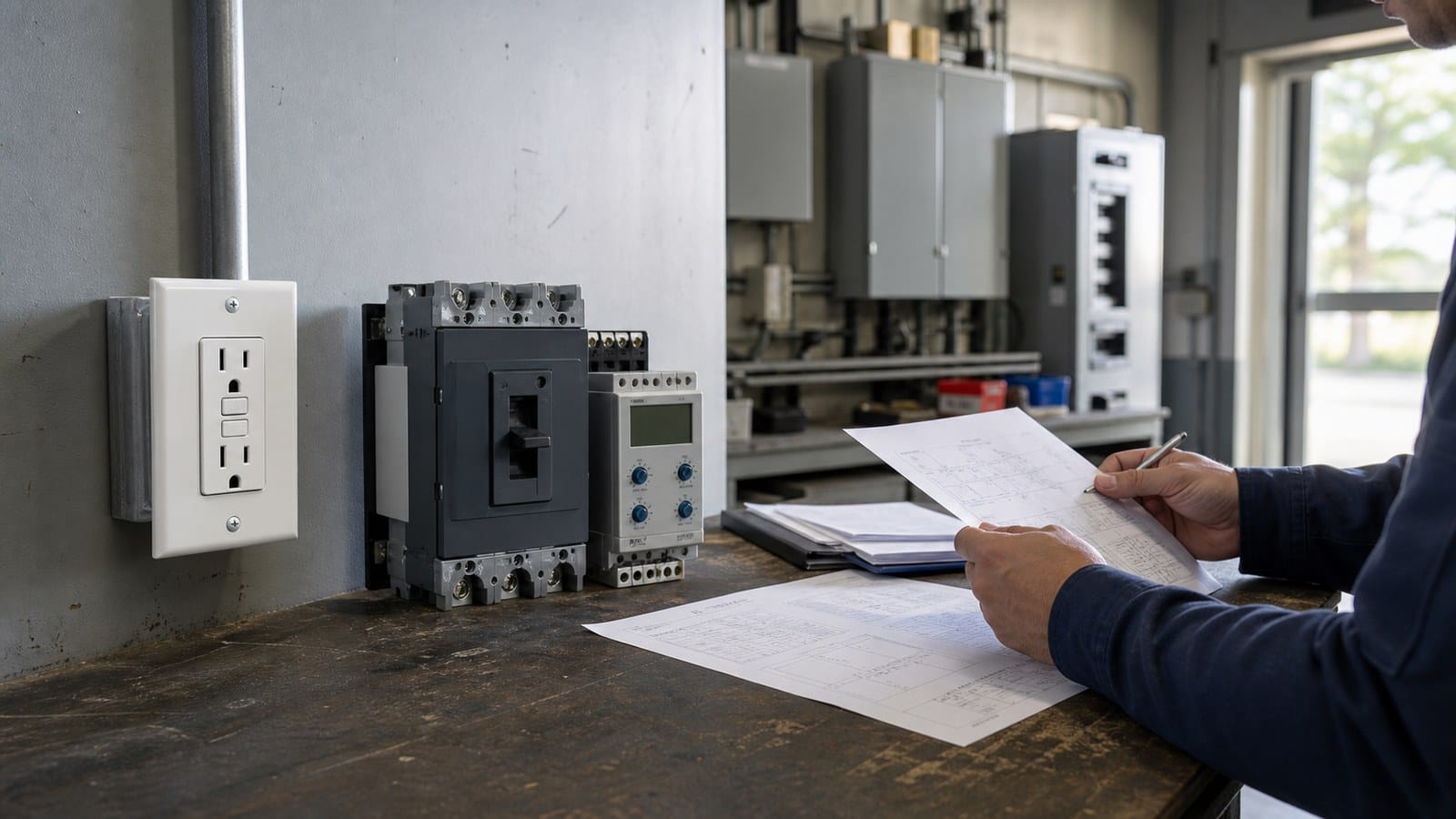
GFCI receptacles provide local protection. They work well in kitchens, bathrooms, garages, and outdoor locations. Resetting happens at the point of use. Downstream outlets can be protected through the LOAD terminals when wired correctly and properly labeled. They offer visible test/reset buttons for easy verification during inspections.
When a GFCI Breaker Makes Sense
GFCI breakers protect the entire branch circuit from the panel. They suit long runs, multiple outlets, or situations where local reset access is inconvenient. Some project drawings specify them for equipment circuits. Reset requires panel access, which can complicate troubleshooting in occupied buildings.
Practical Selection Rule for Project Teams
Choose GFCI receptacles for visible, testable, local protection in high-use areas. Choose GFCI breakers for whole-circuit coverage or when specified. Many projects combine both approaches.
How to Choose GFCI Outlets for U.S. Construction Projects
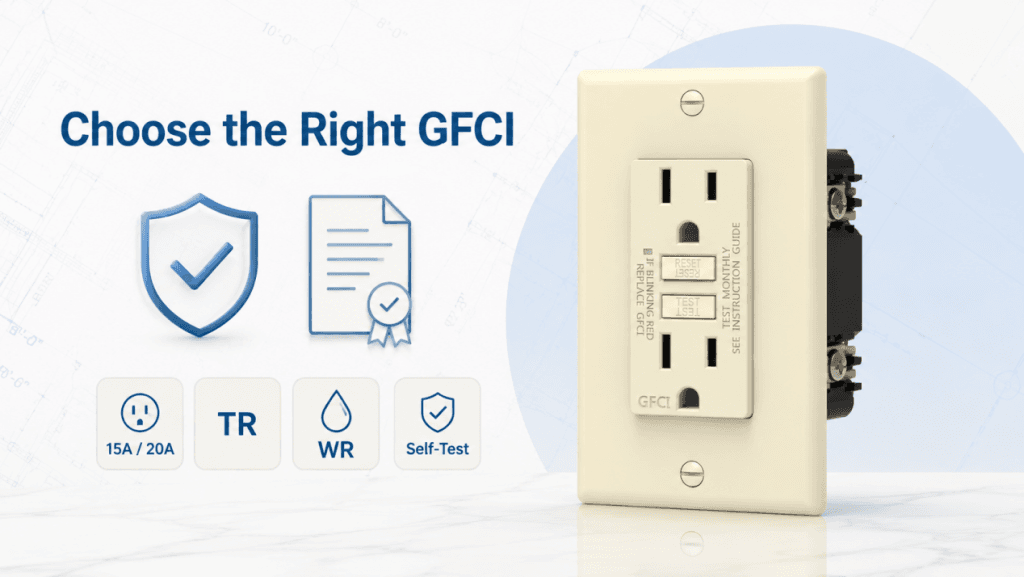
Match the device to the circuit and environment.
| Feature | Where It Matters | What to Check |
| 15A / 20A rating | Branch circuits, kitchens, equipment | Match panel schedule and drawings |
| TR (Tamper-Resistant) | Residential, schools, public buildings | Clear TR marking on face |
| WR (Weather-Resistant) | Outdoor, garages, damp areas | WR stamp plus compatible cover |
| Self-Test | New construction, commercial | Status indicator and auto-monitoring |
| UL/ETL Listing | All U.S. projects | Valid certification documents |
| Commercial Grade | High-traffic areas | Build quality and supplier support |
15A vs 20A GFCI Outlets
Base the choice on the branch circuit rating and expected load. Using 15A devices on a 20A circuit violates code. Many commercial kitchens and equipment circuits require 20A.
TR, WR, and Self-Test Functions
TR prevents foreign objects. WR handles moisture exposure. Self-test improves long-term reliability. Commercial and multi-family projects increasingly specify all three.
UL / ETL Listed GFCI Outlets
Acceptable NRTL listings matter for procurement and inspection. Request datasheets, certification files, and labeling samples before ordering large quantities.
Common GFCI Installation and Inspection Mistakes
Misusing LINE and LOAD Terminals
Connect incoming power only to LINE. Use LOAD only when protecting downstream devices, and label those outlets. Reversing terminals often prevents resetting or disables protection.
Confusing GFCI, WR, and Waterproof Protection
GFCI handles ground faults. WR improves material resistance to weather. Weatherproof covers protect against water ingress. All three may be required outdoors, but they serve different purposes.
Confusing Receptacle Spacing With GFCI Protection
Spacing rules reduce extension cord use. GFCI rules address shock hazards. Satisfying one does not satisfy the other.
Using Uncertified or Poorly Documented Products
Low-cost devices without clear markings or supporting paperwork create liability. Inspectors increasingly request documentation on larger projects.
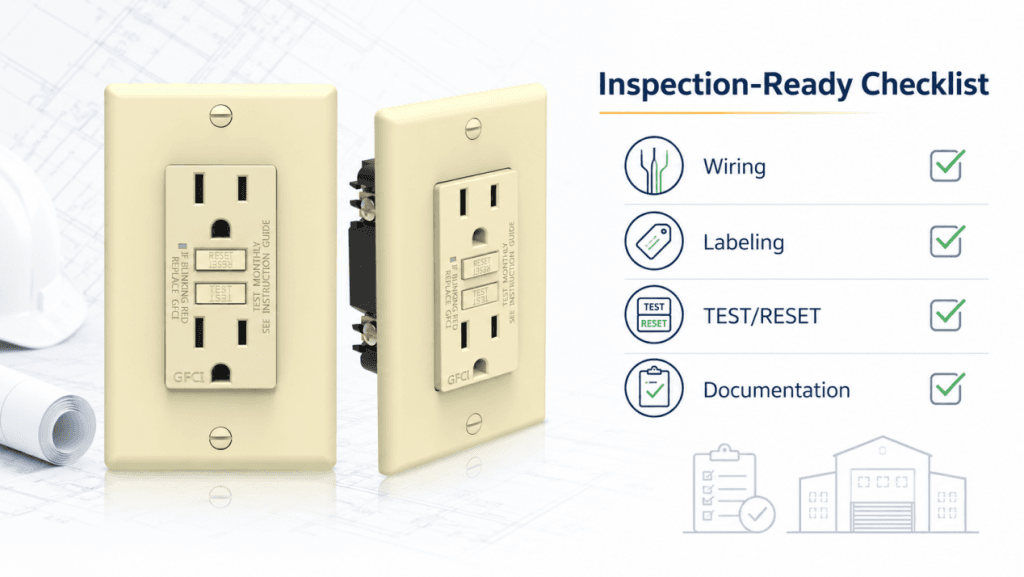
GFCI Inspection-Ready Checklist for Contractors and Project Buyers
Use this checklist before inspection:
- Confirm adopted NEC edition and local amendments
- Review project specifications for extra requirements
- Identify all GFCI-required locations
- Select appropriate receptacle or breaker protection
- Match ampere rating, TR/WR/self-test features
- Verify UL/ETL listings and documentation
- Confirm correct LINE/LOAD wiring and labeling
- Test every device (TEST/RESET and status indicators)
- Document results for closeout package
- Address any nuisance tripping causes early
When Should Existing GFCI Outlets Be Reviewed or Replaced?
Renovation projects cannot assume older devices meet current rules. Devices that fail to reset, trip frequently, show damage, or lack self-test capability should be replaced. Facility teams benefit from scheduled testing programs. Commercial owners often standardize on specific models for consistency across locations.
How Faith Electric Supports GFCI Outlet Supply for U.S. Construction Projects
Faith Electric manufactures wiring devices with 28 years of experience serving the U.S. market. We produce UL/ETL certified GFCI receptacles in 15A and 20A ratings, with TR, WR, and self-test configurations available. Our products support both residential and commercial construction needs, including full-line wiring devices for consistent sourcing.
Contractors and distributors value reliable certification documents, clear marking, and stable supply. For your next project requiring code-compliant GFCI solutions, contact Faith Electric to discuss specifications and availability.

FAQ
Are GFCI outlets required on construction sites?
Yes for temporary power receptacles under OSHA rules. Permanent wiring follows NEC when used for temporary purposes.
What NEC section covers GFCI requirements?
NEC 210.8 is the primary reference, with details varying by occupancy type and location.
Do outdoor outlets need both GFCI and weather-resistant protection?
Yes. GFCI provides shock protection. WR improves durability. Weatherproof enclosures add physical protection.
Should contractors use GFCI outlets or GFCI breakers?
It depends on protection needs, reset accessibility, and project documentation. Many jobs use a combination.
Why won’t a newly installed GFCI outlet reset?
Common causes include reversed LINE/LOAD, existing ground faults downstream, lack of power, or installation damage.
Are UL listed or ETL listed GFCI outlets required for U.S. projects?
Projects generally require NRTL-listed products. Both UL and ETL listings are widely accepted when properly documented.