
GFCI outlets save lives by cutting power fast when they detect a ground fault. They trip at 4–6 mA of leakage current, usually in less than 1/40 of a second. This protects people in wet areas from shock. But the same sensitivity causes problems with certain appliances. High inrush current, normal leakage from filters, or EMI can make the GFCI trip even when nothing is wrong. We call this nuisance tripping.
At Faith Electric, we make UL/ETL listed GFCI devices for the North American market. After 28 years, we see this issue often. The goal is safety without unnecessary downtime. This article explains which devices to avoid on GFCI outlets, why they cause trips, where the NEC requires GFCI, and how to handle common issues.
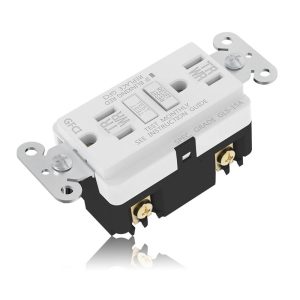
What is a GFCI Outlet and How Does It Work?
A Ground Fault Circuit Interrupter (GFCI) monitors current on the hot and neutral wires. If outgoing current does not match incoming current, it assumes leakage—through a person, water, or damaged insulation. It opens the circuit instantly.
UL 943 sets the standard: Class A GFCI trips at 4–6 mA. This is well below the 30 mA that can cause ventricular fibrillation. GFCI protection comes in receptacles, breakers, or portable adapters. Newer models include self-testing and end-of-life indicators.
Ordinary outlets protect against overloads and shorts. GFCI adds personnel protection in damp locations. The NEC has expanded requirements over time because it works—fatal shocks have dropped sharply since widespread adoption.
But sensitivity has a trade-off. Some appliances create small imbalances that look like faults. That leads to nuisance trips.
What Should Not Be Plugged into a GFCI Outlet?
Avoid plugging these appliances into GFCI-protected outlets unless you use mitigation like dedicated circuits or alarms. The list focuses on high-risk items.
- Refrigerators and freezers
Compressor startup draws a large inrush current. Defrost heaters and EMI filters cause small leakage. Trips happen during cycles. Food spoils if no one notices.
- Sump pumps
Motor inrush plus moisture on long cords creates leakage. Trips during storms when you need the pump most. Basement flooding follows.
- Medical devices that must run continuously
CPAP machines, oxygen concentrators, home dialysis equipment. Unexpected power loss endangers health. Use stable, non-GFCI circuits with backups.
- High-power heating and cooking appliances
Space heaters, portable AC units, microwaves, dishwashers. Heavy inrush or sustained load trips the device. Operation stops.
- UPS systems, surge protectors, and power strips with filters
EMI filters leak a few mA to ground. Add connected loads and it exceeds the threshold. Manufacturers recommend standard grounded outlets.
- Large motor-driven tools and equipment
Vacuum cleaners, power tools, garage door openers, aquarium pumps. Startup spikes fool the GFCI.
- Outdoor power equipment
Lawnmowers, pressure washers, chainsaws. Damp conditions plus motor surges increase false trips. NEC requires GFCI on outdoor outlets, so keep equipment dry and maintained.
Use dedicated non-GFCI circuits where code allows. For forced locations, add audible alarms or battery backups. Faith Electric GFCI products tolerate normal leakage better than many, but no device eliminates all nuisance trips.
Why These Appliances Cause GFCI to Trip
GFCI detects imbalance. Appliances create normal conditions that mimic faults.
High inrush current hits hard at startup. Compressors and motors pull 5–10 times running current for milliseconds. GFCI sees it as leakage.
Normal leakage current flows in many devices. Defrost heaters warm elements. EMI filters shunt noise to ground. Moisture adds path. Multiple small leaks add up past 4–6 mA.
Electromagnetic interference from microwaves or variable-speed drives creates noise on the line. It confuses the sensing circuit.
Old wiring, shared circuits, or long runs worsen the issue. Cumulative effects push over the edge.
Nuisance tripping is not a defect. It shows the GFCI works as designed—sensitive for safety. The challenge is matching the right outlet to the load.
Where GFCI Protection is Required by Code
The 2023 NEC (NFPA 70) expands GFCI coverage in dwelling units under 210.8(A). All 125–250 V receptacles supplied by single-phase branch circuits rated 150 V or less to ground need protection in these locations:
- Bathrooms—all receptacles.
- Kitchens—all receptacles (expanded from countertop only).
- Garages and accessory buildings (grade level or below).
- Basements (unfinished areas).
- Crawl spaces at or below grade.
- Laundry areas.
- Sinks—receptacles within 6 ft of the top inside edge.
- Areas with sinks and permanent food/beverage prep (non-kitchen).
- Bathtubs/showers—within 6 ft of edge.
Section 210.8(D) adds specific appliances that require GFCI on the branch circuit or outlet (150 V or less to ground, 60 A or less): sump pumps, dishwashers, electric ranges, wall-mounted ovens, counter-mounted cooking units, clothes dryers, microwave ovens, vending machines, and others.
Local jurisdictions adopt the NEC at different times. Some amend it. Always check with your AHJ or a licensed electrician. For critical appliances in required spots, use upstream GFCI (breaker) plus alarms to reduce risk.
Common GFCI Problems and How to Fix Them
Nuisance trips top the list. Start troubleshooting by unplugging everything downstream. Plug back one by one. Watch for trips during startup.
If a specific appliance trips often, move it to a dedicated circuit. Add power-loss alarms for fridges or pumps.
Monthly test: Press TEST (power should cut). Press RESET to restore. If it fails or won’t reset, replace the device.
Avoid daisy-chaining surge strips or power bars. They add leakage.
Repeated resets without finding the cause hide real faults. Investigate.
Choose quality UL-listed GFCI. Faith Electric designs ours for North American contractors—better tolerance to normal inrush and leakage while meeting UL 943.
Wrapping Up
GFCI outlets protect people where shock risk is high. But plug the wrong load and you get nuisance trips that defeat the purpose—spoiled food, flooded basements, interrupted medical equipment.
Know the NEC requirements. Plan circuits wisely. Use dedicated lines for motors and critical devices. Add alarms when GFCI is mandatory.
Faith Electric provides a full range of UL/ETL certified GFCI, AFCI, USB outlets, switches, and wall plates for North American pros. Our products help installers deliver reliable, code-compliant jobs with fewer callbacks.
Need help selecting GFCI for your next project? Visit our GFCI outlets series or reach out. Safe installations start with the right information.



![GFCI Outlet Requirements for U.S. Construction Projects [2026 Guide]](https://www.faithelectricm.com/wp-content/uploads/2026/06/图片10-1.png)

.jpg)
.jpg)