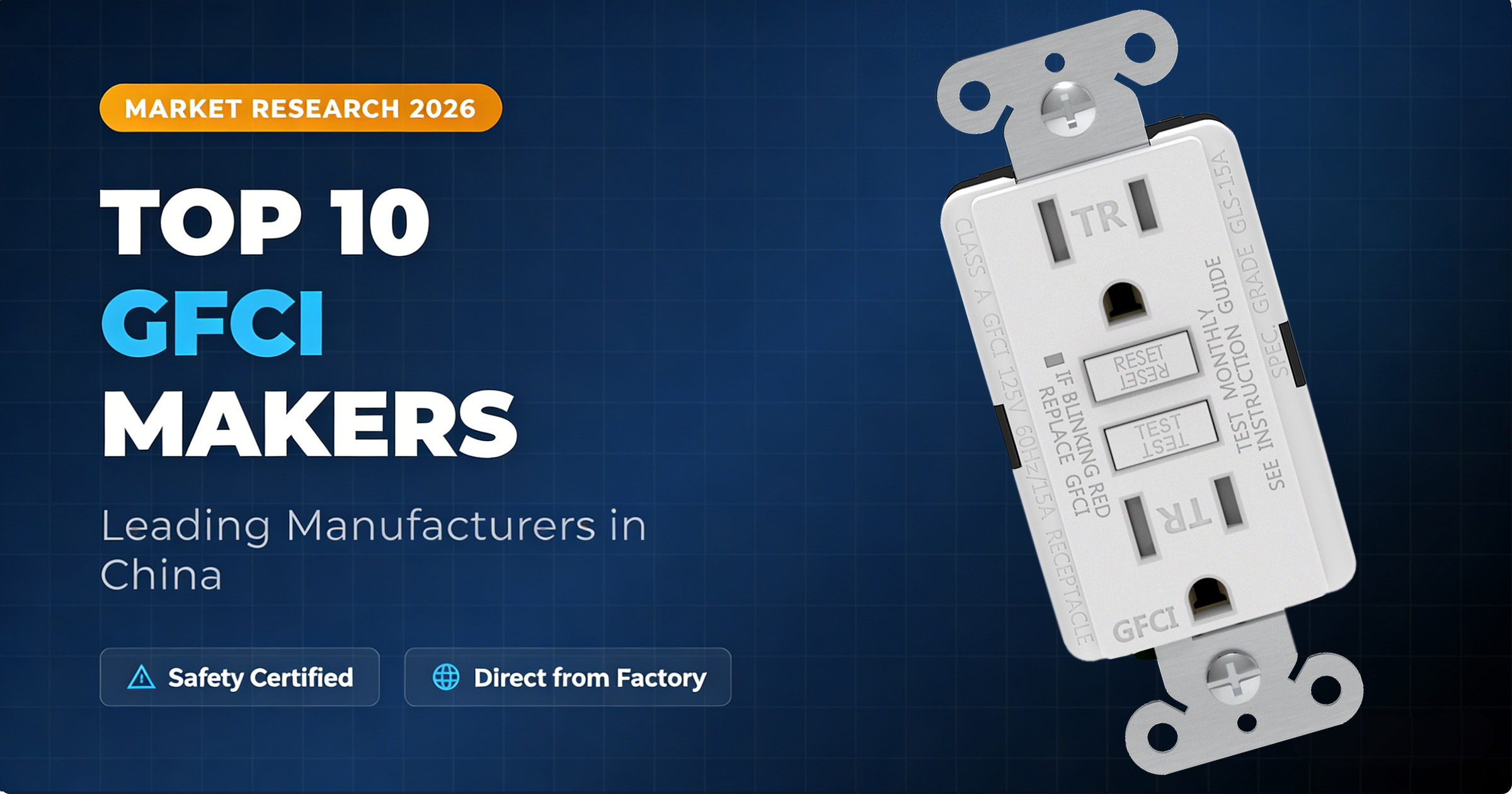
The two most common safety GFCI outlets in residential wiring are standard GFCI (ground fault circuit interrupter) and tamper-resistant (TR) versions. Both are designed to improve electrical safety. However, they address different problems, and in many modern electrical devices, they are also combined for use.
As an electrician, contractor, or homeowner, understanding how they work will help you select the right device for your project and ensure compliance with electrical codes.
This guide will explain the working principles of each type of outlet, their application scenarios, and the differences in actual installation.

What Is a Standard GFCI Outlet?
A standard GFCI outlet monitors current flow between the hot and neutral wires. If it detects an imbalance — typically 4–6 mA — it trips and cuts power in under 25 milliseconds. That speed prevents serious shock when current leaks through a person to ground, often in wet locations like kitchens, bathrooms, garages, or outdoors.
The device uses a zero-sequence current transformer to sense the difference. When leakage exceeds the threshold, an internal solenoid opens the contacts. You see the familiar TEST and RESET buttons on the face. Press TEST to simulate a fault and trip it. Press RESET to restore power.
Since the 1971 NEC first required GFCI protection in certain areas, residential electrocutions have dropped about 81–83% according to NFPA data. That’s real impact. Standard GFCIs carry that same protection today. Many now include automatic self-testing per UL 943 requirements (effective since 2015), which checks the sensing and tripping circuitry periodically — usually every few hours or days — and indicates failure if the device can’t protect.
These outlets work well in wet or damp zones listed in NEC 210.8. They remain reliable after decades of field use.
But they leave one gap open: nothing physically blocks the slots from foreign objects.
What Is a Tamper Resistant GFCI Outlet?
A tamper-resistant GFCI — or TR GFCI — starts with the same ground fault circuitry as a standard model. It adds an internal spring-loaded shutter mechanism behind the slots.
The shutters stay closed until equal pressure is applied to both the hot and neutral openings at the same time — exactly what happens when you insert a proper two- or three-prong plug. A single object like a key, paperclip, hairpin, or coin can’t push through one side alone. The shutter blocks access to the live contacts.
This design protects children from inserting things into the outlet. It also helps adults: a damaged or bent plug blade often won’t open the shutter, preventing a potential short or shock. The mechanism doesn’t interfere with normal plug insertion once you align it correctly, and it adds a layer of dust and debris protection when the outlet is unused.
TR GFCIs still carry full UL/ETL listing for ground fault protection, the same TEST/RESET buttons, and self-test features. The only visible difference is usually a small “TR” marking on the face.
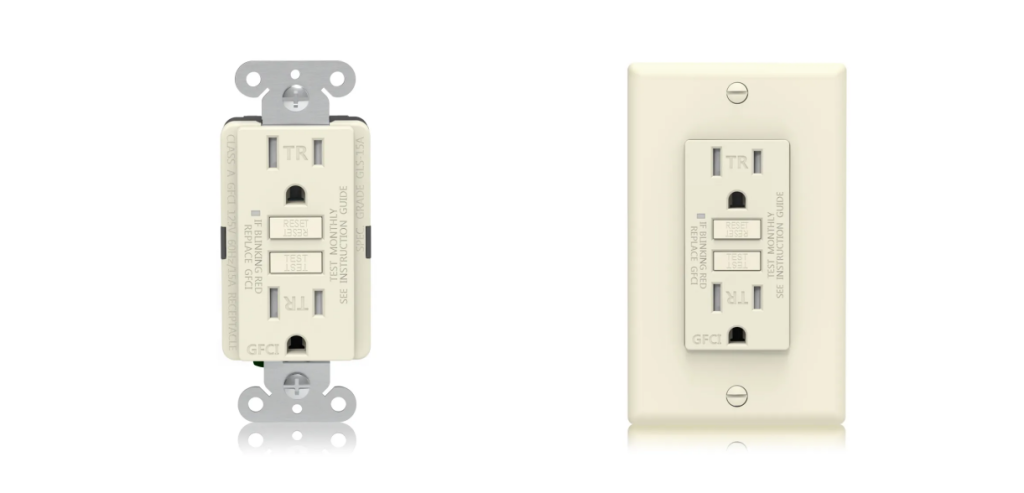
Standard GFCI vs Tamper Resistant GFCI: Key Differences
Here’s a clear side-by-side comparison of the main points contractors and homeowners ask about most.
| Feature | Standard GFCI Outlet | Tamper Resistant GFCI (TR GFCI) |
| Ground Fault Protection | Yes (4–6 mA trip, <25 ms) | Yes (identical) |
| Tamper/Shutter Mechanism | No | Yes — blocks single-object insertion |
| Child Safety from Objects | Limited (relies on covers or supervision) | High — built-in physical barrier |
| Price | Lower baseline | 20–30% higher due to shutter components |
| Plug Insertion Feel | Smooth and easy | Slightly stiffer first time; normal after use |
| Compatibility with Old/Non-Standard Plugs | Better — fewer issues | May require plug replacement in rare cases |
| Maintenance | Monthly manual test + auto self-test | Same + occasional check that shutters move freely |
| Code Compliance (Residential) | Meets GFCI zones only | Meets both GFCI and TR requirements (current standard) |
Both types share the same wiring footprint, mounting, and electrical ratings. The shutter is the only mechanical addition, and it doesn’t affect trip sensitivity or increase nuisance trips in normal use.
Are Tamper Resistant GFCI Outlets Required by NEC?
Yes, in most cases today — especially for new work or major renovations.
NEC 406.12 requires listed tamper-resistant receptacles for all 15- and 20-amp, 125- and 250-volt nonlocking-type receptacles in a long list of locations. The 2023 NEC expanded this coverage significantly.
In dwelling units, TR receptacles are required in nearly all general-use areas — kitchens, bathrooms, bedrooms, living spaces, garages, accessory buildings, and common areas. When those locations also require GFCI protection under 210.8 (wet zones like kitchens, baths, garages, outdoors), the outlet must be a TR GFCI.
The expansion goes beyond homes: child care facilities, K-12 schools, hotel guest rooms, dormitories, residential care/assisted living, substance abuse rehab facilities, boathouses, mobile homes, and certain medical office waiting areas/lobbies now require TR receptacles too.
Exceptions exist — receptacles more than 5.5 feet above the floor, dedicated appliance outlets in cabinets, or specific lighting/luminaire parts — but they are narrow. Always check your local AHJ for adopted amendments, but the direction is clear: TR has become the default for most 15/20A receptacles in residential and many public settings.
When Should You Use a Tamper Resistant GFCI Outlet?
Use a TR GFCI when children under 6 are present or could visit — that’s the primary driver. Toddlers explore with anything they can hold. ESFI data (based on CPSC reports over multiple years) shows about 24,000 children under 10 treated in ERs for receptacle-related incidents over a 10-year period — roughly 7 per day, with 89% under age 6. A physical shutter stops that risk at the source.
Install TR GFCI in new construction, major remodels, or any GFCI-required wet location to stay code-compliant without future rework. Kitchens, bathrooms, garages, outdoors, laundry rooms, and unfinished basements all fall here.
Standard GFCI still works fine in adult-only commercial spaces, industrial workshops, or high locations above child reach. For high inrush loads like refrigerators or power tools, some contractors prefer standard models to avoid any minor mechanical interaction, though modern TR designs handle this well.
Advantages of Tamper Resistant GFCI Outlets
The shutter delivers real child safety — it prevents insertion accidents that plastic caps often fail to stop. Caps get lost, pulled off, or removed in seconds by determined toddlers.
TR GFCI gives you both protections in one device — no need to add separate covers or worry about them failing over time. It meets the broadest NEC requirements right now, so installations pass inspection easily and stay future-proof.
The mechanism also keeps dust and small debris out when unused, which can help in garages or basements. Combined with self-test, these outlets provide reliable, low-maintenance protection year after year.
Are There Any Downsides to Tamper Resistant GFCI?
Cost runs 20–30% higher because of the added shutter parts.
The first few insertions feel stiffer — you need to align the plug evenly and push firmly. Most users adapt within a week; elderly people or those with limited hand strength notice it more.
In rare cases, very old or bent plugs won’t open the shutter properly — you replace the plug, not the outlet. Mechanical wear on the shutter is possible after heavy daily use, but quality units handle thousands of cycles without issue.
These points rarely outweigh the safety gain in homes or child-accessible areas.
Standard GFCI vs Tamper Resistant GFCI: Which One Should You Choose?
Look at three things first: kids, code, and location.
- If young children live there or visit regularly — choose TR GFCI every time. The shutter is worth the extra cost.
- For new installs or renovations in dwelling units — go TR GFCI to meet 2023 NEC without questions.
- In GFCI-required wet zones (kitchens, baths, garages, outdoors) — TR GFCI is the compliant, safer choice.
- Adult-only commercial/industrial, high-mounted outlets, or tight budgets with no child risk — standard GFCI performs fine.
Always verify local code adoption. When in doubt, TR GFCI covers more bases.
Conclusion
Standard GFCI outlets deliver proven ground fault protection that has saved countless lives since the 1970s. Tamper-resistant versions add a simple but effective barrier against child-related incidents — and they align with today’s expanded NEC rules.
For most North American homes and many commercial spaces, TR GFCI is now the practical default. It combines both protections cleanly and gives contractors and homeowners peace of mind.
At Faith Electric, our UL/ETL listed TR GFCI line includes self-test models and weather-resistant options built for the North American market. If you’re specifying for a project or replacing in a home, feel free to reach out — we’re here to help match the right device to the job. Safety starts at the outlet.