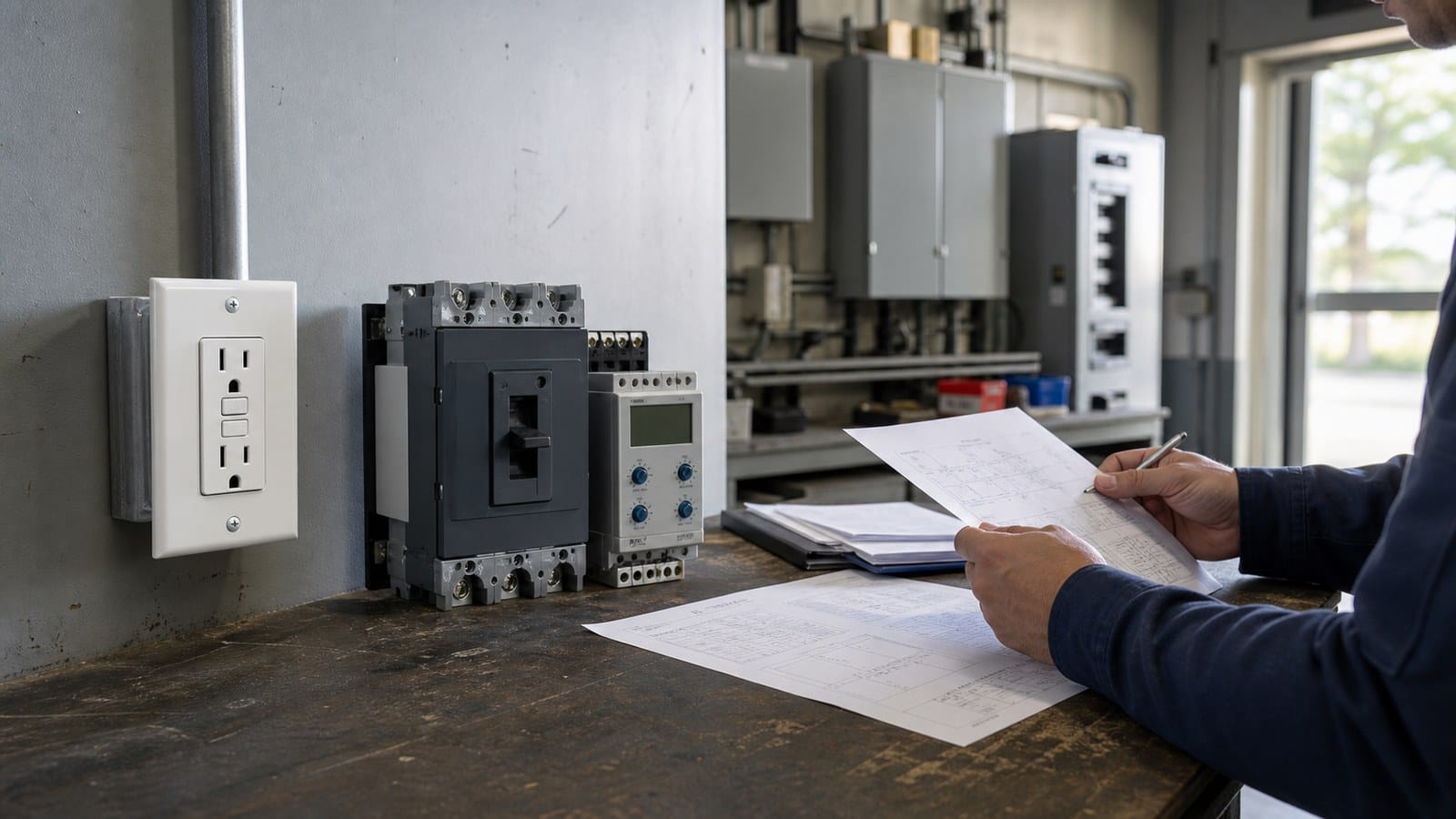
GFCI outlets — Ground Fault Circuit Interrupters — cut power fast when they detect a ground fault. They sense current leaking to ground, as little as 4-6 milliamps, and trip in about 1/40 of a second. This stops shocks in places where water and electricity meet.
We’ve made UL/ETL listed GFCI receptacles for North American homes for 28 years. We see contractors and homeowners ask the same question: where exactly does the code require them? The answer comes from the National Electrical Code (NEC), specifically Section 210.8(A) for dwelling units.
The current widely adopted edition is 2023 NEC. It expanded requirements compared to earlier versions. It covers 125-volt through 250-volt receptacles on single-phase branch circuits rated 150 volts or less to ground in listed locations. Always check your local authority — some adopt with amendments or lag behind.
Why GFCI Protection Saves Lives
Water increases shock risk. A small current leak through a person to ground can kill. Ordinary breakers protect against overloads and shorts, but not ground faults. GFCI fills that gap.
Since NEC started requiring GFCIs outdoors in 1971 and expanded over time, electrocutions have dropped sharply. Reliable sources report overall reductions around 83% and even higher for consumer product-related incidents. In wet zones, the difference is clear.
One GFCI can protect multiple downstream outlets on the same circuit. You install either a GFCI receptacle at the point or a GFCI breaker in the panel. Both work, but the choice depends on your wiring and upgrade scope.
Required GFCI Locations per NEC 210.8(A) — 2023 Edition
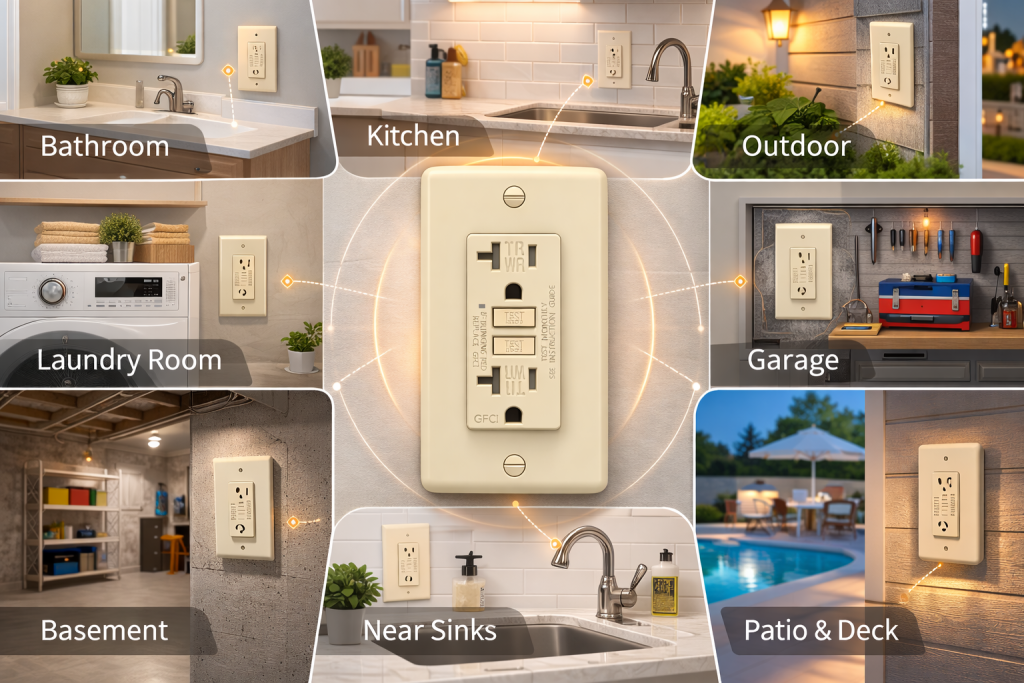
Here are the 12 locations where GFCI protection is mandatory for qualifying receptacles. We list them in typical order from the code, with key details.
- Bathrooms
All receptacles in the bathroom space need GFCI. Humidity and water make every outlet a hazard, even far from the sink.
- Garages and Accessory Buildings
Receptacles in garages, plus accessory buildings with floors at or below grade level used for storage, work, or similar non-habitable purposes. Tools, chargers, and vehicles create risks.
- Outdoors
All exterior receptacles. This includes walls, patios, decks, balconies, pool areas, and boathouses. Use weather-resistant (WR) types. Seasonal lights like Christmas strings need it too.
- Kitchens
All kitchen receptacles. The 2023 update removed the old limit to countertop-serving outlets. Now every receptacle in the kitchen space gets protection. Sinks, appliances, and metal surfaces raise the stakes.
- Areas with Sinks and Permanent Food/Beverage Prep or Cooking Provisions
Spaces outside the main kitchen that have a sink plus built-in setup for food prep, drinks, or cooking (like a wet bar or butler’s pantry). This was new in 2023.
- Basements
All basement receptacles, finished or unfinished. The 2023 edition dropped the unfinished-only limit. Near sump pumps or utility sinks, the need is obvious.
- Crawl Spaces
Receptacles here require protection. Damp, confined spaces hide hazards.
- Laundry Areas
All receptacles in laundry spaces. Washers, dryers near water, and utility sinks drive this.
- Sinks (General)
Any receptacle within 6 feet (measured horizontally from the sink bowl’s top inside edge) of a sink. This applies beyond kitchens and bathrooms.
Includes pools and spas (pump motors, underwater lights, receptacles at least 6 feet from pool edge), hot tubs, and similar. These follow detailed rules in Article 680 but tie back to 210.8(A).
One practical note: protection can come from the GFCI receptacle itself or an upstream GFCI breaker. Downstream wiring lets one device cover several outlets.
Local codes sometimes add more. Check with your inspector or licensed electrician before work.
Recommended Locations and Upgrade Opportunities
Dry indoor spaces like living rooms or bedrooms usually skip mandatory GFCI. But add it near aquariums, humidifiers, or any water-linked appliance.
Old homes often lack full coverage. Kitchen or bathroom remodels are the best time to upgrade. Swap standard outlets for GFCIs. It brings the house closer to current code, cuts shock risk, and can lower liability when selling.
New builds or basement finishes should plan GFCI from the start. Include it in all wet zones.
Installation and Maintenance Tips
Choose UL/ETL listed devices. Our Faith Electric GFCIs meet these standards, with options like tamper-resistant, weather-resistant, or combined with USB ports for modern needs.
Basic steps (power off first):
- Identify line and load terminals (line feeds in, load protects downstream).
- Connect hot to brass/gold, neutral to silver, ground to green.
- Test after install with the built-in TEST button.
Maintenance is simple:
- Press TEST monthly to simulate a fault — it should trip.
- Press RESET to restore.
- Check for damage or wear. Replace if it fails to trip.
To verify an existing outlet has protection, use a plug-in tester or look for TEST/RESET buttons.
If you’re unsure about wiring or local rules, call a licensed electrician. Mistakes cost more than professional help.
FAQ
GFCI vs AFCI — what’s the difference?
GFCI stops ground faults. AFCI stops arcing faults that start fires. Some circuits need both.
Old house has no GFCI — what now?
Prioritize wet areas during any remodel. Add GFCI receptacles or breakers where required.
Why does my GFCI trip?
Moisture, faulty appliance, or real fault. Unplug items one by one to find the cause.
Kitchen islands or peninsulas?
Covered under the full kitchen requirement in 2023 NEC.
How often does code change?
NEC updates every three years. Adoption varies by state and city. Stay current through your local building department.
Final Thoughts
GFCI in the right places prevents shocks and saves lives. The 2023 NEC makes requirements clearer and broader, especially in kitchens and basements.
Check your home today. Look for TEST/RESET buttons or use a tester. Where coverage is missing, plan upgrades.
At Faith Electric, we supply UL/ETL certified GFCI receptacles, AFCI options, USB combos, standard outlets, switches, and wall plates — full in-wall solutions built for North American contractors and EPC clients. Browse our site for specs and samples. Electrical safety starts with the correct locations.