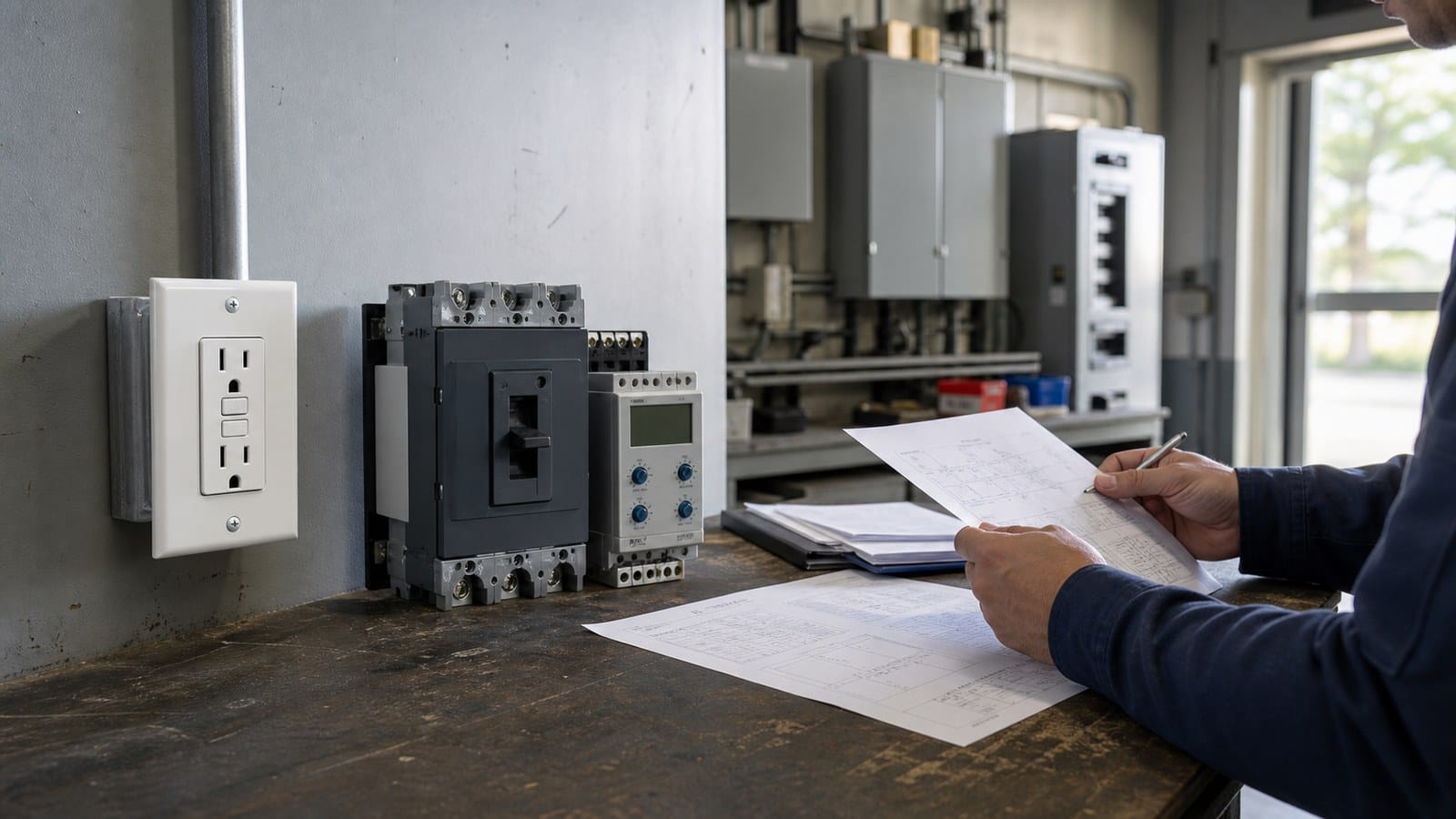
In North American homes and job sites, electrical safety starts at the outlet. Two common types dominate: the regular outlet and the GFCI outlet. A regular outlet simply delivers power. A GFCI outlet actively protects against ground faults that can cause shocks—especially in wet areas. Understanding the difference helps contractors, homeowners, and engineers select the right product and stay code-compliant.
We’ve built UL/ETL-listed GFCI and standard receptacles for North American markets for 28 years. Here’s a clear breakdown.
What Is a Regular Outlet?
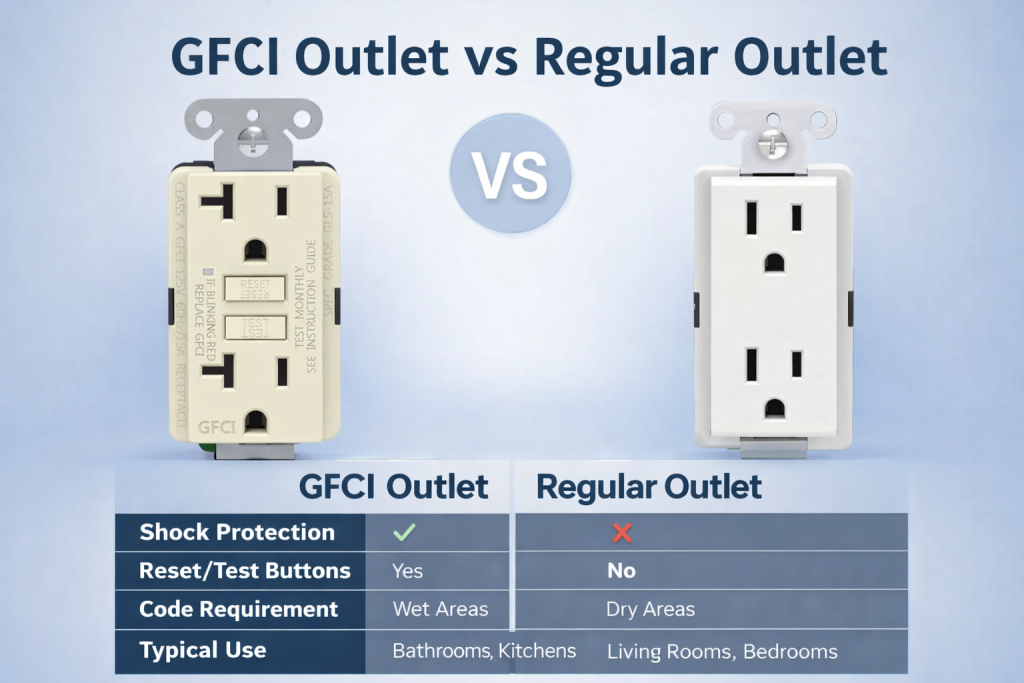
A regular outlet—also called a standard receptacle or non-GFCI outlet—transfers electricity from the circuit to whatever you plug in. It has no built-in mechanism to detect current leakage.
Most feature two or three slots (hot, neutral, ground in grounded models). Rated typically at 15 A or 20 A, 125 V. No Test or Reset buttons on the face.
These work fine in dry locations. They rely entirely on the upstream circuit breaker for overload and short-circuit protection. But they offer zero defense against ground faults—when current escapes the intended path, often through water or a person.
In older homes built before the 1970s, you still see mostly regular outlets everywhere. In dry rooms they perform reliably. Near water, however, they turn everyday tasks into shock hazards.
What Is a GFCI Outlet?
A GFCI outlet—Ground Fault Circuit Interrupter—is a safety receptacle designed to prevent electrocution. It constantly monitors current flow between hot and neutral wires.
If it detects an imbalance as small as 4–6 mA (indicating leakage to ground), the device cuts power in under 0.1 seconds. That interruption usually prevents serious injury.
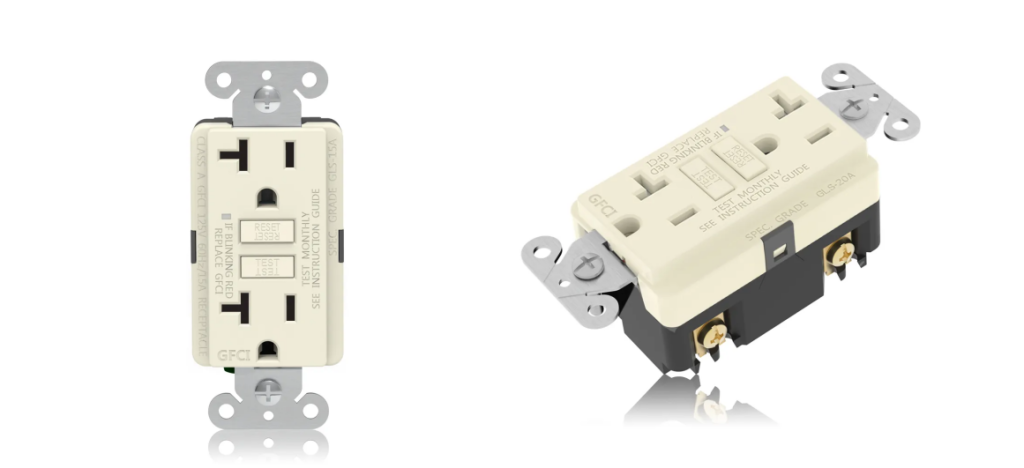
Key visual cue: prominent Test and Reset buttons on the face. Many modern units include tamper-resistant shutters (TR), monthly self-test features, USB ports, or weather-resistant construction for outdoor use.
All our GFCI models carry UL and ETL listings to meet North American standards. They go beyond basic protection with reliable, code-compliant performance.
GFCI Outlet vs Regular Outlet: Key Differences
The core distinction lies in protection level and response.
| Feature | GFCI Outlet | Regular Outlet |
| Safety Protection | Detects 4–6 mA ground fault, trips <0.1 sec | No ground-fault detection |
| Response to Leakage | Instant cut-off to prevent shock | None—relies on breaker for overcurrent |
| Appearance | Test and Reset buttons visible | No buttons |
| Wiring Terminals | LINE (incoming) + LOAD (downstream protection) | Simple screw terminals only |
| Maintenance | Monthly Test button press required | No special maintenance |
| Typical Material Cost | $12–$40+ (basic to advanced models) | $2–$10 |
| Required Locations | Wet/high-risk areas per NEC | Dry/low-risk areas |
GFCI adds active monitoring. Regular outlets remain passive. That difference matters most where water meets electricity.
How Does a GFCI Outlet Work?
Inside, a GFCI uses a current transformer to compare current on the hot wire with current returning on the neutral. Under normal conditions the values match.
A ground fault—current leaking through damaged insulation, water, or a person—creates an imbalance. When that difference hits 4–6 mA, the internal relay opens the circuit almost instantly.
This protects against shocks far faster than a standard breaker, which only reacts to high current. Water makes the human body a better conductor, so the quick trip is critical in bathrooms, kitchens, and outdoors.
Test monthly: press Test to simulate a fault (power should drop), then press Reset to restore. If it trips repeatedly or fails to reset, replace the unit. A working GFCI can save lives.
Where Are GFCI Outlets Required?
The National Electrical Code (NEC) mandates GFCI protection in high-risk locations. California follows the 2023 NEC (via 2025 California Electrical Code, effective 2026), with local AHJ variations possible in Los Angeles.
Current key requirements:
Bathrooms: All receptacles.
- Kitchens: All 125–250 V receptacles (2023 NEC removed distance limits from sinks—full coverage).
- Garages, accessory buildings, unfinished basements: All receptacles.
- Outdoors: All accessible outlets up to 60 A (2026 NEC increase from 50 A).
- Laundry areas, within 6 ft of sinks, pools/spas: Required.
- Outdoor HVAC equipment (208/240 V single-phase ≤50 A serving dwellings): GFCI mandatory from September 1, 2026 (new Class C or similar products address nuisance tripping).
Check your local AHJ in Los Angeles—some areas add stricter rules. One GFCI receptacle can protect downstream regular outlets on the same circuit via the LOAD terminals. That often saves material and labor.
Can You Replace a Regular Outlet With a GFCI?
Yes—and it’s one of the most common safety upgrades.
A single GFCI can safeguard the outlet itself plus every downstream receptacle on the branch via the LOAD side. This protects multiple points without installing GFCI everywhere.
Steps (always hire a licensed electrician):
- Turn off power at the breaker.
- Remove the old regular outlet.
- Connect incoming wires to LINE terminals, outgoing to LOAD if protecting downstream.
- Mount, test, and label “GFCI Protected” where required.
In older homes without ground wires, use self-testing GFCI models designed for 2-wire circuits. Professional installation in Los Angeles typically runs $130–$300 per replacement (average ~$210), higher for new wiring or outdoor work.
Proper replacement eliminates weak links in the circuit.
When Is a Regular Outlet Still Acceptable?
Regular outlets remain suitable in dry, low-risk areas.
Use them in:
- Bedrooms, living rooms, offices, hallways—any space without water exposure.
- Circuits feeding high-inrush appliances like refrigerators, air conditioners, or certain medical devices (CPAP machines), where standard GFCI might nuisance-tripon startup surges.
- General lighting or low-load devices far from moisture.
Even in dry zones, consider tamper-resistant regular outlets in homes with children. But never install regular outlets in NEC-mandated wet locations. The code exists for a reason.
GFCI Outlet Cost vs Regular Outlet
Material costs differ significantly.
Regular outlets: $2–$10 each.
GFCI outlets: $12–$40+ (basic models $12–20; USB, self-test, or weather-resistant versions $25–40+).
Installation (Los Angeles area, 2026 estimates):
- Regular outlet replacement: $100–$250.
- GFCI replacement: $130–$300 (average $210).
- New GFCI install or outdoor work: $150–$350+.
Higher upfront cost for GFCI pays off in safety. Downstream protection reduces the number of units needed. Quality UL/ETL-listed products also lower long-term failure risk and may help with insurance.
How to Choose Between a GFCI Outlet and a Regular Outlet
Follow this practical decision path:
- Check NEC requirements first. Wet or high-risk areas (bathrooms, kitchens, garages, outdoors, laundry) demand GFCI—no exceptions.
- Evaluate the environment. Any chance of moisture, tools, or water contact? Choose GFCI.
- Consider usage. High-startup-load appliances or sensitive medical equipment? Regular outlet may avoid nuisance trips.
- Factor in family and age of home. Young children present? Use tamper-resistant GFCI. Older wiring? Upgrade to GFCI for added safety.
- Look for extras. Need USB charging or self-testing? Select combination models.
Avoid common mistakes: don’t overload GFCI circuits with daisy-chained high-draw devices; test monthly; never bypass requirements in wet zones.
For reliable performance, stick to UL/ETL-certified products. Faith Electric offers a full range of GFCI receptacles, USB combos, tamper-resistant models, and weather-resistant units—all built for North American codes.
Conclusion
GFCI outlets deliver active protection against ground faults in wet environments. Regular outlets handle basic power delivery in dry areas. The right choice follows NEC rules, matches the location risk, and prioritizes safety.
Test your GFCI units monthly. Inspect older homes for missing protection. When upgrading or specifying, select quality components that meet UL/ETL standards.
At Faith Electric, we’ve supplied North American electricians, contractors, and EPC clients with dependable UL/ETL-listed GFCI outlets, USB receptacles, switches, and wall plates for 28 years. Explore our complete in-wall electrical solutions or reach out for project support. Safe installations start with the right outlet.