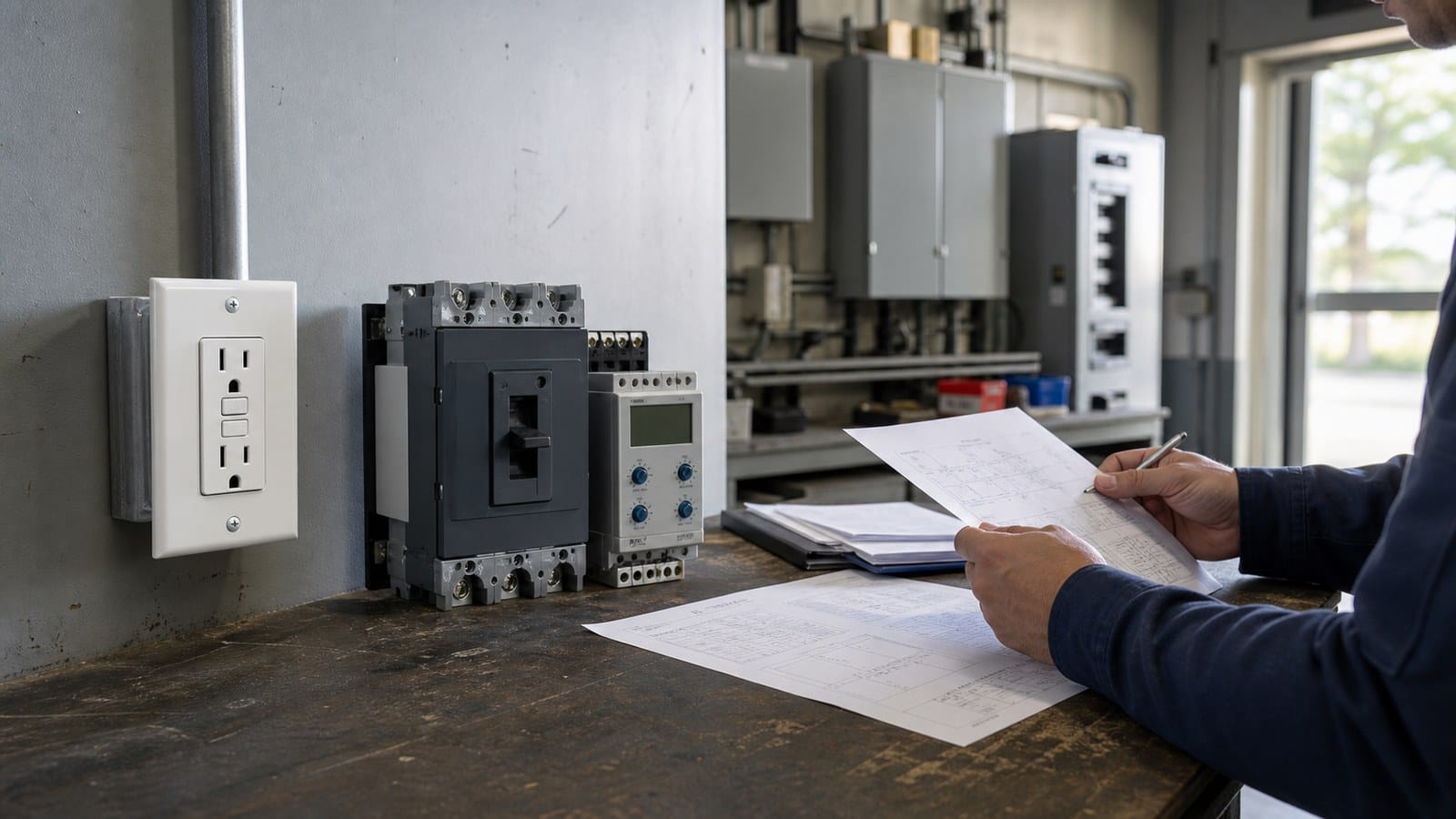
In residential electrical work, GFCI and AFCI devices get confused all the time. People ask if one can replace the other or if a single type covers everything. The answer is no. They handle completely different hazards. Mixing them up leaves real blind spots in protection.
GFCI stands for Ground Fault Circuit Interrupter. It watches for current leaking to ground—usually through water or a person—and trips fast to stop shocks. AFCI stands for Arc Fault Circuit Interrupter. It listens for dangerous electrical arcs in wiring that can start fires without ever hitting overload levels. One saves people from electrocution. The other stops hidden fires in walls or behind furniture. They don’t overlap. Using the wrong one—or skipping one—compromises safety.
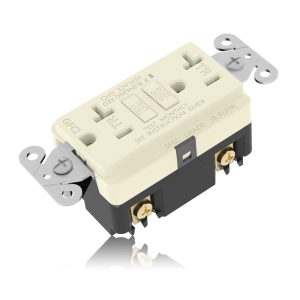
What Is a GFCI Outlet?
A GFCI outlet monitors the balance between hot and neutral current. Any imbalance as small as 4-6 mA means current is leaking somewhere it shouldn’t—often through moisture or a human body. When that happens, it trips in under 25 milliseconds. That’s quick enough to prevent serious injury or death in most cases.
These show up as standard duplex receptacles with TEST and RESET buttons. Press TEST and the power cuts. RESET brings it back if everything checks out. You can also get GFCI breakers in the panel that protect the whole downstream circuit.
GFCI protection is non-negotiable in wet or damp locations. Skip it there and you expose people to real shock risk. Test monthly—plug in a lamp, hit TEST, watch it trip, then RESET. If it doesn’t trip or won’t reset, replace it immediately. A dead GFCI provides zero protection.
What Is an AFCI Outlet?
An AFCI detects arc faults—those tiny, dangerous sparks from damaged insulation, loose connections, or pinched cords. These arcs hit temperatures over 10,000°F and ignite nearby materials without drawing enough current to trip a standard breaker.
Modern AFCIs use electronics to spot the jagged waveform of a bad arc while ignoring normal ones from switches or appliances. They come mainly as panel breakers (combination type covers series and parallel arcs) or as outlet-branch-circuit devices for retrofits.
Arc faults cause a big chunk of residential electrical fires. An AFCI catches them early and cuts power before flames start. In living areas, skipping AFCI leaves wiring vulnerable to hidden damage that builds over years.
Key Differences: GFCI vs AFCI
Here’s the side-by-side that matters when you’re specifying or installing.
| Feature | GFCI | AFCI |
| Primary Protection | Personnel – electric shock | Property – electrical fire |
| Detection | Current imbalance (4-6 mA to ground) | Dangerous arc signatures (series/parallel) |
| Trip Threshold/Time | 4-6 mA, <25 ms | Arc waveform, fast response |
| Typical Locations | Wet/damp areas (kitchens, baths, outdoors) | Living spaces (bedrooms, family rooms) |
| Common Form Factor | Receptacle with TEST/RESET or breaker | Mostly panel breaker |
| Can Substitute the Other? | No – misses ground faults | No – misses arc faults |
Bottom line: they protect different things. One doesn’t cover the other’s job.
NEC Requirements
The National Electrical Code lays out where each is mandatory. Requirements come from the latest NEC edition adopted locally—always verify with your AHJ, especially in California or Los Angeles where amendments happen.
GFCI (NEC 210.8) hits hard in areas with water exposure:
- All bathroom receptacles
- All kitchen receptacles (not just countertops—full coverage including fridge, microwave circuits)
- Laundry areas
- Garages
- Unfinished basements, crawl spaces
- Outdoor receptacles
- Specific hardwired appliances (ranges, dryers, dishwashers in many cases)
AFCI (NEC 210.12) covers most habitable spaces to catch arc faults:
- Bedrooms
- Living rooms, family rooms, dining rooms
- Hallways, closets
- Sunrooms, recreation rooms
- Kitchens and laundry areas (in many cycles)
Bathrooms, garages, and outdoors usually skip AFCI but demand GFCI. Kitchens and laundry often require both. Dual-function AFCI/GFCI breakers handle that in one slot—clean, code-compliant, and space-efficient in the panel.
When you modify or extend a circuit in a required area, add the protection. Old workarounds fail inspections and leave gaps.
Which to Use in Different Rooms
Pick based on the hazard, not preference.
- Bathroom — GFCI only. Water everywhere. AFCI not required.
- Kitchen — All receptacles need GFCI; living/working space needs AFCI. Dual-function breaker is the practical move.
- Laundry Room — Water + large appliances = shock and arc risk.
- Bedroom / Living Room / Family Room / Dining Room — AFCI required. Add GFCI only if near sinks or wet zones.
- Garage / Outdoor / Unfinished Basement — GFCI required. AFCI usually not.
In retrofit, start with the first outlet on the circuit for AFCI or swap to GFCI receptacle. New builds favor panel dual-function breakers—covers the branch end-to-end without extra devices.
Common Misconceptions
Don’t fall for these.
- AFCI replaces GFCI (or vice versa). Wrong. Different faults. One leaves the other hazard wide open.
- Kitchen GFCI alone suffices. No—arc faults still burn houses.
- Older homes don’t need updates. Code doesn’t force retrofits everywhere, but missing protection raises fire/shock risk. Insurance companies notice.
- Dual-function is overkill. In overlapping areas it’s the smartest, most economical fix—no extra outlets, full coverage.
- Frequent tripping means the device is bad. Usually signals a real problem. Ignore it and you risk escalation.
Final Thoughts:
GFCI stops shocks in wet zones. AFCI stops fires in living spaces. They complement, not compete. In kitchens, laundry, and similar high-risk spots, combine them—dual-function breakers deliver both protections cleanly from the panel.
Practical steps: Audit your panel and outlets against current local code. Test GFCI monthly (TEST/RESET routine). For AFCI breakers, use the built-in test button.
If you’re unsure about your setup or planning upgrades, bring in a licensed electrician. Cutting corners here doesn’t save money—it creates liabilities you don’t want. Protect the circuit properly from the start.
FAQ
Can I use a GFCI outlet instead of an AFCI outlet?
No. They detect different fault conditions. One cannot substitute for the other.
Do kitchens require both GFCI and AFCI protection?
In many modern code applications, yes. Kitchens combine shock and fire risks.
Are AFCI outlets required in bathrooms?
Generally no. Bathrooms focus on GFCI protection due to shock risk.
What’s the difference between outlet and breaker protection?
Breakers protect the entire circuit. Outlets protect only downstream loads, if wired correctly.
Why does my GFCI or AFCI keep tripping?
Repeated tripping usually indicates a real fault, not a nuisance. Ignoring it exposes risk.
Discover Faith Electric, your trusted professional electrical manufacturer from China, specializing in safety-first power outlets. Our GFCI and AFCI outlets are built to last, enduring up to 20,000 trip/reset cycles—far exceeding the UL standard’s required 6,000 cycles. Contact us today for free samples.

References / Data Sources: